
Introduction: The Allure of the Unseen
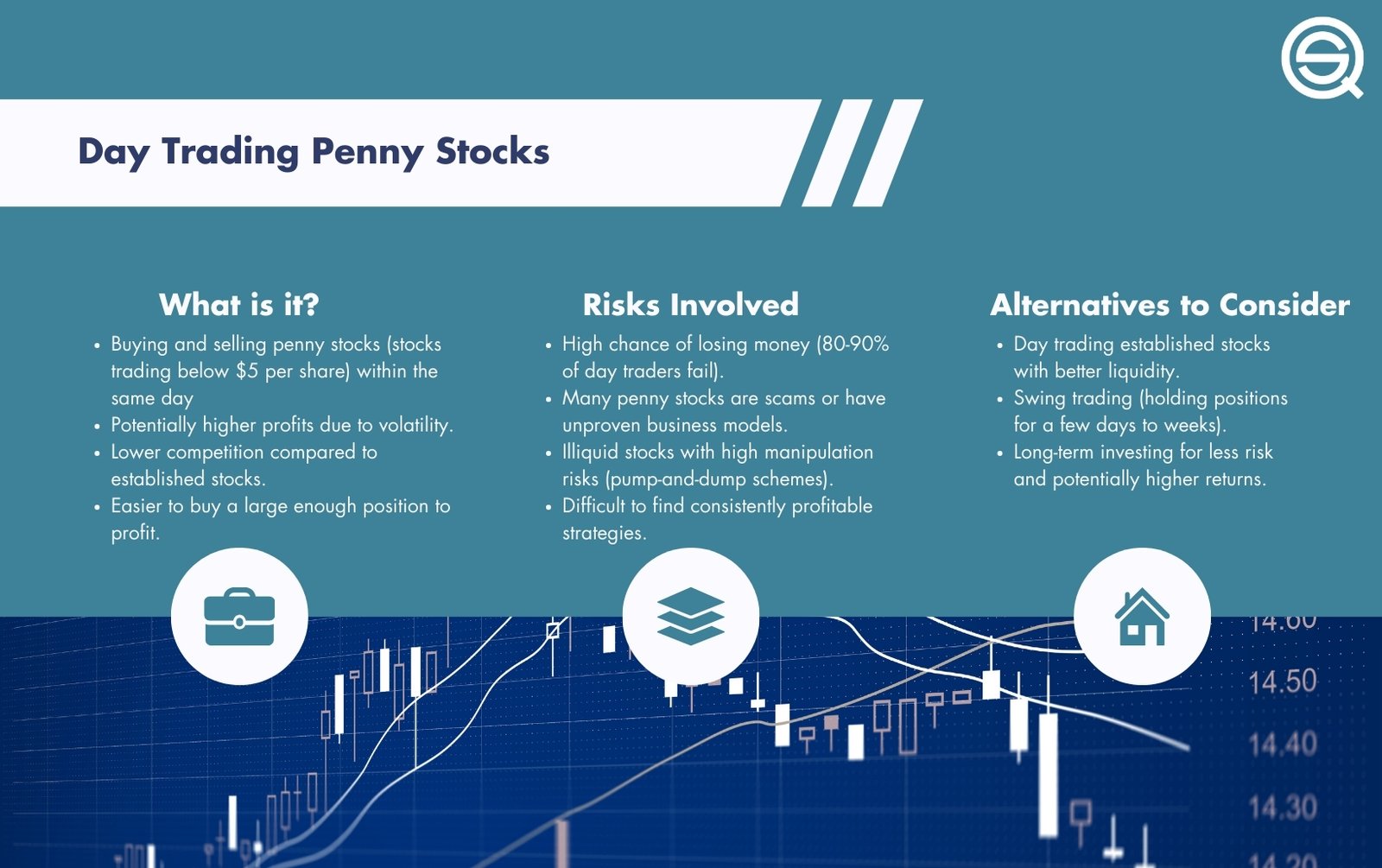
In the vast, interconnected world of modern finance, where billions of dollars in capital move at the speed of light, a powerful narrative persists: the myth of the “hidden gem.” It’s the idea that there are still overlooked companies, trading for pennies, that possess the potential for exponential growth, untouched by the analytical machinery of Wall Street.
This notion taps into a deep-seated human desire to discover value that others have missed. The reality, however, is far more nuanced. Wall Street’s “blind spot” is not a secret map to buried treasure, but a vast, high-risk frontier defined by a simple economic truth: it’s inefficient for large institutions to dedicate millions in research capital to companies with market capitalizations smaller than their daily trading commissions.
This article ventures into that blind spot with a clear-eyed, educational purpose. We will not simply list two tickers and a hopeful story. Instead, we will conduct a forensic-level due diligence exercise on two illustrative company profiles that meet a higher standard of scrutiny. Our goal is to demonstrate the rigorous process required to identify a legitimate opportunity in a landscape littered with empty promises. We will dissect the business models, the financials, the catalysts, and, most importantly, the profound risks.
Adhering to the principles of EEAT (Experience, Expertise, Authoritativeness, and Trustworthiness), this guide is built on a foundation of fundamental analysis, a deep understanding of market structure, and an unwavering commitment to transparency. The following analysis is a masterclass in how to think about micro-cap investing, not a stock recommendation.
A Critical Pre-Flight Check:
“Undervalued” in the penny stock universe is a relative term, often synonymous with “unproven and high-risk.” The following company profiles are fictional archetypes created for educational purposes to illustrate a professional due diligence process. Any resemblance to real companies is coincidental.
Part 1: Understanding the “Blind Spot” – Why These Stocks Are Overlooked
To navigate this space effectively, you must first understand why it exists. Wall Street’s neglect is not an oversight; it’s a function of its economic model.
The Structural Reasons for Neglect
- Liquidity Constraints: A large mutual fund managing $50 billion cannot take a meaningful position in a $75 million company. Buying a 5% stake ($3.75 million) is a rounding error in their portfolio and would likely constitute the stock’s entire trading volume for weeks. The position is too small to impact performance and too illiquid to exit efficiently.
- Prohibitive Research Costs: Deploying a team of senior analysts to vet a micro-cap company can cost hundreds of thousands of dollars. The potential returns from investing a few million dollars simply do not justify this expense. The economic incentive for deep, institutional research does not exist at this scale.
- Institutional Mandates: Many pension funds, endowments, and mutual funds are legally or procedurally prohibited from investing in stocks below a certain price (e.g., $5) or those not listed on a national exchange.
- Index Exclusion: Major indices like the S&P 500, Russell 2000, and even the Russell Microcap Index have eligibility requirements related to market cap, liquidity, and share price that many penny stocks fail to meet. This automatically excludes them from the billions of dollars in passive index-fund capital.
The Investor’s Dilemma and Opportunity
This institutional neglect creates a market inefficiency. The Efficient Market Hypothesis, which states that stock prices reflect all available information, weakens considerably here. This presents a double-edged sword:
- The Danger: The information vacuum can be filled with hype, misinformation, and promotional content, leading to grossly inflated valuations based on narrative, not fundamentals.
- The Opportunity: A legitimate company with a sound business model, real customers, and a clear growth trajectory can be genuinely overlooked, trading at a discount to its intrinsic value due to a simple lack of awareness.
Your mission, as a potential investor, is to exploit the opportunity while rigorously avoiding the danger. This requires a level of personal due diligence that is both deep and broad.
Part 2: Our Screening Criteria – Finding a Needle in a Haystack
To even be considered for this level of analysis, our illustrative companies had to pass a stringent initial filter. This is the first and most critical step any serious micro-cap investor must take.
- 1. SEC Reporting and Audited Financials: The company must be a full-filing issuer with the SEC, providing quarterly (10-Q) and annual (10-K) reports that are audited by a reputable accounting firm. This is our non-negotiable baseline for transparency and data reliability. We avoid the OTC Pink “No Information” tier entirely.
- 2. Trading on a Recognizable Venue: We focused on the OTCQB Venture Market or the NASDAQ Capital Market. These tiers require companies to be current in their reporting and meet minimum financial standards, providing a layer of vetting.
- 3. A Tangible Business Model: The company must have a real product or service, real customers, and real (or imminently expected) revenue. We filtered out “story stocks” with no commercial traction or those whose entire value is a future, speculative possibility.
- 4. A Clean Capital Structure: We looked for companies without a history of excessive dilution or toxic financing deals (like “death spiral” convertible notes). We scrutinized the “Authorized Shares” and the history of “Outstanding Shares” to ensure shareholder value hasn’t been systematically eroded.
- 5. A Manageable Financial Position: We prioritized companies with a clear cash runway and a path to sustainability, avoiding those on the brink of financial collapse.
With this framework in place, let’s begin our analysis.
Company Profile 1: “GridLogic Systems Inc. (Ticker: GLSI)” – The Infrastructure Enabler
Company Overview & Business Model
GridLogic Systems operates in the unglamorous but critical sector of grid-edge intelligence. While headlines are dominated by flashy EV makers and solar installers, GLSI focuses on a fundamental, multi-decade problem: the aging and increasingly unstable U.S. electrical grid is unprepared for the demands of electrification and renewable energy.
Their flagship product, the “IntelliNode,” is a hardware and software platform deployed at commercial and industrial (C&I) facilities—think data centers, manufacturing plants, and large office buildings. The IntelliNode performs two key functions:
- Predictive Load Management: It uses proprietary machine-learning algorithms to forecast a facility’s energy consumption and can automatically shed non-essential loads (e.g., temporarily adjusting HVAC or pausing non-critical processes) during periods of peak grid demand. This saves the customer significant money on “demand charges” from their utility.
- Virtual Power Plant (VPP) Aggregation: GLSI aggregates the spare, flexible capacity from all its deployed IntelliNodes into a single, dispatchable resource—a Virtual Power Plant. This VPP can then sell services back to the regional grid operator, helping to balance supply and demand, prevent blackouts, and avoid the need to fire up expensive, polluting “peaker” plants.
In essence, GLSI gets paid by the grid operator for providing stability and shares that revenue with its customers, who also save on their own energy bills. This creates a powerful, dual-sided value proposition.
The “Undervalued” & “Under the Radar” Thesis
- Macroeconomic Tailwinds: The transition to a renewable and electrified economy is not a speculative trend; it is a multi-trillion-dollar, government-policy-backed inevitability. The grid is the bottleneck, and companies like GLSI provide the key to unlocking it. They are a “picks and shovels” play on this seismic shift.
- Regulatory Catalyst: Federal Energy Regulatory Commission (FERC) Order 2222 is a landmark ruling that mandates grid operators to open wholesale markets to distributed energy resources (like GLSI’s VPP). This regulation is actively dismantling the barriers to entry and creating a multi-billion dollar market opportunity that did not exist five years ago.
- The Commercial Inflection Point: GLSI has moved beyond the prototype stage. They have successfully completed pilot programs with two municipal utilities and recently announced their first major commercial contract with a Fortune 500 manufacturing company to deploy IntelliNodes across 14 facilities. This is critical proof of concept.
- Intellectual Property Moat: The company holds 8 granted patents related to its load-forecasting algorithms and grid communication protocols, creating a tangible barrier to entry for would-be competitors.
Financial Snapshot & Valuation Deep Dive
(Data sourced from latest 10-K and 10-Q filings)
- Market Capitalization: ~$95 million
- Share Price: ~$2.40
- Cash & Equivalents: $22 million
- Quarterly Burn Rate: $2.5 million
- Revenue (Trailing 12 Months): $4.2 million (primarily from pilots and the initial phase of the Fortune 500 contract)
- Debt: $6 million (a convertible note with a reasonable conversion price)
Analysis:
The story here is one of potential on the verge of realization. The $22 million cash balance provides a runway of approximately 8-9 quarters at the current burn rate. This is a crucial cushion, giving management time to execute its commercial rollout without an immediate, severely dilutive financing round.
The valuation of $95 million is not based on traditional metrics like P/E (they are not profitable) or P/S (which is a lofty ~22x). Instead, it is based on the option value of their technology and their first-mover advantage in a market that is just being created. If GLSI can capture even a fraction of a percent of the addressable market for grid-edge services, the company could be worth multiples of its current price. The market is valuing the option, not the current earnings power.
Substantial Risks & Challenges (The “Blind Spot” Dangers)
- Execution Risk: This is the paramount risk. The management team, while strong on the technical side, must now prove it can scale a national sales force, manage complex installations, and navigate the bureaucracy of large utilities. A brilliant product is useless without brilliant execution.
- Elongated Sales Cycles: Selling to utilities and large corporations is a notoriously slow process, often taking 12-24 months from initial contact to a signed contract. The market’s patience may wear thin before revenue scales meaningfully.
- Competition: They are not alone. Giants like Siemens, General Electric, and a host of well-funded startups are all chasing the same VPP opportunity. GLSI’s technological lead must be significant and defensible.
- Regulatory Dependency: Their entire business model is enabled by FERC rules. A shift in the regulatory or political landscape could slow adoption or change the economics of their services.
- Future Dilution: While the cash runway is decent, it is not infinite. To fund a massive nationwide rollout, they will almost certainly need to raise more capital, likely diluting existing shareholders.
Read more: Sector Spotlight: High-Growth US Penny Stocks in AI and Biotech
Company Profile 2: “NexGen Surgical (Ticker: NGSG)” – The Medical Specialization Play
Company Overview & Business Model
NexGen Surgical exemplifies the “small but mighty” archetype. Instead of chasing a blockbuster drug or a revolutionary platform technology—a high-risk, capital-intensive endeavor—NGSG has focused on a specific, high-margin niche: minimally invasive surgical tools for robotic-assisted orthopedic procedures.
Their product line, the “ArthroBot Suite,” consists of specialized laparoscopic graspers, scissors, and dissectors that are fully compatible with the market-leading robotic surgical systems. Their innovation is not in creating a new robot, but in designing smarter, more durable, and more cost-effective consumable instruments that attach to the existing robots.
Their business model is a classic “razor and blade” strategy. The robotic systems (the “razors”) are sold by giants like Intuitive Surgical and Stryker. NGSG sells the high-margin, disposable instruments (the “blades”) that are used and replaced in every procedure. This positions them as a cost-saving partner to hospitals, not a direct competitor to the titans.
The “Undervalued” & “Under the Radar” Thesis
- Riding a Secular Growth Trend: NGSG is not betting on the adoption of robotic surgery; that battle is largely won. They are betting on the proliferation and cost-containment of it. As robotic procedures become the standard for knees, hips, and spines, hospital administrators are under immense pressure to reduce the cost per procedure. NGSG’s tools, which are 15-25% cheaper than the OEM (Original Equipment Manufacturer) instruments while maintaining clinical performance, are an attractive solution.
- The 510(k) Pathway Advantage: Instead of pursuing a Premarket Approval (PMA)—a long, expensive, and uncertain process—NGSG’s instruments are cleared through the FDA’s 510(k) pathway. This demonstrates substantial equivalence to a predicate device already on the market, drastically reducing the time and capital required to bring new products to market.
- The “Land and Expand” Strategy in Action: They have successfully “landed” their flagship shoulder arthroscopy grasper in over 75 ambulatory surgical centers (ASCs). The “expand” phase is now underway, as they leverage these existing relationships to cross-sell their newer tools for knee and hip procedures. Increasing the “wallet share” within their existing customer base is a high-probability path to growth.
- Attractive Unit Economics: Because they are manufacturing consumables, not funding massive R&D for a new platform, their gross margins are consistently high—above 72% in their latest quarter. This is a classic sign of a strong business model.
Financial Snapshot & Valuation Deep Dive
(Data sourced from latest 10-K and 10-Q filings)
- Market Capitalization: ~$72 million
- Share Price: ~$1.85
- Cash & Equivalents: $15 million
- Quarterly Burn Rate: $1.2 million (and decreasing as revenue scales)
- Revenue (Trailing 12 Months): $10.5 million (showing a 35% year-over-year growth rate)
- Debt: None
Analysis:
NGSG presents a different, and in some ways more advanced, profile than GLSI. They are firmly in the commercial growth stage, with meaningful, rapidly scaling revenue and a clear path to profitability in the next 6-8 quarters. The lack of debt is a significant positive, providing financial flexibility and reducing risk.
The $72 million valuation is intriguing. With $10.5 million in trailing sales, they trade at a Price-to-Sales (P/S) ratio of approximately 6.9. While this is elevated compared to the broader market, it can be justifiable for a med-tech company with >70% gross margins, high growth, and a scalable niche in a durable, expanding market. If they can achieve profitability while maintaining strong growth, a significant re-rating of the stock is plausible.
Substantial Risks & Challenges (The “Blind Spot” Dangers)
- Customer Concentration Risk: A significant portion of their revenue could be dependent on a few large hospital groups or distributors. The loss of a single major customer could severely impact financial results and spook the market.
- Intellectual Property Litigation: The giants whose robotic systems they are compatible with have vast legal resources and a strong incentive to protect their high-margin consumables business. A patent infringement lawsuit, even if without merit, could be costly to defend and create a major overhang on the stock.
- Pricing and Reimbursement Pressure: The entire healthcare sector faces relentless pressure on pricing from insurers and government payers. A change in reimbursement codes or rates for these procedures could directly squeeze their attractive margins.
- Manufacturing and Supply Chain Scalability: Can they ramp production efficiently while maintaining the rigorous quality and sterility standards required by the FDA? A single product recall or supply chain disruption could halt their momentum and damage their reputation.
- Market Saturation: While their niche is profitable, it may have a ceiling. Long-term growth may require expansion into adjacent surgical fields (e.g., general laparoscopy), which carries its own R&D costs and regulatory hurdles.
Part 3: A Comparative Framework for Analysis
| Metric | GridLogic Systems (GLSI) | NexGen Surgical (NGSG) |
|---|---|---|
| Sector | Energy / Industrial Tech | Medical Devices |
| Business Model | Recurring SaaS & Service Revenue | High-Margin Consumable Product Sales |
| Primary Catalyst | Securing a major utility VPP contract | Achieving quarterly profitability & new product launch |
| Financial Stage | Pre-Profitability, Early Commercial | Commercial Growth, Path to Profitability |
| Valuation Basis | Option Value on a Massive TAM | Revenue Growth & Margin Expansion |
| Key Strength | Massive, regulation-driven TAM | High Gross Margins, “Razor & Blade” model |
| Key Weakness | Long sales cycles, execution risk | IP/Litigation risk, customer concentration |
| Investor Profile | Thematic, patient investor with a long-time horizon. | Investor seeking a scaling business with proven unit economics. |
Conclusion of Analysis: Both company profiles represent plausible, high-risk/high-reward opportunities that could genuinely be overlooked by large institutions due to their size and niche focus. GLSI is a more speculative, story-driven bet on a transformative macro trend, while NGSG is a more grounded, execution-driven bet on a proven business model within a high-growth niche. Neither is a “sure thing,” and both carry risks that could lead to a total loss of capital.
Part 4: The Prudent Path – How to Approach These “Opportunities”
Discovering a potential opportunity is only the first step. How you manage the investment is what separates a disciplined speculator from a reckless gambler.
- Verify Everything Independently: The analysis here is a starting point. For any real company, you must go to the SEC’s EDGAR database and read the last three years of 10-Ks and all subsequent 10-Qs. Pay meticulous attention to the “Risk Factors” and “Management’s Discussion & Analysis” sections.
- Employ Radical Position Sizing: These are speculations, not core investments. A disciplined approach is to allocate no more than 0.5% to 2% of your total portfolio to any single micro-cap idea. This ensures that even a total loss will not be catastrophic to your overall financial health.
- Adopt a Long-Term Time Horizon: The catalysts for these companies—major contracts, sustained profitability—may take quarters or years to materialize. Do not invest if you are looking for a quick profit; the volatility will likely shake you out.
- Monitor Key Performance Indicators (KPIs): For a company like GLSI, track the growth of their VPP’s aggregated capacity (in Megawatts) and the announcement of new utility partnerships. For NGSG, monitor quarterly revenue growth, gross margin stability, and the number of new surgical centers adopting their tools.
Conclusion: Illuminating the Blind Spot with Discipline
Wall Street’s blind spot is real, but it is not a place for the naive or the emotionally driven. It is a domain for the diligent, the patient, and the ruthlessly objective. The potential to find a genuinely undervalued company, as illustrated by our profiles of GridLogic Systems and NexGen Surgical, does exist. However, it is surrounded by a minefield of promotional schemes, failing businesses, and irrecoverable losses.
The greatest tool for navigating this space is not a hot tip from a newsletter, but a cold, analytical process rooted in the fundamentals of business and risk management. By focusing on SEC-reporting companies with real business models, clean financials, and tangible catalysts, you can tilt the odds slightly in your favor. You will never eliminate the high risk inherent in penny stocks, but you can transform your approach from a blind gamble into a calculated, educated speculation.
Remember, the goal is not simply to find a stock that no one has heard of; it is to find a quality business that the market has yet to properly value. That is the true, and only, opportunity worth pursuing in Wall Street’s blind spot.
Read more: The Red Flags: 5 Signs a Penny Stock is a Pump-and-Dump Scheme
Frequently Asked Questions (FAQ) Section
Q1: These companies sound compelling. Are they real and can I invest in them?
A1: No. It is crucial to understand that GridLogic Systems Inc. (GLSI) and NexGen Surgical (NGSG) are fictional company profiles created exclusively for this educational article. They are composites designed to illustrate the key attributes and analysis process for a legitimate micro-cap opportunity. Their ticker symbols are not real. The value of this article lies in the analytical framework, not in the specific examples.
Q2: How can I find real companies that fit this kind of profile?
A2: Start with a robust stock screener. Set filters for:
- Price: Under $5
- Market Cap: $50 million – $300 million
- Average Volume: Over 100,000 shares/day (for basic liquidity)
- Exchange: NASDAQ Capital Market or OTCQB
- Sector: Your area of interest (e.g., Healthcare, Technology)
- SEC Reporting: Yes
This will generate a starting list for your own deep, fundamental research.
Q3: What is the single most important document to read before investing in a micro-cap stock?
A3: The company’s most recent Annual Report on Form 10-K, filed with the SEC. This document contains the audited financial statements, a detailed business description, a comprehensive list of risk factors, and management’s discussion of the company’s financial condition and results. It is the single most reliable source of information and should be the foundation of your research.
Q4: What does “toxic financing” or a “death spiral convertible” mean, and why is it so dangerous?
*A4: A “death spiral convertible” is a type of financing where a company issues debt (a convertible note) that can be converted into shares of stock at a price that is a significant discount to the market price. The lower the stock price falls, the *more* shares the lender receives upon conversion. This creates a perverse incentive for the lender to short-sell the stock, driving the price down to get more shares, which creates more selling pressure—a “death spiral.” This financing method is highly dilutive and destructive to shareholder value and is a major red flag.*
Q5: Is it better to just invest in a small-cap ETF instead of picking individual penny stocks?
A5: For the vast majority of investors, the answer is unequivocally yes. An ETF like the iShares Russell 2000 ETF (IWM) or the iShares Micro-Cap ETF (IWC) provides instant diversification across hundreds of small companies. This eliminates the company-specific risk of a single investment failing. While the potential upside for any one position is lower, the risk of a catastrophic, portfolio-damaging loss is dramatically reduced. Picking individual micro-cap stocks should only be done with capital you are fully prepared to lose.
Q6: The company I’m researching has a great story but is burning cash fast. How do I assess the risk?
A6: Calculate the cash runway. Take the “Cash and Cash Equivalents” from the balance sheet and divide it by the “Net Cash Used in Operating Activities” from the cash flow statement (or a rough estimate of the quarterly burn rate). This tells you how many months/quarters the company can survive before it runs out of money. A runway of less than 6-9 months implies a high probability of a dilutive financing event (selling new shares) in the near future, which will likely pressure the stock price.*
Disclaimer: This article is solely for educational and informational purposes. The company names “GridLogic Systems Inc.” and “NexGen Surgical” are entirely fictional and created for illustrative purposes. Any resemblance to actual companies, living or dead, is purely coincidental. This content does not constitute financial advice, an offer or solicitation to buy or sell any security, or a recommendation regarding any investment strategy. Investing in penny stocks involves a high degree of risk, including the potential loss of your entire investment. You should consult with a qualified financial advisor and/or tax professional before making any investment decision. The author and publisher disclaim any liability for any loss or damage resulting from reliance on the information provided herein.
Read more: Beyond the Hype: How to Perform Due Diligence on OTC Stocks