Keywords: Thetagang, WallStreetBets, Options Trading, Selling Premium, Theta Decay, YOLO, FOMO, Wheel Strategy, Iron Condor, Market Mechanics, Risk Management.
Executive Summary
The popular image of WallStreetBets (WSB) as a monolithic horde of YOLO-ing gambers is a media oversimplification. Within the chaotic ecosystem of the subreddit, a fundamental philosophical schism has erupted, creating a persistent, low-grade civil war. On one side are the Degenerates—the classic WSB archetype who buy out-of-the-money call options, seeking explosive, lottery-ticket gains. On the other are Thetagang—a methodical faction that sells those same options to the Degenerates, harvesting steady premium from the relentless decay of time. This is not merely a disagreement over strategy; it is a clash of worldviews, a battle between the irresistible force of FOMO and the immovable object of statistical edge. This article delves deep into this conflict, exploring the mechanics, psychology, and culture of both camps to answer the critical question: In the modern market, is it better to be the gambler or the house?
Introduction: The Battle Lines Are Drawn
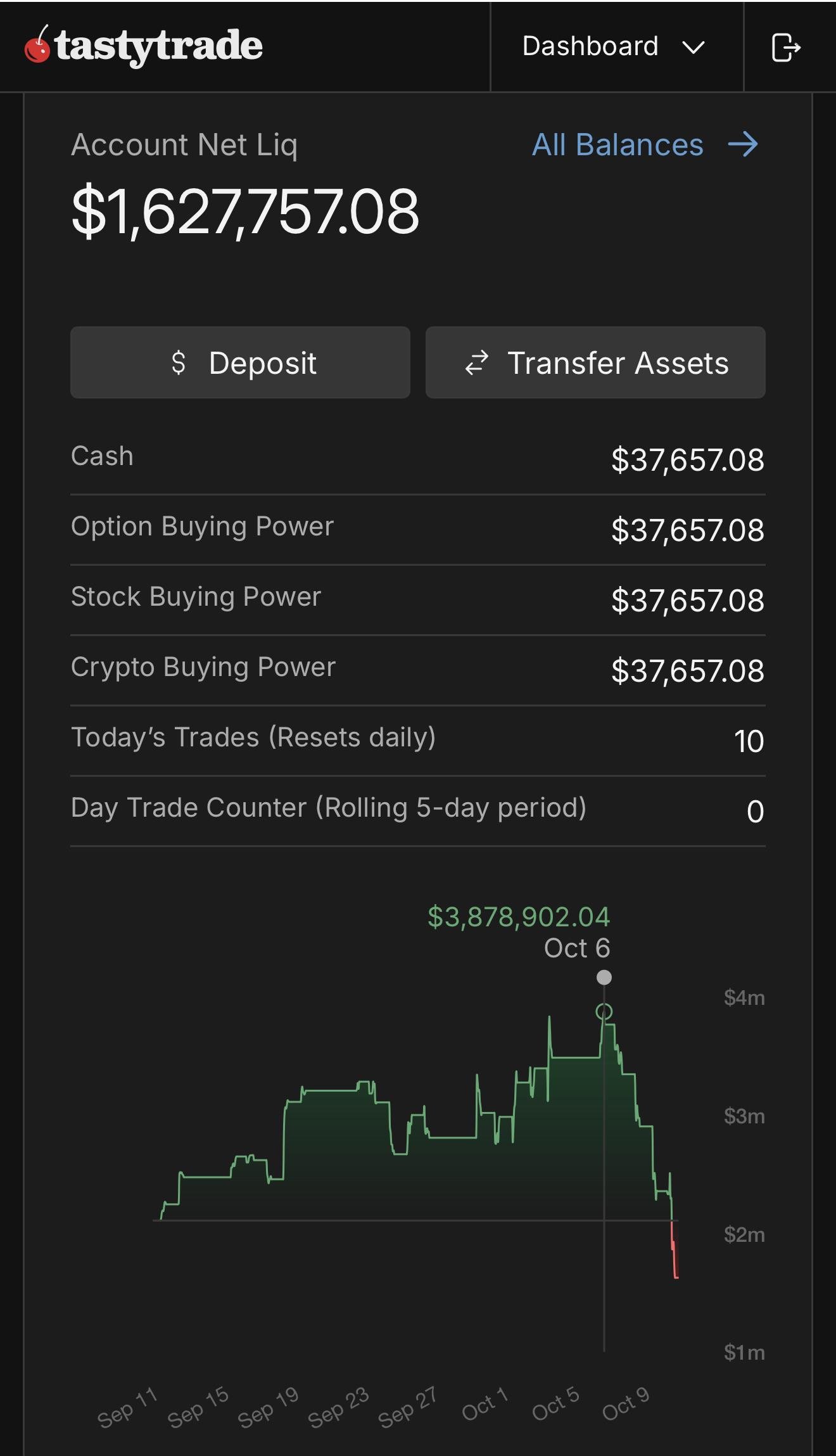
Scroll through r/WallStreetBets on any given day, and you will witness two parallel realities. The first is a blaze of neon-green gain porn: screenshots of six-figure returns from a single, well-timed call option. The captions are jubilant: “TO THE MOON!” and “JUST YOLO’D MY STUDENT LOANS!” This is the domain of the Degenerate, the modern-day market Viking, for whom trading is a bloodsport and risk is a sacrament.
But look closer. In the comments, a different sentiment often emerges. “Enjoy the IV crush,” writes one user. “Thanks for the premium, regard,” quips another. These are the voices of Thetagang, the quiet strategists who view the Degenerates not as comrades, but as their source of income. They are the house in the casino, calmly collecting chips while the players chase the jackpot.
This divide represents the central tension in modern retail trading: the battle between the dream of instantaneous wealth and the reality of probabilistic, incremental gains. Understanding this civil war is key to understanding the soul of WallStreetBets and, more importantly, to defining your own identity as a trader.
Part 1: The Army of Hope – Anatomy of the WSB Degenerate
The Degenerate is the heart, soul, and id of WallStreetBets. Their strategy is simple in theory but devastatingly difficult to execute consistently.
1.1 The Core Strategy: Buying Optionality
The Degenerate’s playbook is centered on being a net buyer of options, primarily long-dated or weekly out-of-the-money (OTM) call options.
- The Goal: Asymmetric, explosive returns. A Degenerate isn’t looking for a 10% gain. They are looking for a 1,000% gain—a “10-bagger” or more.
- The Mechanism: They pay a premium to acquire the right, but not the obligation, to buy a stock at a specific price (the strike price) before a certain date (expiration). Their bet is that the stock will not only move in their direction but that it will do so with enough force and speed to overcome the built-in costs of the option itself.
1.2 The Degenerate’s Fuel: The “Greeks” as Enemies
To understand the Degenerate’s struggle, one must understand the forces working against them:
- Theta (Time Decay): Theta is the rate at which an option’s value erodes as time passes. For a Degenerate, Theta is a vampire, silently sucking the value from their position every single day, weekend, and holiday. A long option is a wasting asset.
- Implied Volatility (IV): Degenerates are often forced to buy options when excitement is high and IV is elevated. This means they are paying a higher premium. If the expected explosive move doesn’t happen, IV Crush can eviscerate their position, even if the stock moves in the right direction.
- Delta (Directional Sensitivity): An OTM call has a low delta, meaning it doesn’t move much with a small uptick in the stock. The stock doesn’t just need to go up; it needs to sprint towards and past their strike price to see significant profits.
1.3 The Psychological Profile: The Thrill of the Hunt
The Degenerate is driven by powerful psychological forces:
- FOMO (Fear Of Missing Out): The paralyzing anxiety of watching a stock like GME or TSLA rocket upward without them on board.
- Hope and Lottery Mentality: The belief that the next trade will be the one that changes everything. It’s a form of financial escapism.
- Tribal Identity: The camaraderie of the “ape” mentality. “Diamond hands” is not just a strategy; it’s a badge of honor, a vow to hold through volatility with their digital brethren.
- Cognitive Biases: They are highly susceptible to confirmation bias (seeking out only bullish posts) and the sunk cost fallacy (holding losing positions because they’ve “already invested so much”).
The Outcome Spectrum:
- Success (The 1%): A perfectly timed trade on a meme stock during a gamma squeeze. Result: life-changing gain porn.
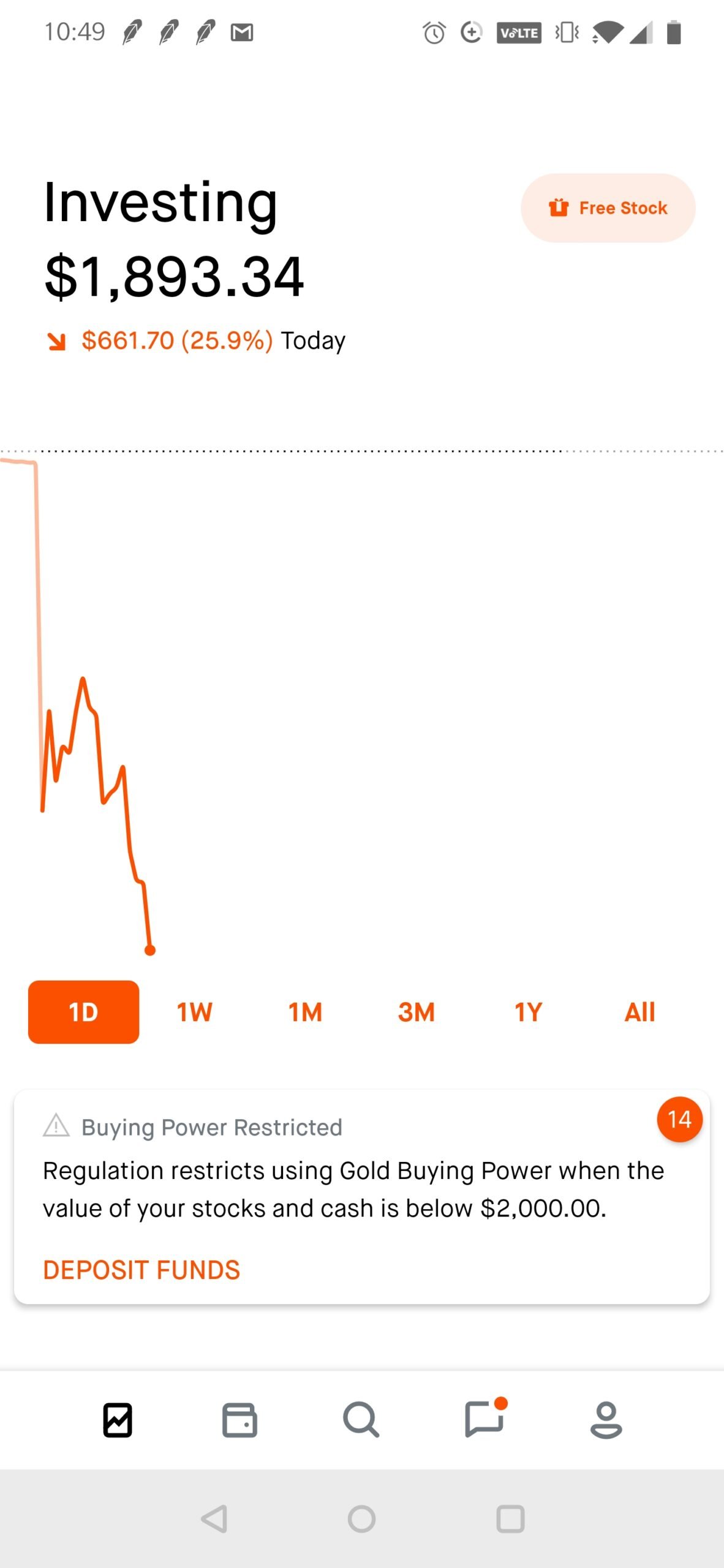
- Failure (The 99%): A slow grind to $0.00 as theta and IV crush decimate the position, or a swift 100% loss at expiration. Result: a silent loss or a self-deprecating loss porn post for clout.
Part 2: The Lords of Time – Unveiling Thetagang
If the Degenerates are the players, Thetagang are the card dealers and casino owners. Their entire philosophy is the inverse of the WSB mainstream.
2.1 The Core Strategy: Selling Optionality
Thetagang’s entire existence is based on being a net seller of options. They are the ones collecting the premium that the Degenerates are so eager to pay.
- The Goal: Consistent, incremental income. They aim to pocket the premium as the option they sold loses value over time. Their motto is: “A small, steady stream will carve a canyon.”
- The Mechanism: They sell options (most commonly Cash-Secured Puts and Covered Calls) and immediately collect the premium. Their bet is that the stock will not move dramatically enough to breach their strike price by expiration. Their primary ally is Time.
2.2 Thetagang’s Ally: Harnessing the “Greeks”
Thetagang turns the Degenerate’s enemies into their most powerful weapons:
- Theta (Time Decay): For Thetagang, Theta is a loyal friend. Every passing minute increases the value of their position. They are literally selling time to the Degenerates. Thetagang wants nothing more than for the stock to sit perfectly still, allowing theta to slowly evaporate the option’s value to $0.00 at expiration.
- Implied Volatility (IV): Thetagang loves high IV. It means they can sell options for inflated, juicy premiums. They make the most money when fear and greed are running high—precisely when Degenerates are most active.
- Delta: They sell high-delta options to collect more premium or low-delta options for a higher probability of profit. Their strategies are designed to be delta-neutral, meaning they are less concerned with the stock’s direction and more concerned with its lack of movement.
2.3 The Psychological Profile: The Patience of a Hunter
The Thetagang mindset is one of discipline and emotional control:
- Process Over Outcome: They focus on executing their strategy correctly, not on the outcome of a single trade. A successful trade is one that follows their rules, even if it loses money.
- Embracing “Boring”: They find satisfaction in the slow, predictable accumulation of premium. A week where their stocks do nothing is a perfect week.
- Risk Management as Religion: Their entire strategy is a form of risk management. Selling cash-secured puts, for instance, is a defined-risk strategy where they are always prepared to own the stock at their chosen price.
- Contrarian Instincts: They are often sellers into hype and buyers into fear, taking the other side of the Degenerate’s emotional trades.
The Outcome Spectrum:
- Success (The 90%): The option expires worthless, and they keep 100% of the premium. They then sell another one. This is their “win.”
- “Failure” (The 10%): The stock moves against their short option. For a put seller, this means they are assigned and must buy 100 shares per contract at the strike price. However, this is often a calculated part of a larger strategy like The Wheel, where they then turn around and sell covered calls against their new shares.
Part 3: The Battlefield – A Side-by-Side Comparison
Let’s illustrate this war with a concrete example. Imagine stock $XYZ is trading at $100. A massive earnings report is due in one week.
The Degenerate’s Play:
- Action: Buys 1 $110 Weekly Call Option for a premium of $3.00 ($300 total cost).
- The Bet: $XYZ will rip to $120+ after earnings. They need a big move, fast.
- Best Case: $XYZ goes to $120. The call is now worth at least $10.00 ($1,000). A 233% return.
- Worst Case: $XYZ stays flat or drops. Theta and/or IV crush decimates the option. It expires worthless. A 100% loss of the $300.
- Break-Even: $XYZ at $113 on expiration ($110 strike + $3 premium).
Thetagang’s Play:
- Action: Sells 1 $90 Weekly Cash-Secured Put for a premium of $2.50 ($250 total credit).
- The Bet: $XYZ will not crash below $90 after earnings. They want stability or a gentle rise.
- Best Case: $XYZ stays above $90. The put expires worthless. They keep the entire $250 premium. A 2.8% return on the $9,000 of secured cash in one week.
- Worst Case: $XYZ crashes to $80. They are forced to buy 100 shares at $90 ($9,000 cost). Their effective cost basis is $87.50 ($90 strike – $2.50 premium). They now own a stock that is down significantly, but they begin selling covered calls to generate income and lower their basis further.
- Break-Even: $XYZ at $87.50 on expiration ($90 strike – $2.50 premium).
This comparison highlights the core conflict: the Degenerate seeks a low-probability, high-payoff event, while Thetagang seeks a high-probability, low-payoff event.
Part 4: The Cultural and Rhetorical War
The conflict isn’t just about money; it’s fought with memes, jargon, and deeply held beliefs.
The Degenerate’s View of Thetagang:
- “Boomers”: They see Thetagang as boring, unambitious traders who are content with “peanut” returns.
- “Picking Up Pennies in Front of a Steamroller”: This is the classic critique—that Thetagang’s strategies work until they don’t, and then they face a catastrophic, assignment-driven loss that wipes out months of gains.
- Lack of Vision: They believe Thetagang lacks the courage and vision to make truly life-altering bets.
Thetagang’s View of the Degenerates:
- “Donors”: They view Degenerates as their source of income, the “dumb money” that willingly pays them premium.
- “Gamblers”: They see the YOLO culture as financially illiterate and statistically doomed to fail over the long run.
- Lack of Discipline: They believe Degenerates are slaves to their emotions, lacking the discipline required for sustainable wealth building.
The comment sections on WSB are a constant theater for this debate. A Degenerate’s gain post will be met with a mix of “congrats regard” and “see you next week when theta collects.” A Thetagang post about a successful premium collection will be met with “ok boomer” and “have fun with your 2% return.”
Read more: From Memes to Millions: The Unlikely Companies WSB Is Sending to the Moon
Part 5: The Synthesis – Is There a Middle Path?
The rigid dichotomy between Thetagang and Degenerates is not always so clear-cut. Many sophisticated traders operate in the grey area, using principles from both camps.
5.1 Thetagang with a Degenerate Twist
- Selling Premium on Meme Stocks: Some Thetagang members will specifically sell puts on high-IV WSB favorites. The premium is enormous, but the risk of assignment into a falling knife is high. This requires extreme risk management and a willingness to potentially own a volatile asset.
- The Wheel Strategy on Volatile Stocks: This is the ultimate fusion strategy. You start by selling a cash-secured put on a stock you wouldn’t mind owning. If assigned, you now own the shares and begin selling covered calls. If the stock takes off and your shares are “called away,” you keep the premium and the capital gain, and you start over by selling another put. This strategy systematically harvests premium from both sides of the market.
5.2 The Disciplined Degenerate
- Using Theta to Inform Entries: A smart options buyer will be aware of theta and IV. They might avoid buying weekly options with 0 days to expiration (0DTE) and instead look for longer-dated options or buy during periods of lower IV.
- Defined-Risk Spreads: Instead of naked long calls, a trader might use a debit spread (e.g., buying a $100 call and selling a $105 call). This defined-risk approach lowers the capital outlay and the impact of theta, though it also caps the upside.
5.3 The Verdict: Who Has the Edge?
From a purely statistical, long-term perspective, the mathematical advantage lies with Thetagang. Selling time and volatility is a positive-expectancy strategy over a large number of trades, much like the house edge in casino games. The vast majority of options expire worthless, which means the net sellers of options are the net winners in the aggregate.
However, this does not mean being a Degenerate is “wrong.” It means the Degenerate’s path is exponentially more difficult. It requires being right about three things simultaneously: direction, magnitude, and timing. It is a game of outliers. For every one Degenerate who scores a 1,000% return, there are hundreds who slowly bleed out their accounts to theta.
Conclusion: Choosing Your Side in the Endless War
The civil war inside WallStreetBets is a microcosm of a timeless financial conflict: the battle between patience and impulse, between probability and possibility, between the tortoise and the hare.
- Choose the Path of the Degenerate if: You have a high risk tolerance, view trading as a form of entertainment, have capital you are fully prepared to lose, and are chasing the dream of a single, life-altering win. Understand that you are the player at the table, and the odds are stacked against you.
- Choose the Path of Thetagang if: You are patient, disciplined, and prioritize consistent, sustainable returns over lottery tickets. You are comfortable with “boring” strategies, have a larger capital base to secure your positions, and are content with being the house, steadily building wealth over time.
The most successful traders understand both philosophies. They respect the power of theta and use it to their advantage, whether they are selling premium or making strategic, calculated directional bets. They know that in the endless war between time and hope, time is the one undefeated champion. The true victory is not in picking a side, but in understanding the battlefield so well that you can navigate it on your own terms.
Read more: Fed Pivot or Market Meltdown? What WSB Apes Are Betting On This Quarter
Frequently Asked Questions (FAQ)
Q1: Is Thetagang really “risk-free” money?
- A: Absolutely not. It is often mistakenly called “free money,” but it carries significant risks. The primary risk for a put seller is the stock crashing far below your strike price, leading to substantial unrealized losses. The risk for a call seller is the stock shooting past your strike, capping your upside and resulting in your shares being called away. Thetagang manages risk, but it does not eliminate it.
Q2: Can you start Thetagang with a small account?
- A: It’s challenging but possible. Selling cash-secured puts requires having enough cash to buy 100 shares of the underlying stock. For expensive stocks like Amazon, this is prohibitive for a small account. The path is to focus on lower-priced stocks (e.g., under $50) or to use defined-risk credit spreads, which require less capital.
Q3: What’s the difference between Thetagang and just selling covered calls?
- A: Thetagang is a broader philosophy, and selling covered calls is one of its primary strategies. Thetagang also includes selling cash-secured puts, credit spreads, iron condors, and other strategies where the main profit driver is theta decay. Selling covered calls is a subset of the Thetagang universe.
Q4: As a Degenerate, how can I reduce the effect of Theta decay?
- A: You can’t eliminate it, but you can mitigate it. Buy options with more time until expiration (e.g., 60-90 days out, known as “LEAPS”). These have lower theta decay in percentage terms. Also, try to buy options when Implied Volatility is relatively low, so you’re not overpaying.
Q5: What is “The Wheel” strategy?
- A: The Wheel is a popular Thetagang strategy that involves two cycles:
- Cycle 1: Sell Cash-Secured Puts on a stock you want to own until you get assigned and buy the shares.
- Cycle 2: Sell Covered Calls on the shares you now own. If the stock rises and your shares get called away, you keep the premium and the capital gain. You then return to Cycle 1.
It’s a systematic way to generate income from a stock whether it’s going up, down, or sideways.
Q6: Where can I learn more about Thetagang strategies?
- A: Start with the r/thetagang subreddit, which is dedicated to this philosophy. From there, explore educational resources from reputable options exchanges like the CBOE and OIC. Books like “The Options Playbook” and “Trading Options Greeks” are excellent for deepening your understanding of the mechanics.
Author Bio & Disclaimer: This article was written by a team with expertise in derivatives trading, market microstructure, and behavioral finance. It is intended for educational purposes only and does not constitute financial advice, nor a recommendation to buy or sell any security or employ any specific strategy. All trading and investment activities involve substantial risk, including the possible loss of the entire principal amount invested. Options trading is particularly complex and carries additional risks that make it unsuitable for many investors. You are solely responsible for your own investment decisions and should consult with a qualified financial advisor and tax professional before acting on any information contained herein. Past performance is not indicative of future results.
Read more: YOLO or FADE: A Deep Dive Into The Most Controversial Stock on WallStreetBets