
Imagine this: you get a direct message on social media, an email, or see a flashy online ad. It promises a little-known company, a “hidden gem” trading for just pennies a share, poised to explode because of a groundbreaking new technology, a major contract, or a revolutionary discovery. The message is urgent: “Get in now before the crowd finds out and it rockets to $10!” The potential return is thousands of percent. It’s a tantalizing fantasy of turning a small stake into life-changing wealth.
This is the siren song of the penny stock scam, and it has lured countless investors onto the rocky shores of devastating financial loss. While not all low-priced stocks are fraudulent, the penny stock market is the primary hunting ground for fraudsters employing a classic scheme known as the “pump-and-dump.”
The U.S. Securities and Exchange Commission (SEC), the federal agency responsible for protecting investors, has been fighting this battle for decades. They have identified a clear set of red flags—warning signs that can help you distinguish a legitimate, albeit speculative, opportunity from a carefully orchestrated theft.
This article will serve as your comprehensive guide. We will demystify penny stocks, deconstruct the mechanics of the pump-and-dump, and, most importantly, equip you with the SEC’s own red flags to protect your hard-earned money. Our goal is not to eliminate speculative investing but to arm you with the knowledge to do so with your eyes wide open, understanding the risks and recognizing the hallmarks of fraud.
Part 1: Understanding the Battlefield – What Are Penny Stocks?
Before we can spot the scams, we must understand the environment in which they thrive.
The Official Definition
The SEC generally defines a penny stock as an equity security issued by a very small company that trades at a low price, typically below $5 per share. Many trade for mere pennies, hence the name. They are often, but not always, traded outside the major national securities exchanges like the New York Stock Exchange (NYSE) or NASDAQ. Instead, they are found on the Over-the-Counter (OTC) markets, such as the OTCQX, OTCQB, and the OTC Pink Open Market (formerly known as the Pink Sheets).
Key Characteristics of the Penny Stock Market
- Low Liquidity: There are often few buyers and sellers for a given penny stock. This means you might not be able to sell your shares when you want to, and even a small trade can significantly impact the stock’s price.
- Limited Public Information: Companies listed on major exchanges must meet strict financial and reporting standards. Many OTC-traded penny stock issuers are not required to file regular, detailed reports with the SEC. This lack of transparency is a breeding ground for misinformation.
- High Volatility: The combination of low liquidity and low share price makes these stocks extremely volatile. Their prices can swing wildly based on little more than rumor and hype.
- Minimal History: Many penny stock companies are start-ups or development-stage companies with no revenue, no proven business model, and a short or non-existent operating history. They are inherently risky, even when they are legitimate.
It is this perfect storm of low transparency, high volatility, and immense potential reward that scammers exploit so effectively.
Part 2: The Anatomy of a Con – Deconstructing the Pump-and-Dump Scheme
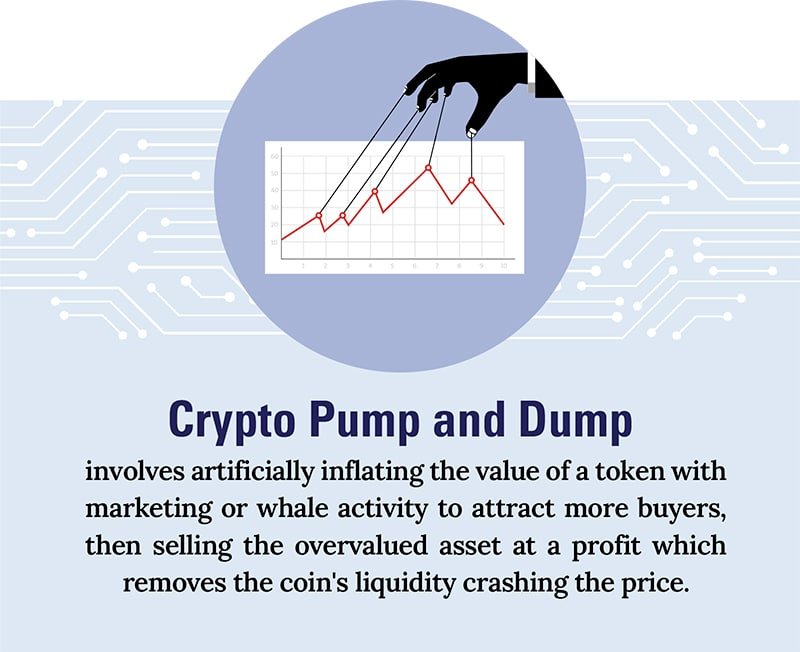
The pump-and-dump is the most common and pernicious type of penny stock fraud. It’s a simple, three-act play designed to separate investors from their money.
Act 1: The Accumulation Phase
The fraudsters, who are often the promoters themselves or working in concert with the company’s insiders, quietly accumulate a massive position in a super-cheap stock. They might gain control of millions of shares for a fraction of a penny per share. The company is typically a “shell”—a corporate entity with no real business operations—or a failing company with a ticker symbol that already exists.
Act 2: The Pump Phase
This is where the hype machine kicks into overdrive. The goal is to create a tidal wave of artificial demand. Using a variety of channels, the promoters blast out false, exaggerated, or wildly misleading information:
- Boiler Rooms: High-pressure cold-calling operations where telemarketers use aggressive, scripted pitches.
- Spam Email and Social Media: Blasts of emails, tweets, and posts on platforms like Reddit, Telegram, and Facebook, often using fake profiles and bots to create an illusion of widespread interest.
- Stock Newsletters & Websites: Fake “research” reports from seemingly legitimate but entirely compromised financial newsletters and websites.
- Message Boards: Coordinated posting on forums like StockTwits and InvestorHub, with promoters posing as independent, excited investors who “just discovered this goldmine.”
The themes are always the same: “imminent breakthrough,” “game-changing contract,” “the next Apple/Amazon/Tesla.” They create a sense of urgency and greed, encouraging you to “BUY NOW BEFORE IT’S TOO LATE!”
As unsuspecting investors pile in based on this fabricated hype, the buying pressure drives the stock price up, just as the schemers planned.
Act 3: The Dump Phase
Once the price has been inflated to a peak—often after a frenzy of retail buying—the fraudsters execute their exit strategy. They sell all of their cheaply acquired shares into the inflated market, reaping massive, risk-free profits.
This massive, coordinated selling causes the stock price to collapse. The hype vanishes, the promoters go silent, and the investors who bought during the pump are left holding worthless shares. The chart of a classic pump-and-dump looks like a steep, sudden mountain peak, followed by a sheer cliff.
A Real-World Example: In one notorious case, a promoter named Jonathan Lebed, then a teenager, was sanctioned by the SEC for manipulating stocks. He would buy a penny stock, then post hundreds of messages on Yahoo Finance boards under aliases, touting the stock as being “ready to explode.” Once the price rose, he would sell his entire position for a profit. He mastered the digital-age pump-and-dump.
Part 3: The SEC’s Red Flags – Your Shield Against Fraud
The SEC has published extensive guidance for investors, highlighting specific red flags of penny stock fraud. Memorize this list. It is your most powerful defensive tool.
Red Flag #1: Unsolicited Hype and High-Pressure Sales Tactics
What it looks like: You receive a cold call, email, or direct message out of the blue. The promoter is overly enthusiastic, aggressive, and creates a false sense of urgency. They use phrases like “once-in-a-lifetime opportunity,” “act now or regret forever,” and “the stock is about to take off.” They may claim to have “inside information” that must be acted upon immediately.
Why it’s a red flag: Legitimate financial advisors and brokers do not use high-pressure tactics. Urgency is a tool to short-circuit your critical thinking and prevent you from doing your own research. If you feel rushed, it’s almost certainly a scam.
Red Flag #2: “Too Good to Be True” Claims and Guarantees
What it looks like: Promises of “triple-digit returns,” “can’t-miss investment,” or “zero risk.” The promoter might guarantee that you will not lose money.
Why it’s a red flag: All investments carry risk, and penny stocks are at the highest end of the risk spectrum. There is no such thing as a guaranteed, massive-return investment. If it sounds too good to be true, it absolutely is. This is the oldest rule in finance for a reason.
Red Flag #3: Inaccurate or Sparse Public Information
What it looks like: You try to research the company and find very little. The company’s financial statements are not available on the SEC’s EDGAR database. The company’s website is vague, filled with stock photos and grandiose language about “maximizing shareholder value” but with no concrete details about its products, clients, or management team.
Why it’s a red flag: Transparency is the cornerstone of legitimate public markets. A company that does not provide clear, verifiable information about its operations, finances, and leadership is a major warning sign. Always check EDGAR (sec.gov/edgar) to see if the company is a current SEC filer.
Red Flag #4: Problems with the Company’s Financial Statements
What it looks like: If you can find financial statements, look for:
- Auditor Issues: The auditor’s report is qualified, or the company has changed auditors frequently.
- Unusual Transactions: Unexplained related-party transactions, where the company does business with other entities owned by its executives.
- Serial Restructurings: Repeatedly changing their business model or name (a “name-and-claim” strategy).
- Consistently Negative Cash Flow: The company is always burning cash with no clear path to profitability.
Why it’s a red flag: These are classic signs of poor financial health or potential accounting manipulation. A legitimate auditor will not sign off on questionable financials, and constant restructuring suggests a company that is lost and not executing a viable plan.
Red Flag #5: Incredible Assets and Unverifiable Business Ventures
What it looks like: The company claims to own revolutionary patents, massive mineral reserves, or proprietary technology that will disrupt a billion-dollar industry. However, these assets are impossible for the average investor to verify. They may be in the business of something complex and obscure, like rare earth minerals, cryptocurrency mining, or miracle medical cures.
Why it’s a red flag: Fraudsters rely on your inability to check their claims. It’s easy to say you have a gold mine in a remote country; it’s hard and expensive for you to verify it. They use complexity to obscure the fact that there is no real business.
Red Flag #6: Insiders Own a Significant Percentage of the Stock
What it looks like: While some insider ownership is good, excessive concentration (e.g., 80-90% of the shares held by a few insiders) is dangerous in the penny stock world.
Why it’s a red flag: This creates the perfect conditions for a pump-and-dump. The insiders have absolute control over the float (the shares available for public trading). They can easily manipulate the price and have a massive number of shares to dump when the time is right.
Red Flag #7: Frequent Changes to Company Name or Ticker Symbol
What it looks like: A company that seems to constantly reinvent itself, changing its name and stock ticker every few years.
Why it’s a red flag: This is often a tactic to shed a negative history. A company that has been the subject of past SEC actions or has a reputation as a failed scam can “reinvent” itself as a new, exciting entity, making it harder for new investors to uncover its checkered past. This is known as the “name-and-claim” or “shell game.”
Red Flag #8: Trading Suspensions by the SEC
What it looks like: The SEC has the authority to temporarily suspend trading in any stock for up to ten days. They do this when they have concerns about the adequacy of public information, the accuracy of statements made to investors, or suspected market manipulation.
Why it’s a red flag: A trading suspension is one of the clearest and most serious warnings the SEC can issue. If a stock you own or are considering has been subject to a trading suspension, you should consider it toxic. The SEC only takes this drastic step when it has significant concerns.
Part 4: A Practical Due Diligence Checklist for the Cautious Investor
Knowing the red flags is theory. Putting them into practice is power. Before you even consider investing a single dollar in a micro-cap or penny stock, you must complete this checklist.
- Verify the Ticker Symbol: Use FINRA’s website (finra.org) to confirm the official company name and ticker symbol. Scammers sometimes use fake tickers or impersonate real companies.
- Check the SEC’s EDGAR Database: Go to sec.gov/edgar and search for the company. Are they a current filer? Read their annual (10-K) and quarterly (10-Q) reports. If they don’t file with the SEC, this is your first and biggest stop sign.
- Read the Financials (If Available): Don’t be intimidated. Look for the basics in the 10-K:
- Does the company have any revenue?
- Is it consistently profitable?
- Is it burning through cash?
- Does it have more debt than assets?
- Research the Executives: Google the CEO and other named executives. Do they have a credible history in the industry? Or are they associated with other failed or questionable companies?
- Understand the Business Model: In one simple sentence, can you explain what the company actually does to make money? If you can’t, and the company’s own materials are vague, walk away.
- Be Skeptical of Hype: Cross-reference any exciting news you see in a newsletter or on a message board with official company press releases or SEC filings. Is the “major contract” actually mentioned in an 8-K filing? If not, it’s likely fake.
- Check for Regulatory Actions: Use the SEC’s Action Lookup and the BrokerCheck tool on FINRA’s website to see if the company, its executives, or the brokers promoting it have been disciplined by regulators.
If you hit a dead end or a red flag at any point in this checklist, the safest course of action is to simply walk away. There are thousands of other investment opportunities; you do not need to gamble on one that fails basic due diligence.
Read more: Penny Stocks vs. Blue Chips: Understanding Risk and Reward for American Investors
Part 5: What to Do If You’ve Been Scammed
Despite your best efforts, if you believe you have fallen victim to a pump-and-dump scheme, it’s crucial to act:
- Report It Immediately:
- SEC: File a complaint at sec.gov/tcr.
- FINRA: Report fraud at finra.org/investors/highlights/submit-tip-or-complaint.
- Your State Securities Regulator: You can find them via the North American Securities Administrators Association (NASAA) website.
- Contact Your Brokerage Firm: Inform them of the situation. They may be able to provide information about the transaction.
- Be Realistic About Recovery: Recovering lost funds from a penny stock scam is extremely difficult. The perpetrators often operate offshore, hide behind shell companies, and dissipate the money quickly. The primary goal of reporting is to help regulators track, stop, and prosecute the fraudsters to protect other investors.
Conclusion: Empowerment Through Education
The world of penny stocks is a high-risk, high-reward environment where the line between a speculative gamble and outright fraud is often deliberately blurred. The scammers are sophisticated, leveraging digital tools to spread hype faster and wider than ever before.
However, you are not powerless. By understanding the mechanics of the pump-and-dump and, most importantly, by internalizing the SEC’s red flags, you can build a powerful defense. The key is a healthy and unwavering dose of skepticism. Reject urgency, demand verification, and always, always conduct thorough due diligence.
The dream of finding the “next big thing” is powerful, but protecting your capital is paramount. Let caution, not greed, be your guide. In the volatile arena of penny stocks, the best investment you can make is first in your own financial education.
Read more: 3 High-Growth Penny Stocks in the U.S. Clean Energy Sector
Frequently Asked Questions (FAQ)
Q1: Aren’t all penny stocks scams?
A: No, not all penny stocks are fraudulent. There are legitimate, small companies trading at low prices. However, the market is characterized by high risk, low transparency, and is disproportionately targeted by fraudsters. The key is that while not all are scams, the environment is so risky that you must treat every opportunity with extreme caution and assume the burden of proof is on the company to demonstrate its legitimacy.
Q2: What’s the difference between the OTC Markets and major exchanges like NASDAQ?
A: The primary differences are in listing standards and regulatory oversight. To list on NASDAQ or the NYSE, a company must meet strict requirements for minimum stock price, number of shareholders, market capitalization, and financial performance. They are also required to file regular, detailed reports with the SEC. The OTC markets have much lower, or in some tiers (like the Pink Sheets), no specific listing standards. This makes them a home for riskier, early-stage, or troubled companies.
Q3: I saw a promo from a seemingly legitimate newsletter. Is that a safe bet?
A: Not necessarily. Be very careful with investment newsletters, especially those that focus on micro-cap stocks. Many are paid by the companies they promote—a fact that may be buried in fine print. This is a major conflict of interest. Always verify their claims with independent, official sources like SEC filings.
Q4: Can I make money trading penny stocks if I’m just really quick?
A: This is a dangerous strategy known as “trying to time the dump.” While a tiny number of day traders might profit from short-term volatility, the vast majority of retail investors lose money. The promoters and insiders have already accumulated their shares at a far lower price and have coordinated their selling. You are essentially competing against people who have rigged the game. For every person who gets out in time, many more are left holding the bag.
Q5: A promoter sent me their “audited financials.” Isn’t that proof it’s legitimate?
A: Not always. You must check the credibility of the auditor. Some auditing firms have a reputation for working with questionable micro-cap companies. You can look up the auditor on the PCAOB (Public Company Accounting Oversight Board) website to see if they are registered and if they have a history of disciplinary actions. A audit from an obscure or disreputable firm is a major red flag.
Q6: What is a “shell company,” and why is it dangerous?
A: A shell company is one that has no significant assets or operations. While shells can be used for legitimate purposes (like a vehicle for a future merger), they are the preferred vehicle for pump-and-dumps. Fraudsters can take control of a public shell, reverse-merge their “business” into it, and begin a promotional campaign with a ready-made public ticker symbol, avoiding the scrutiny of an initial public offering (IPO).
Q7: Where can I go for unbiased investor education?
A: Start with the official sources. The SEC’s Office of Investor Education and Advocacy (sec.gov/investor) and FINRA (finra.org/investors) are treasure troves of free, unbiased educational materials, tools, and alerts designed specifically to protect investors.