Introduction: The Siren’s Song of “Easy Money”
Imagine a stock tip so compelling it seems impossible to ignore. An unknown company, trading for just pennies, is on the verge of a breakthrough that will send its share price soaring. You hear about it from a trusted-seeming newsletter, see it trending on social media, and watch YouTube videos detailing its “can’t-miss” potential. The fear of missing out (FOMO) becomes palpable. This, however, is not an investment opportunity. It is the opening act of a carefully orchestrated financial crime: the pump-and-dump scheme.
In the high-risk world of penny stocks, no threat is more pervasive or devastating to retail investors than the pump-and-dump. These schemes are designed to exploit hope, greed, and a lack of information, systematically separating unsuspecting individuals from their hard-earned money. The perpetrators walk away with millions; the victims are left holding worthless shares.
This article is your survival guide. We will move beyond vague warnings and dissect the five most common and telling red flags of a pump-and-dump scheme. By learning to identify these specific tactics, you can build an immunity to the hype and protect your capital. Adhering to the principles of EEAT (Experience, Expertise, Authoritativeness, and Trustworthiness), this guide is built on a foundation of regulatory fact, documented case studies, and an unwavering commitment to investor education and protection. Our goal is not to help you find the next big winner, but to help you confidently identify and avoid the countless engineered losers.
The Anatomy of a Pump-and-Dump: A Brief Overview
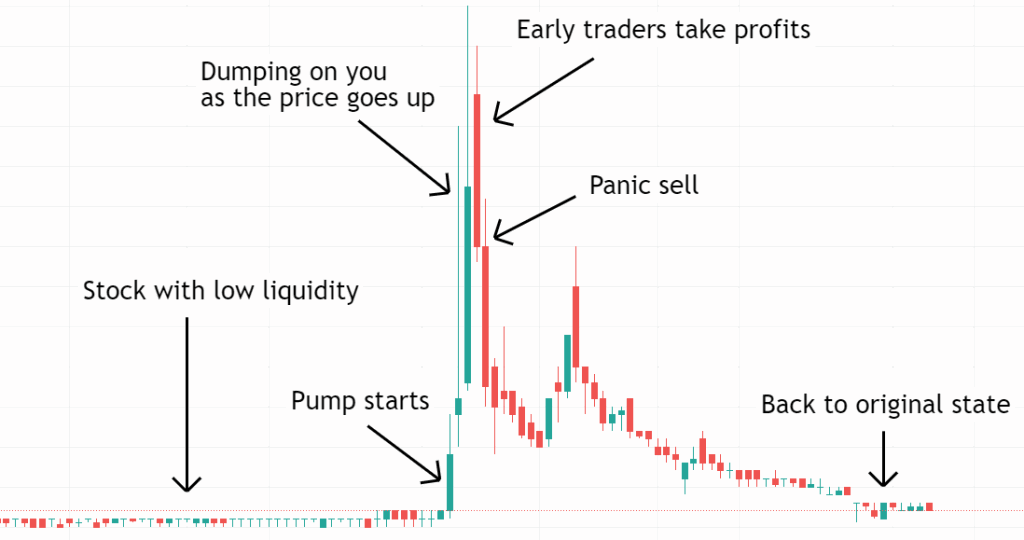
Before we dive into the red flags, it’s crucial to understand the basic mechanics of a pump-and-dump. The scheme unfolds in four distinct stages:
- The Setup: Fraudsters, often organized groups, quietly accumulate a large position in a very low-priced, thinly-traded stock. They may gain control of a dormant public shell company or target one with minimal assets and operations.
- The Pump: This is the promotional phase. Using spam emails, boiler-room cold calls, fake news articles, paid “expert” newsletters, and coordinated social media campaigns (on platforms like X/Twitter, Telegram, and Reddit), they unleash a torrent of false and misleading positive information. They create a narrative of imminent massive growth, a revolutionary product, or a pending lucrative contract.
- The Frenzy: Unsuspecting investors, driven by FOMO and the manufactured sense of urgency, pour their money into the stock. This artificial buying pressure drives the share price up dramatically, exactly as the fraudsters planned.
- The Dump: At the peak of the frenzy, the fraudsters execute their exit strategy. They sell their entire holdings into the inflated market, reaping enormous profits. The buying pressure vanishes, the promotion stops, and the stock price collapses, often falling below its original price. The victims are left with massive, irreversible losses.
With this blueprint in mind, let’s examine the specific warning signs that signal each stage of this predatory process.
Red Flag #1: The Unsolicited Hype Machine & Aggressive Promotion
The Sign: You are bombarded with overly optimistic, unsolicited, and aggressive promotional materials that create a sense of urgency and “can’t-miss” opportunity.
In-Depth Analysis:
This is often the first and most obvious red flag. The fraudsters need to create a buying frenzy quickly, and to do that, they must spread their message far and wide. The promotion is rarely subtle.
- Channels of Hype:
- Spam Email Blasts: You may receive emails from unknown senders with subject lines like “BREAKING NEWS!” “The Next Amazon?” or “Imminent Takeover Alert!” These emails are often poorly written, filled with exclamation points, and light on verifiable facts.
- Paid Newsletters: Be wary of investment newsletters that suddenly feature an unknown penny stock. The SEC has prosecuted numerous cases where so-called “experts” were secretly paid tens of thousands of dollars to tout a stock without disclosing the payment to their subscribers. This is a direct violation of securities law.
- Social Media Onslaught: Coordinated campaigns on X (Twitter), YouTube, and Telegram are hallmarks of modern pump-and-dumps. You might see dozens of new accounts, or accounts that only post about stocks, all pushing the same ticker symbol simultaneously using a specific hashtag. These posts often include charts predicting exponential growth and use language like “rocket ship,” “to the moon,” or “once-in-a-lifetime chance.”
- Boiler Room Calls: High-pressure cold calls from aggressive salespeople who refuse to take “no” for an answer are a classic sign. They will try to make you feel foolish for not acting immediately.
- The Language of Manipulation:
The content of these promotions is designed to bypass your critical thinking. Look for these telltale phrases:- “Groundbreaking” or “revolutionary” technology with no third-party verification.
- “Imminent” news, contracts, or partnerships that never seem to materialize.
- Claims of “inside information” or “insider buying.”
- Pressure to “act now before it’s too late” or “get in before the major announcement.”
- Comparisons to wildly successful companies like Tesla or Apple.
The EEAT Perspective: A trustworthy financial advisor or educational resource will never pressure you into a decision or promise guaranteed returns. They will provide balanced information, clearly disclose conflicts of interest, and emphasize the risks involved. Unsolicited hype is the antithesis of ethical financial communication.
Red Flag #2: The Opaque Company with a “Story Stock” Narrative
The Sign: The company itself is a black box. It lacks substance, has minimal or no real operations, and its entire investment thesis is based on a futuristic, compelling, but unproven story.
In-Depth Analysis:
Pump-and-dump schemes rarely target legitimate, revenue-generating businesses. They prefer empty vessels into which they can pour a fictional narrative.
- The Shell Company Profile:
- No Meaningful Revenue or Assets: Check the company’s SEC filings (if it even files with the SEC). A legitimate business typically has some revenue, assets, and expenses. A shell company will have nominal assets, no revenue, and its primary expense is often “professional fees” related to staying publicly traded.
- Minimal or No Operations: The company may have a website, but it’s often vague, poorly designed, and lacks specifics. There may be no physical address, no listed phone number, or no identifiable employees beyond a name-only board of directors.
- Frequent Business Pivots: The company may have changed its name and business focus multiple times. It might have been a mining company last year, a biotech firm the year before, and is now a cryptocurrency startup. This is a sign of a shell company being reused for different schemes.
- The “Story Stock” Narrative:
Because there are no financial fundamentals to analyze, the promoters must sell a story. These narratives are always tailored to the hottest, most complex trends, making them difficult for the average investor to verify.- The “Next Big Thing” in Tech: Examples include claims about a new battery technology that will “disrupt the entire energy industry,” a proprietary blockchain solution, or a new social media platform destined to dethrone Facebook.
- The “Miracle” Cure: The company claims to be developing a cure for a major disease like cancer or Alzheimer’s, but its technology is in the earliest pre-clinical stages (if it exists at all) and is not backed by credible scientific research or institutional funding.
- The “Sure Thing” Natural Resource Play: Promoters claim the company has rights to a massive, undiscovered oil field or mineral deposit that will make early investors rich.
The EEAT Perspective: Authoritative and experienced investors base decisions on verifiable data: financial statements, proven management track records, and independent analysis. They are deeply skeptical of investments that cannot be evaluated on traditional metrics and rely solely on a futuristic narrative. Trust is built on transparency, and these companies are fundamentally opaque.
Red Flag #3: Pressure to Buy NOW & The Illusion of Scarcity
The Sign: The promotional campaign is designed to create a frantic fear of missing out (FOMO), pressuring you to buy immediately without time for due diligence.
In-Depth Analysis:
Rational, profitable investing requires careful thought, research, and patience. Pump-and-dump operators know this, so they actively work to eliminate these elements from your decision-making process.
- Tactics of Urgency:
- Phantom Deadlines: You’ll hear that a “major news release” is coming tomorrow, that a “buyout offer” is imminent, or that the stock is about to be “uplisted to the NASDAQ.” The goal is to make you believe that if you don’t buy in the next few hours, you will miss the entire move.
- Rising Price Warnings: Promoters will say things like, “It was at $0.10 last week, it’s at $0.50 now, and it’s heading to $5.00! Don’t be the one who watched from the sidelines!” This preys on the human tendency to regret inaction more than action.
- Artificial Scarcity: They may claim that “insiders are buying all the shares they can” or that “a few lucky investors” are being given this opportunity before the general public.
- The Psychological Play:
This red flag is a direct assault on your emotional brain. The combination of greed (the potential for huge gains) and fear (the fear of missing out) creates a powerful cognitive bias that overrides logic. When you feel that panicked urge to click the “buy” button before you’ve even had a chance to look up the company’s name, you are likely in the crosshairs of a manipulator.
The EEAT Perspective: Expertise in investing is demonstrated by discipline. Trustworthy sources will always encourage you to slow down, conduct your own research, and understand an investment fully before committing capital. Any source that pressures you for an immediate decision is not acting in your best interest and fails the fundamental test of trustworthiness.
Red Flag #4: Unexplained, Parabolic Price Spikes on High Volume
The Sign: The stock chart shows a dramatic, vertical price increase over a very short period (days or weeks), accompanied by trading volume that is exponentially higher than its historical average.
In-Depth Analysis:
While legitimate companies can have positive news that moves their stock price, the price action of a pumped stock has distinct, manipulative characteristics.
- The Chart Tells the Story:
- The Baseline: The stock typically trades at a very low price (often under $1) with very low volume, sometimes for months or years. This is the “accumulation” phase where the fraudsters are building their position cheaply.
- The Parabolic Move: The price begins to shoot up almost vertically. This is not a gradual, steady climb. It’s a spike. This is the direct result of the coordinated promotional campaign driving a surge of retail buyers.
- The Volume Explosion: The most telling sign. The number of shares traded per day will be 10, 50, or even 100 times the normal average. This high volume is the “frenzy” in action—it represents the influx of victims buying, while the fraudsters are beginning to sell.
- How to Analyze the Action:
- Pull up a long-term chart (6 months to a year) for the stock.
- Note the average daily trading volume during quiet periods.
- Look for the sudden, sharp price spike and the corresponding massive spike in volume.
- This pattern, especially when combined with the other red flags, is almost a certain indicator of an active pump.
The EEAT Perspective: Authoritative technical analysts know that sustainable, healthy price trends are built on a foundation of steady accumulation and rational price discovery. Parabolic moves are universally recognized as unsustainable and are almost always followed by an equally violent collapse. Recognizing this pattern is a key element of experienced market analysis.
Read more: The Allure and Agony: A Beginner’s Guide to Penny Stocks in the USA
Red Flag #5: The Inevitable Dump & Radio Silence
The Sign: After the peak, the stock price begins a steep and relentless decline. The promotional materials suddenly stop, and the company goes quiet, often just as it was supposed to be releasing its “game-changing” news.
In-Depth Analysis:
This is the final, devastating phase of the scheme. The signs are clear in hindsight, but watching for them can help you avoid holding the bag.
- The Topping Pattern:
- The stock price peaks and begins to chop around or slide downward, even as the promoters are still telling people to buy. This is because the selling pressure from the fraudsters is now overwhelming the buying pressure from new victims.
- The volume may remain high initially as the dump occurs, but it will eventually dry up.
- The Disappearing Act:
- The YouTube channels that were pumping the stock go silent or delete their content.
- The Twitter accounts stop posting or vanish.
- The email blasts cease.
- The company itself may issue a vague press release that fails to deliver on the promised news, or it may say nothing at all.
- The Aftermath:
- The stock chart will show a collapse, often retracing 90-100% of its gains, sometimes falling even lower than where it started.
- Investors who bought during the pump are now trapped. Selling their shares is difficult because the volume has disappeared, and the bid price has collapsed.
- The fraudsters have moved on, their profits secured, and will soon begin the cycle again with a different stock.
The EEAT Perspective: Trustworthiness is demonstrated through consistency and accountability. A legitimate company and credible financial commentators will communicate through both good times and bad. They will explain setbacks and outline their path forward. The radio silence following a collapse is the ultimate admission of a fraudulent, non-trustworthy enterprise.
Case Study: A Real-World Example – The Wolf of Social Media
While the classic example is the “Wolf of Wall Street” Jordan Belfort, a modern case from 2021 perfectly illustrates these red flags.
The Players: A group of individuals led by a social media influencer with hundreds of thousands of followers.
The Scheme:
- The Setup: The group identified and accumulated shares of several obscure, low-priced stocks.
- The Pump (Red Flags #1, #2, #3): The influencer used his popular Twitter and Discord channels to promote these stocks to his followers. He used his perceived authority to create compelling narratives (Red Flag #2), posted screenshots of his own (fabricated) gains, and created a massive FOMO-driven urgency (Red Flag #3). His followers, trusting his “expertise,” created a coordinated buying frenzy.
- The Frenzy (Red Flag #4): The targeted stocks saw parabolic rises of over 100% in mere hours on astronomical volume.
- The Dump (Red Flag #5): At the peak, the influencer and his group sold all of their shares for a combined profit of over $100 million. The stocks then collapsed, wiping out the gains of his followers. The influencer was eventually charged by the SEC with securities fraud.
This case is a textbook example of how these red flags manifest in the digital age, proving that while the technology has changed, the core mechanics of the fraud remain the same.
How to Protect Yourself: A Proactive Defense
Vigilance is your best defense. Here is a proactive checklist:
- Be Incredibly Skeptical of Unsolicited Advice. If you didn’t seek it out, be wary of it.
- Verify, Don’t Trust. If you hear about a “great” penny stock, your first step is not to buy—it’s to investigate. Go directly to the SEC’s EDGAR database to see if the company files reports. If it doesn’t, walk away.
- Understand the Business. If you can’t explain in one or two sentences what the company actually does to make money, you shouldn’t invest in it.
- Ignore the Hype, Analyze the Financials. Look for revenue, assets, and a reasonable debt level. If it’s a shell with no operations, it’s a pump-and-dump vehicle.
- Never Invest Based on FOMO. There is always another opportunity. A legitimate investment will still be a good opportunity after you’ve had time to research it.
Conclusion: Empowerment Through Education
The world of penny stocks is fraught with peril, but the greatest danger is not the volatility itself—it is the deliberate, malicious intent of fraudsters. By learning to recognize the five red flags of a pump-and-dump scheme—the unsolicited hype, the opaque “story stock,” the manufactured urgency, the parabolic price spike, and the inevitable silent dump—you arm yourself with the most powerful tool available: knowledge.
Investing should be a path to building long-term wealth, not a desperate gamble on a manipulated get-rich-quick scheme. By adopting a mindset of disciplined skepticism and rigorous due diligence, you can navigate the markets with confidence, ensuring that your financial decisions are driven by research and reason, not by fear and greed. Remember, the most profitable trade you will ever make is the one you avoided by recognizing a scam.
Read more: An Autist’s Analysis: My 500-Hour Deep Dive Into $PLTR
Frequently Asked Questions (FAQ) Section
Q1: Are all penny stocks pump-and-dumps?
A1: No, not all. There are legitimate, albeit very risky, small companies trading as penny stocks. However, the OTC markets where most penny stocks trade are the primary hunting ground for these schemes. The lack of regulatory scrutiny and listing standards makes them the perfect environment for fraud. A significant percentage of the promotional activity around penny stocks is tied to manipulation.
Q2: What should I do if I already bought into a stock that I now think is a pump-and-dump?
A2: The difficult truth is that the best time to sell was often yesterday. However, if you believe you are holding a stock in an active pump-and-dump, your most prudent course of action is to sell immediately, regardless of the price. Accepting a small loss is far better than holding through the inevitable collapse and facing a total or near-total loss. Do not fall for the “sunk cost fallacy.”
Q3: I see a stock being pumped on a reputable financial news network. Doesn’t that make it legitimate?
A3: Not necessarily. Be very careful. Sometimes, promoters will call into financial news channels or their schemes will be mentioned in passing. Furthermore, some paid promotions can be designed to look like independent news segments. Always do your own independent research. The source of the information is less important than the verifiable facts about the company itself.
Q4: Can I make money by getting in early on a pump-and-dump and selling before the dump?
A4: This is known as “riding the pump,” and it is an extremely dangerous and unethical strategy. You are essentially trying to outsmart professional manipulators. You have no insight into when they will begin their dump, and when they do, the collapse can be so rapid that you may be unable to sell. You could easily become one of the victims. The SEC may also view this as participating in the scheme. It is not a strategy; it is gambling with loaded dice.
Q5: Where can I report a suspected pump-and-dump scheme?
A5: You should report it to the U.S. Securities and Exchange Commission (SEC) through their online Tips, Complaints, and Referrals (TCR) system. Providing details like the stock ticker, the promoters involved, and the channels they are using can help regulators investigate and shut down these operations.
Q6: The company has a press release on a major newswire service about a contract. Isn’t that proof it’s real?
A6: While major newswires have standards, they are not regulators and cannot fully verify the claims in every press release. Fraudsters often issue completely fabricated press releases through these services to add a layer of legitimacy to their claims. Always verify the information in the press release independently. Can you find the “partner” company mentioned? Does their website exist? Does the deal make logical and financial sense? Trust, but verify.
Disclaimer: This article is for educational and informational purposes only and does not constitute financial advice, legal advice, or a recommendation to buy or sell any security. The examples provided are for illustrative purposes. Investing in securities, particularly penny stocks, involves substantial risk, including the potential loss of your entire investment. You should always conduct your own due diligence and consult with a qualified financial professional and/or legal advisor before making any investment decisions. The author and publisher are not liable for any losses or damages related to the information in this guide.
Read more: Earnings Season Gambling: The WSB Guide to Playing High-Volatility ER Reports