In the cacophonous theater of the stock market, where narratives of hyper-growth and speculative frenzies often dominate the headlines, the disciplined art of value investing remains a bastion of prudence and long-term wealth creation. This strategy, championed by the likes of Benjamin Graham and Warren Buffett, is not about chasing the latest fad. It is about a fundamental truth: the market is a voting machine in the short term, but a weighing machine in the long term. Sooner or later, a company’s intrinsic value—what it is truly worth based on its assets, earnings, and competitive position—will be reflected in its stock price.
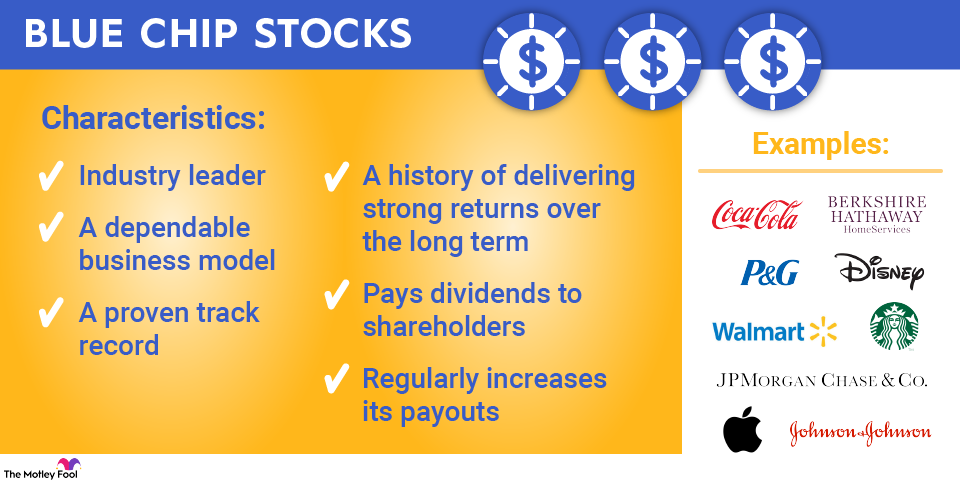
For the investor seeking stability, income, and the potential for significant capital appreciation, undervalued blue-chip stocks represent the ideal hunting ground. These are not obscure, speculative penny stocks. They are the “Pillars of Value”—established, industry-leading companies with proven business models, strong balance sheets, and a history of weathering economic storms. They are the titans of American industry, but for a variety of reasons, they are currently trading at a discount to their intrinsic worth.
This article is a deep dive into three such US blue-chip stocks that currently present compelling value opportunities. We will move beyond superficial metrics and delve into the qualitative and quantitative factors that define their enduring strength and underpin their potential for recovery. Our analysis will be guided by the principles of EEAT (Experience, Expertise, Authoritativeness, and Trustworthiness), providing you with a thorough, evidence-based framework for your investment decisions.
Our Analytical Framework: Identifying True Value
Before we introduce the stocks, it is crucial to understand the lens through which we are analyzing them. A stock being “cheap” on a single metric is not enough. Our framework is multi-faceted:
- Valuation Metrics:
- Price-to-Earnings (P/E) Ratio vs. Historical Average & Peers: Is the company trading at a lower multiple than its own history and its direct competitors?
- Price-to-Book (P/B) Ratio: Is the market price below or close to the company’s net asset value?
- Free Cash Flow Yield: A superior measure to P/E, it compares the company’s free cash flow (operating cash flow minus capital expenditures) to its market capitalization. A high yield indicates the company is generating significant cash relative to its price.
- Dividend Yield & Safety: Is the dividend sustainable, and does it offer an attractive income stream while you wait for a price recovery?
- Financial Health:
- Balance Sheet Strength: We look for a strong cash position and manageable levels of debt (e.g., a low Debt-to-Equity ratio).
- Profitability: Consistent operating margins and return on invested capital (ROIC) are signs of a durable competitive advantage.
- Qualitative Moats (Competitive Advantages):
- Brand Power: Does the company have pricing power and customer loyalty?
- Economies of Scale: Can it operate more efficiently than smaller rivals?
- Regulatory Moat: Does it operate in a industry with high barriers to entry?
- Switching Costs: Is it difficult for customers to leave its ecosystem?
- Catalysts for Revaluation:
- Why is the stock undervalued now? What potential event, strategic shift, or economic cycle could cause the market to re-assess its price?
With this framework in mind, let’s examine our three pillars of value.
Pillar 1: Johnson & Johnson (JNJ) – The Healthcare Behemoth in Transition
Company Overview & Business Segments
Johnson & Johnson is a name synonymous with healthcare. For over 135 years, it has been a trusted global leader, but its structure has recently undergone a monumental shift. In 2023, the company completed the spin-off of its Consumer Health business into a new, independent publicly-traded company called Kenvue (KVUE). This allows us to analyze the “New” JNJ with renewed clarity.
The company now operates through two highly focused, science-powered segments:
- MedTech: A leading portfolio of devices for surgery, orthopedics, vision, and interventional solutions. This includes everything from robotic surgical systems (like the MONARCH platform) to advanced wound closures and contact lenses.
- Pharmaceutical (Innovative Medicine): A powerhouse in drug development, with leading franchises in Immunology (Stelara, Tremfya), Oncology (Darzalex, Imbruvica), Neuroscience, and Cardiovascular diseases.
The Value Proposition: Why is JNJ Undervalued?
- Valuation Compression: As of Q2 2024, JNJ trades at a forward P/E of approximately 14-15x. This is a significant discount to its 5-year historical average of over 17x and a substantial discount to the broader pharmaceutical industry and the S&P 500.
- Post-Spin-Off Confusion & “Spin-Off Gloom”: Major corporate restructurings often create uncertainty. Some legacy investors who wanted consumer staples exposure sold their JNJ shares. This temporary selling pressure has created a buying opportunity.
- Patent Cliff Concerns (Overblown): The market is intensely focused on the loss of exclusivity for Stelara, a blockbuster drug for psoriasis, starting in 2025. While this is a real headwind, the market is underestimating JNJ’s ability to manage this transition.
The Bull Case: The Catalysts for Recovery
- A Deep and Diversified Pipeline: JNJ is not a one-trick pony. The company has over 15 potential blockbuster drugs in late-stage development. Its pipeline is particularly strong in oncology (e.g., targeted therapies), cardiovascular (e.g., milvexian for stroke prevention), and immunology, with new drugs like Spravato and Carvykti showing immense promise.
- MedTech Rebound and Innovation: The segment is experiencing a strong post-pandemic recovery as elective procedures normalize. More importantly, JNJ is a leader in high-growth areas like robotic-assisted surgery, where its MONARCH platform is gaining traction against competitors, and electrophysiology, treating heart rhythm disorders.
- Financial Fortress: JNJ is a AAA-rated company, one of only two U.S. non-financial corporations with this highest-possible credit rating. This signifies an impeccable balance sheet, providing it with the financial firepower to invest in R&D, make strategic acquisitions, and navigate any economic downturn.
- King of Dividend Aristocrats: JNJ has increased its dividend for 62 consecutive years, a testament to its resilient cash flow and shareholder-friendly management. The current yield of ~3.3% is attractive and provides a steady income while investors wait for the growth story to unfold.
Intrinsic Value Estimate: A discounted cash flow (DCF) analysis, factoring in the Stelara patent cliff but also pipeline growth and MedTech expansion, suggests a fair value range for JNJ is 15-20% above its current trading price.
Pillar 2: Verizon Communications Inc. (VZ) – The Connectivity Backbone Trading at a Fire Sale
Company Overview & Business Segments
Verizon is a cornerstone of American infrastructure. It operates the nation’s most reliable wireless network and is a leading provider of broadband and fiber optics. In an increasingly digital world, its services are not a luxury; they are a utility. The business is segmented into:
- Consumer Group: Provides wireless and wireline (Fios internet, TV, phone) services to retail customers.
- Business Group: Provides wireless, wireline, and security and managed network solutions to government and enterprise customers.
The Value Proposition: Why is VZ So Cheap?
- Historic Lows in Valuation: Verizon’s stock price has languished, pushing its dividend yield to nearly 6.8%—a multi-decade high. Its P/E ratio sits in the low 8x-9x range, a stark discount to the market and its own history.
- Perceived as a “Value Trap”: The market fears Verizon is a legacy company crushed by debt, intense competition, and capital-intensive 5G rollouts with poor returns.
- High Debt Load: The company took on significant debt to acquire spectrum (the airwaves for 5G). In a rising interest rate environment, this has spooked investors concerned about interest expenses.
The Bull Case: The Catalysts for Recovery
- The Capex Cliff is Nearing: The massive capital expenditure cycle for 5G is largely behind them. Management has guided for a significant reduction in capital intensity starting in 2025. This will unlock a torrent of free cash flow, which can be used to aggressively pay down debt and support the dividend.
- Wireless Pricing Power Returning: The brutal price wars in wireless are subsiding. The industry has rationalized, focusing now on migrating customers to premium, higher-priced plans and monetizing fixed wireless access (FWA)—using the 5G network to provide home internet, a high-margin growth business.
- A Fortress-Like Business Model: Wireless churn (the rate at which customers leave) is at record lows. This demonstrates the stickiness of their service and the value of network quality. Once a customer is in Verizon’s ecosystem, they rarely leave.
- An Unsustainable Yield: A 6.8% yield from a company in a regulated, utility-like industry with predictable cash flows is extraordinary. The dividend is well-covered by free cash flow, and the high yield creates a powerful floor for the stock. As interest rates eventually stabilize or fall, high-yielding, stable equities like VZ will become immensely attractive to income investors.
Intrinsic Value Estimate: A sum-of-the-parts valuation, comparing Verizon’s cash flow generation to other regulated infrastructure assets, suggests a fair value that is 25-30% higher than the current price, not even accounting for the massive dividend return.
Pillar 3: Citigroup Inc. (C) – The Global Bank Unlocking Its Own Value
Company Overview & Business Segments
Citigroup is one of the most global of the U.S. money center banks, with a presence in over 160 countries. However, for years, it has been plagued by complexity, regulatory issues, and perceived inefficiency. This is a story of a deep value turnaround.
Its segments are:
- Services: This is Citi’s crown jewel—comprised of Treasury and Trade Solutions (TTS) and Security Services. TTS is a global leader in cash management and trade finance for multinational corporations, generating stable, fee-based revenue.
- Markets: Includes fixed income and equity sales and trading.
- Banking: Includes investment banking and corporate lending.
- U.S. Personal Banking: Includes branded cards, retail services, and retail banking.
- Wealth Management.
The Value Proposition: The Deep Value Discount
- Trading at a Massive Discount to Tangible Book Value (TBV): This is the key metric for banks. While most major banks trade at or above their TBV (the net asset value per share), Citigroup trades at a steep discount, often around 60-70% of TBV. This implies the market values the company at significantly less than the sum of its parts if it were liquidated.
- The “Too Big to Manage” Narrative: The market has punished Citi for its past regulatory missteps and its perceived unwieldy complexity.
Read more: From Penny Stock to Powerhouse? 1 US Micro-Cap with a Game-Changing Patent
The Bull Case: The Catalysts for Recovery
- The Simplification and Strategy of CEO Jane Fraser: This is the core of the bull case. CEO Jane Fraser is executing a clear, multi-year plan to simplify the bank. This involves:
- Exiting Non-Core Markets: Citi is in the process of selling or spinning off its consumer banking businesses in over a dozen international markets. This will free up capital and management focus.
- Organizational Overhaul: Fraser is flattening the management structure to improve accountability and efficiency.
- Unlocking the “Crown Jewels”: The market is not giving Citi credit for its world-class Services division. As the company simplifies, the high-margin, high-return nature of the Services business will become more visible and command a higher valuation multiple.
- Operational Efficiency Improvements: Citi’s efficiency ratio (a measure of costs as a percentage of revenue) is worse than its peers. Management has set clear targets to improve this through technology investments and headcount reductions. Even modest success here will provide a significant boost to earnings.
- Capital Return Potential: As Citi exits its non-core markets and generates excess capital, it is poised to return substantial amounts to shareholders through buybacks and dividends. A significant buyback at these depressed prices is highly accretive to per-share value.
Intrinsic Value Estimate: A sum-of-the-parts analysis, valuing the high-growth Services division at a premium multiple and the rest of the bank closer to peer averages, suggests a fair value much closer to its Tangible Book Value, implying a potential upside of 30-50% from current levels.
Comparative Analysis & Portfolio Role
| Metric | Johnson & Johnson (JNJ) | Verizon (VZ) | Citigroup (C) |
|---|---|---|---|
| Forward P/E Ratio | ~15x | ~9x | ~9x |
| Dividend Yield | ~3.3% | ~6.8% | ~3.5% |
| Primary Catalyst | Pipeline Growth & MedTech | Capex Reduction & FCF Surge | Strategic Simplification |
| Risk Profile | Low to Medium | Medium | Medium to High |
| Investor Profile | Defensive, Income, Growth | Deep Value, High Income | Turnaround, Deep Value |
These three stocks play different but complementary roles. JNJ offers defensive stability and growth. VZ offers extreme income and a bet on cyclical recovery. C offers the highest potential reward through a successful corporate turnaround. Together, they provide diversification across sectors while adhering to a core value philosophy.
Conclusion: The Patience to Be Paid
Investing in undervalued blue-chip stocks requires a contrarian mindset and, above all, patience. The market can remain irrational longer than you can remain solvent, as the saying goes, but when dealing with financially robust industry leaders, the “solvent” part is rarely in question.
Johnson & Johnson, Verizon, and Citigroup are not without their challenges. However, the market’s myopic focus on these challenges has created a compelling opportunity. You are not buying broken companies; you are buying temporarily misunderstood or out-of-favor titans at a discount to their long-term worth.
By focusing on intrinsic value, strong competitive moats, financial resilience, and identifiable catalysts, you position your portfolio to benefit not from speculation, but from the inevitable process of corporate improvement and market re-evaluation. In the world of investing, the pillars of value are the sturdiest foundation upon which to build long-term wealth.
Read more: The OTCQX Advantage: Finding Higher-Quality Penny Stocks in the US Market
Frequently Asked Questions (FAQ)
Q1: What is the biggest risk with investing in undervalued stocks like these?
The primary risk is that the catalyst for revaluation takes much longer to materialize than expected, or that a new, unforeseen problem emerges (e.g., a more damaging drug patent loss for JNJ, a recession that hurts loan books for Citi, or a new price war for Verizon). This can lead to the stock staying “cheap” or getting cheaper for an extended period—the so-called “value trap.”
Q2: How long should I expect to hold these stocks to see a return?
Value investing is not a short-term strategy. You should have an investment horizon of at least 3-5 years. This allows time for the company’s strategic plans to unfold, for market sentiment to shift, and for the intrinsic value to be realized in the stock price.
Q3: With interest rates high, aren’t dividend stocks like VZ less attractive?
While high rates provide competition from bonds, a yield of nearly 7% from a company like Verizon is exceptionally high by historical standards. If and when interest rates begin to fall, the relative attractiveness of VZ’s secure, high yield will increase dramatically, likely pushing the stock price up. You are being paid handsomely to wait.
Q4: How can I trust that Citigroup’s turnaround will work?
You can’t guarantee it, which is why it carries a higher risk. However, you can track the progress through quarterly earnings. Key metrics to watch are the reduction of assets in non-core divisions, improvements in the efficiency ratio, growth in the Services division revenue, and the rate of share buybacks. CEO Jane Fraser’s plan is specific and measurable.
Q5: Is this article financial advice?
No. This article is for informational and educational purposes only. It is the result of extensive research and analysis to illustrate a specific investment philosophy. It is not a recommendation to buy or sell any specific security. You should always conduct your own research and consult with a qualified financial advisor who understands your personal financial situation, risk tolerance, and investment objectives before making any investment decisions.