
Imagine turning a few hundred dollars into tens of thousands. Imagine discovering the next Amazon or Apple before it becomes a household name. This is the powerful, intoxicating allure of penny stocks. They represent a corner of the financial market where dreams of rapid, life-changing wealth are sold daily through flashy online ads, compelling success stories, and the tantalizing promise of getting in on the “ground floor.”
But for every dream sold, there is a stark reality. The same market that boasts of incredible gains is also littered with shattered portfolios, broken companies, and investors who learned a painful, expensive lesson. Penny stocks are the wild west of the financial world—largely unregulated, incredibly volatile, and fraught with unique perils that can wipe out a trading account in the blink of an eye.
This guide is not here to sell you a dream or to scare you away entirely. Its purpose is to provide a clear-eyed, honest, and comprehensive overview of what penny stocks are, why they are so dangerous, and the disciplined strategies required to navigate them for those who choose to proceed. We will demystify the jargon, expose the common scams, and equip you with the knowledge to approach this high-risk arena not as a gambler, but as an informed and cautious participant.
Part 1: Understanding the Penny Stock Landscape
What Exactly is a Penny Stock?
While the name suggests stocks that trade for mere “pennies,” the official definition is a bit broader. The U.S. Securities and Exchange Commission (SEC) generally defines a penny stock as any equity security issued by a small, public company that trades at less than $5 per share.
However, it’s crucial to understand the key characteristics that truly define this asset class:
- Low Share Price: Typically under $5, often under $1.
- Small Market Capitalization: These are almost always “micro-cap” or “nano-cap” companies, with total market values often well below $300 million and sometimes under $50 million. This small size is a primary source of their volatility.
- Limited Liquidity: Liquidity refers to how easily an asset can be bought or sold without affecting its price. Penny stocks are notoriously illiquid. There may be few buyers when you want to sell, and few sellers when you want to buy, leading to wild price swings on small volumes of trades.
- Lack of Public Information: Unlike large, established companies like Coca-Cola or Microsoft, which are required to file extensive quarterly and annual reports (10-Qs and 10-Ks) with the SEC, many penny stock companies are not subject to these same “reporting” requirements. This makes it extremely difficult to perform fundamental analysis on their financial health, management, or business prospects.
Where Do Penny Stocks Trade?
You won’t find the majority of penny stocks on major exchanges like the New York Stock Exchange (NYSE) or the Nasdaq. Instead, they trade on two primary platforms:
- Over-the-Counter (OTC) Markets: This is the primary home for penny stocks. The OTC is not a single exchange but a network of broker-dealers who quote and trade stocks amongst themselves. The OTC Markets Group organizes these into tiers, most notably:
- OTCQX® Best Market: The top tier, with some reporting standards.
- OTCQB® Venture Market: The “venture” market, often referred to as the “pink sheets,” with some basic reporting requirements.
- Pink Open Market (Pink Sheets): The most speculative and risky tier. Companies here have no filing requirements with the SEC. The information available can be sparse, outdated, or unreliable. This is where the vast majority of penny stock scams and shell companies reside.
- Major Exchanges (in rare cases): It is possible, though less common, to find stocks trading under $5 on the Nasdaq or NYSE American. These companies are subject to stricter listing standards and reporting requirements, making them generally less risky than their OTC counterparts, though still highly volatile.
Part 2: The Allure – Why Investors Are Drawn In
The appeal of penny stocks is not baseless; it stems from several powerful psychological and mathematical factors.
1. The Low Entry Point
The most obvious allure is the price. With just $500, you could buy thousands of shares of a company. This feels empowering compared to buying a handful of shares of a blue-chip stock like Google. The ability to amass a large quantity of shares is psychologically satisfying.
2. The Potential for Explosive Percentage Gains
A stock moving from $0.10 to $0.20 is a 100% gain. A move from $0.50 to $1.00 is also a 100% gain. These “multi-bagger” returns are the holy grail for penny stock traders. While a $50 stock would need monumental news to double, a low-priced stock can double or triple on relatively minor developments, hype, or speculation.
3. The “Ground Floor” Narrative
There’s a romantic notion of discovering a tiny company with a revolutionary product or service before the rest of the world catches on. The idea of being an early supporter of the “next big thing” is a powerful motivator.
4. Accessibility and Hype
The internet has democratized access to information, but also to misinformation. Social media platforms, YouTube channels, and online forums are filled with influencers and promoters talking about the “next rocket ship.” This creates a sense of community and FOMO (Fear Of Missing Out) that can be irresistible to new investors.
Part 3: The Overwhelming Danger – The Dark Side of Penny Stocks
For every alluring aspect, there is a corresponding and often more powerful danger. Understanding these risks is the single most important step in protecting your capital.
1. Extreme Volatility and Liquidity Risk
This is the twin-engine of penny stock danger. Low liquidity means that a single large buy or sell order can cause the price to spike or crater. Furthermore, the “bid-ask spread” (the difference between the highest price a buyer is willing to pay and the lowest price a seller is willing to accept) can be enormous. You might buy a stock at $0.05, but the moment you own it, the highest bid to sell it might only be $0.03. This means the stock would need to rise over 66% just for you to break even. This spread is a hidden cost that eats into profits.
2. Lack of Transparency and Information
How do you value a company with no earnings, no proven business model, and no requirement to tell you what it’s doing? You can’t. Investing becomes less about analysis and more about speculation and rumor. The limited information available is often unreliable or deliberately misleading.
3. High Susceptibility to Manipulation and Scams
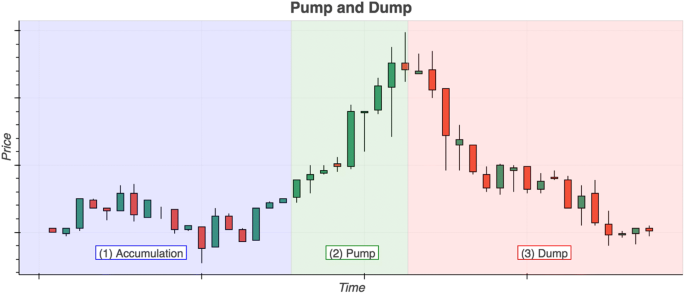
This is the most nefarious risk. Penny stocks are the preferred playground for “pump and dump” schemes. Here’s how it works:
- The Setup: A group of promoters or a single large holder (the “pumper”) accumulates a large position in a very low-volume stock at a cheap price.
- The Pump: They then launch a coordinated marketing campaign using spam emails, fake news articles, paid influencers, and social media bots to create a frenzy of buying interest. They make outrageous claims about new contracts, revolutionary technology, or imminent buyouts.
- The Dump: As unsuspecting retail investors (like you) buy into the hype, the price and trading volume soar. The pumpers then sell their entire holdings at the artificially inflated price, making a huge profit.
- The Collapse: Once the pumping stops and the promoters have sold, the buying pressure vanishes. The price collapses, often back to its original level or lower, leaving the late-to-the-party investors with massive losses.
4. Financial Instability of the Companies
Many penny stock companies are not just small; they are failing. They may have no revenue, mounting debt, poor management, or a product that will never see the light of day. The risk of bankruptcy or the company simply ceasing operations (becoming a “shell company”) is very high.
5. The Psychological Toll
The constant, violent swings can be emotionally exhausting. The hope of a big win can lead to addictive trading behavior. Conversely, a rapid loss can trigger the “gambler’s fallacy”—the urge to throw good money after bad to recoup losses, often leading to even greater ruin.
Part 4: A Disciplined Approach: Strategies for the Cautious Participant
If, after understanding the risks, you still wish to allocate a small portion of your capital to this speculative arena, you must adopt a disciplined, rule-based approach. Never invest money you cannot afford to lose entirely.
Step 1: Education and Research is Your Armor
Do not buy a stock based on a tip from a stranger on the internet. Your first and most important job is due diligence.
- Read the SEC Filings (if they exist): If the company is on the OTCQB or OTCQX, it may file reports with the SEC. Look for the 10-K (annual report) and 10-Q (quarterly report). Scrutinize the balance sheet (assets vs. liabilities), the income statement (revenue vs. expenses), and the statement of cash flows (is the company burning cash?).
- Understand the Business Model: What does the company actually do? Does its product or service make sense? Who is its competition? If you can’t understand its business in a few sentences, it’s a red flag.
- Research Management: Look up the CEO and key executives. What is their track record? Have they been involved with other failed companies or been charged with fraud?
- Use the OTC Markets Website: OTC Markets provides a “profile” page for each stock, which includes a warning if the company is delinquent in its reporting or has been the subject of investor warnings.
Step 2: Risk Management is Your Shield
This is non-negotiable. The goal is not to win big on one trade, but to survive long enough to find a few good ones.
- Use Strict Position Sizing: Never put more than 1-5% of your total speculative capital into a single penny stock. If one trade goes to zero, it will not devastate your account.
- Always Use a Stop-Loss Order: A stop-loss is a pre-set order to automatically sell your stock if it falls to a certain price. For example, if you buy at $0.50, you might set a stop-loss at $0.40. This caps your potential loss at 20% on that trade, preventing a single bad pick from wiping you out. This is the most critical tool for any penny stock trader.
- Have a Profit-Taking Plan (Take Profit): Greed is the enemy. Decide on your profit target before you enter a trade (e.g., sell half at a 50% gain, sell the rest at a 100% gain). Stick to your plan.
Step 3: Practical Trading Mechanics
- Use a Limit Order, Not a Market Order: A market order buys at the best available price at that moment, which could be much higher than you expected due to a wide spread. A limit order specifies the maximum price you are willing to pay, giving you control over your entry point.
- Be Wary of “Pink No Information” Stocks: Avoid companies on the lowest OTC tier that provide no verified information. The risk of fraud is exponentially higher.
- Ignore the Hype: Be deeply skeptical of unsolicited emails, flashy newsletters, and social media promoters. If someone is publicly telling you about a “sure thing,” they are almost certainly trying to manipulate the price for their own gain.
Part 5: A Realistic Example: The Anatomy of a Trade
Let’s walk through a hypothetical, disciplined trade to illustrate the principles in action.
- The Idea: You hear about “ABC Biotech” (ticker: ABCB), a company on the OTCQB, which is developing a new medical device. The stock is at $0.80.
- Due Diligence:
- You find their SEC filings. They have $2 million in cash, no debt, and are burning about $200,000 per month. This gives them about 10 months of “runway.”
- Their management team has experience in the medical field.
- They have an upcoming catalyst: FDA trial results are expected in 3 months.
- The Plan:
- Capital Allocation: You decide to risk 2% of your $10,000 speculative account, which is $200.
- Entry & Stop-Loss: You plan to buy at $0.80 and set a stop-loss at $0.64 (a 20% loss).
- Position Sizing: To calculate the number of shares: $200 risk / ($0.80 – $0.64) = $200 / $0.16 = 1,250 shares. The cost of the position is 1,250 x $0.80 = $1,000.
- Profit-Taking: You plan to sell half your position (625 shares) if the price hits $1.20 (a 50% gain) and then move your stop-loss on the remaining shares to your breakeven point ($0.80). You will sell the remainder if it hits $1.60 (100% gain) or if it falls back and triggers your stop-loss.
Read more: Consumer Staples: 3 Defensive Stocks to Weather an Economic Downturn
- Execution:
- You place a limit order to buy 1,250 shares of ABCB at $0.80. It fills.
- You immediately place a stop-loss order to sell all 1,250 shares at $0.64.
- Outcome Scenarios:
- Bad News: The FDA trial fails. The stock gaps down overnight and opens at $0.50. Your stop-loss order triggers, and you sell at the next available price, maybe $0.52. You lose about $350, which is more than your planned $200 due to the “gap down,” but it’s still a manageable loss that protected you from a total wipeout.
- Good News: The trial is successful. The stock jumps to $1.30. You sell 625 shares at $1.20 (as per your plan), locking in a profit of $250. You now have 625 shares with a “free ride.” You move your stop-loss to $0.80. If the stock then falls and hits $0.80, you sell the rest for no loss. Your total profit is $250. If it continues to $1.60, you sell the rest for another $500 profit ($0.80 gain on 625 shares). Total profit: $750.
This disciplined approach turns an inherently speculative trade into a managed risk-reward scenario.
Conclusion: A Sobering Reality Check
Penny stocks are not a shortcut to wealth; for the vast majority, they are a shortcut to poverty. The allure of massive, rapid gains is a siren’s song that has led countless investors onto the rocks of financial loss.
The landscape is deliberately designed to separate optimistic retail investors from their money through manipulation, misinformation, and the structural disadvantages of illiquidity and volatility. While it is possible to make money, it requires an immense amount of work, discipline, and emotional fortitude that most beginners do not possess.
For the new investor, the far wiser path is to focus on building a diversified, long-term portfolio centered on low-cost index funds, ETFs, and fundamentally sound, established companies. Use the stock market as a vehicle for steady, long-term wealth creation, not a casino for get-rich-quick speculation.
If you still feel compelled to explore penny stocks, do so with extreme caution. Allocate only “mad money” you are fully prepared to lose. Arm yourself with knowledge, shield yourself with rigorous risk management, and never, ever believe the hype. In the world of penny stocks, the best trade you can often make is the one you never place.
Read more: Small Cap, Big Potential: 3 High-Growth Stocks Flying Under the Radar
Frequently Asked Questions (FAQ)
Q1: Can you actually get rich trading penny stocks?
A: While there are sensationalized stories of people making huge returns, they are the extreme exception, not the rule. For every one person who gets rich, thousands lose money. The structural disadvantages (manipulation, illiquidity, high failure rate of companies) make consistent, long-term wealth creation through penny stocks incredibly difficult and statistically unlikely.
Q2: What is the difference between a penny stock and a regular stock?
A: The main differences are price (under $5), market capitalization (very small), listing venue (often OTC vs. major exchanges), regulatory oversight (less for penny stocks), and liquidity (much lower for penny stocks). Regular stocks of large companies are generally more stable, transparent, and liquid.
Q3: How much money do I need to start?
A: From a brokerage perspective, you can start with a few hundred dollars. However, from a risk perspective, you should only use capital that you can afford to lose completely. It should be a very small portion of your overall investment portfolio, separate from your retirement savings, emergency fund, or money for essential expenses.
Q4: Are there any “safe” penny stocks?
A: No penny stock is “safe.” The asset class is inherently high-risk. However, you can mitigate risk by focusing on companies that are fully reporting with the SEC (e.g., on the OTCQB or OTCQX tiers), have a clear business model, some revenue, and manageable debt. These are “less risky” but still carry significant danger compared to blue-chip stocks.
Q5: What are the biggest red flags for a penny stock?
A: Major red flags include:
- Unsolicited promotions via email or social media.
- A company with no actual revenue or product.
- Constant press releases with grandiose claims but no substance.
- Executives with a history of fraud or failed ventures.
- Trading on the “Pink No Information” tier.
- A share structure with a huge number of “authorized” shares, indicating potential for massive dilution.
Q6: I bought a penny stock and it’s down 90%. Should I hold and hope it comes back?
A: This is known as “bag holding” and is a common psychological trap. The rational decision is to cut your losses. Hoping for a recovery in a failing company is a form of the gambler’s fallacy. The money is already lost; holding onto a losing position in the hope of a miracle prevents you from using that remaining capital on a more promising opportunity and risks a total loss if the company goes bankrupt.
Q7: How do I place a stop-loss order on a penny stock?
A: You do this through your brokerage platform when you place the trade or afterward. You will select “stop loss” as the order type and set your price. Remember, due to low liquidity, a stop-loss can trigger at a price worse than you set if the stock “gaps down” overnight. It is a risk-management tool, not a guarantee of execution price.
Q8: Is short-selling penny stocks a good way to profit from their decline?
A: Short-selling (betting a stock will go down) is an advanced, extremely high-risk strategy that is generally not suitable for beginners. With penny stocks, the risks are magnified. Because a penny stock can theoretically rise infinitely, your potential loss on a short position is unlimited. Furthermore, the illiquid nature of penny stocks can make it very difficult and expensive to borrow shares to short. It is not recommended.