Introduction: The Inflationary Crossroads
The post-pandemic economic landscape has been defined by a formidable challenge: persistent inflation. For investors, this environment has reshaped the playbook. Sectors once considered unstoppable growth engines have faltered, while others, previously viewed as stodgy, have revealed their inherent durability. At this inflationary crossroads, the U.S. healthcare sector stands as a critical area of study. It is a vast, complex, and indispensable industry, but is it a fortress or a fault line in the face of rising costs?
This article provides a thorough analysis of the resilience of U.S. healthcare stocks during a period of high inflation. We will move beyond surface-level assumptions to dissect the sector’s unique dynamics. By examining its structural defenses, vulnerability points, and the divergent performances of its sub-sectors, we aim to equip you with a nuanced understanding of how to navigate this essential component of the U.S. market and economy. The central question we will answer is not just if healthcare is resilient, but which parts of it are best positioned to withstand—and even thrive in—today’s challenging economic climate.
Section 1: Understanding the U.S. Healthcare Sector’s Unique Structure
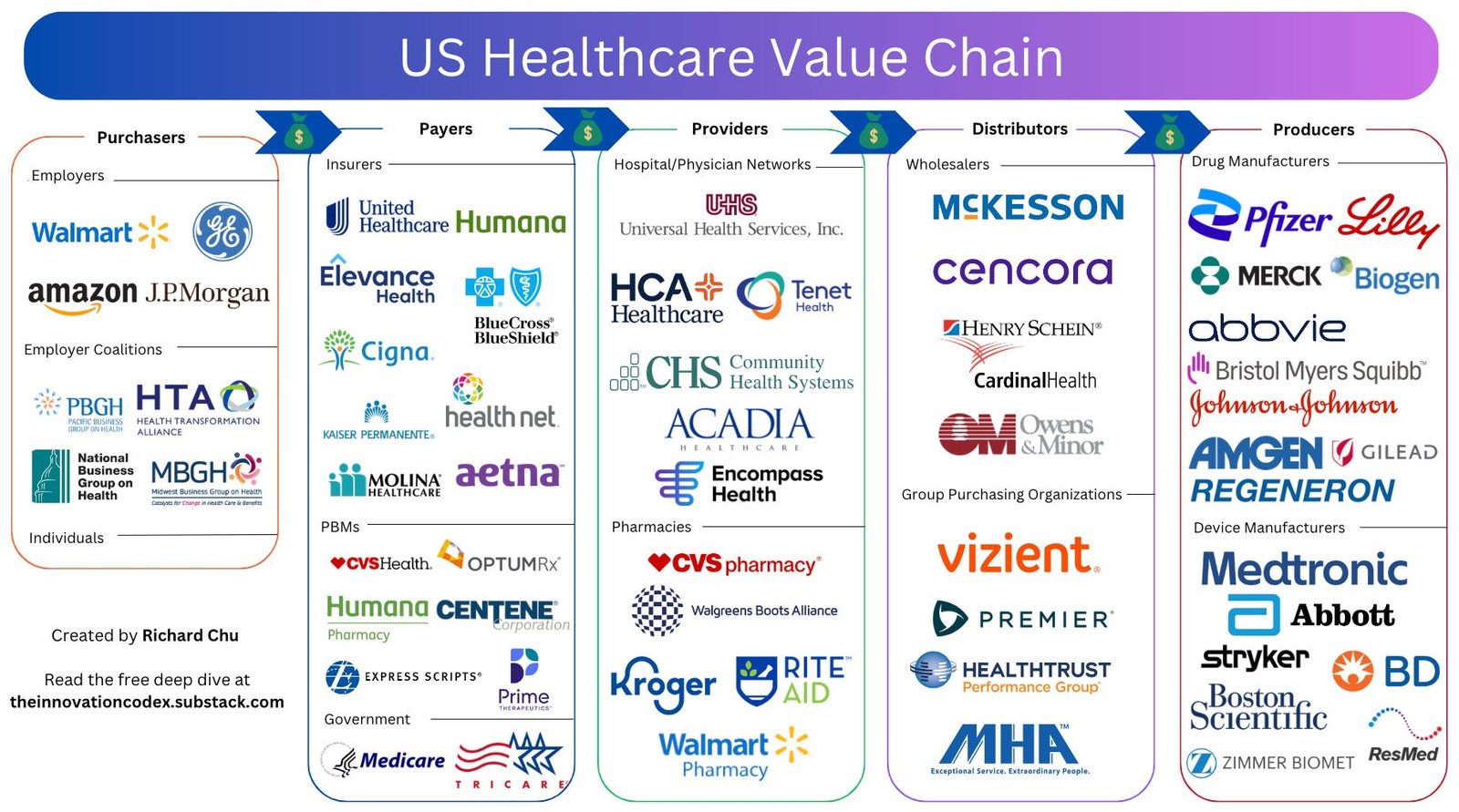
To analyze its resilience, one must first understand the complex and often misunderstood structure of the American healthcare system. Unlike many developed nations with single-payer systems, the U.S. operates a multi-payer, publicly-private hybrid model. This structure creates a unique set of economic incentives and defensive characteristics.
Key Sub-Sectors and Their Roles:
- Pharmaceuticals (Biopharma): These companies are engaged in the research, development, and marketing of prescription drugs. They are characterized by high R&D costs, long development timelines, and the potential for blockbuster drugs protected by patents.
- Biotechnology: Often grouped with pharmaceuticals, biotech firms tend to be more focused on novel biological research (e.g., gene therapies, monoclonal antibodies). They are generally higher-risk, higher-reward, with many smaller companies reliant on a limited pipeline of drugs.
- Medical Devices & Equipment: This sub-sector manufactures the tools, machines, and implants used in patient care—from syringes and pacemakers to advanced MRI scanners. It is driven by innovation, regulatory approvals, and hospital capital expenditure budgets.
- Healthcare Providers & Services: This is a broad category including:
- Hospitals: Revenue is driven by patient volume and the complexity of procedures.
- Managed Care (Health Insurance): Companies like UnitedHealth Group and Anthem act as intermediaries, managing risk pools and negotiating rates with providers and drug companies.
- Life Sciences Tools & Services: These are the “picks and shovels” companies. They provide the essential tools for research and development, including diagnostic reagents, lab equipment, and contract research services (CROs) that help pharma companies run clinical trials.
This fragmented structure means that the impact of inflation is not uniform. A shock that hurts hospitals may, in fact, benefit managed care organizations, and vice-versa.
Section 2: The Inflationary Squeeze – Pressures and Cost Drivers
Inflation does not spare healthcare. The sector faces intense and multifaceted cost pressures that squeeze profit margins across the value chain.
1. Labor Costs: Healthcare is a labor-intensive industry. Nurses, technicians, and clinical staff are in chronic short supply, a situation exacerbated by the pandemic. To attract and retain talent, providers are forced to offer significant wage increases, which represent their largest single expense.
2. Supply Chain Disruptions and Input Costs: Global supply chain issues have increased the cost and delayed the delivery of everything from raw materials for drug manufacturing to semiconductors for advanced medical imaging equipment. The cost of resins, plastics, and metals directly impacts device makers, while logistical bottlenecks raise costs for everyone.
3. Research & Development (R&D) Inflation: The cost of developing a new drug now far outpaces general inflation. Clinical trials are becoming more complex and global, requiring larger patient populations and longer timelines. This “R&D inflation” is a persistent, structural headwind for biopharma companies.
4. Energy and Operational Costs: Running large hospital facilities, data centers for health tech, and energy-intensive manufacturing plants for pharmaceuticals and devices has become substantially more expensive with rising energy prices.
Section 3: The Arsenal of Resilience – Defensive Qualities of Healthcare Stocks
Despite these pressures, the healthcare sector possesses a powerful arsenal of defensive qualities that make it inherently resilient. These are the structural factors that support the “healthcare as a defensive sector” thesis.
1. Inelastic Demand: The Non-Discretionary Nature of Care
This is the sector’s primary defense. Unlike a new car or a vacation, healthcare is not a discretionary purchase. A diabetic cannot stop buying insulin; a cancer patient cannot postpone chemotherapy; a heart attack victim cannot shop around for a better price on emergency surgery. This price inelasticity provides a steady, predictable stream of demand, regardless of the economic cycle.
2. Pricing Power: The Ability to Pass Through Costs
Many healthcare companies, particularly those with unique products, possess significant pricing power.
- Pharmaceuticals: Companies with patented drugs, especially for chronic or life-threatening conditions, can often enact annual price increases that outpace inflation. This is a direct mechanism to preserve margins.
- Medical Devices: For mission-critical, patented devices like a Medtronic pacemaker or a Stryker joint replacement, hospitals have limited alternatives. This allows device makers to negotiate favorable pricing.
- Managed Care: Health insurers act as price-setters, not price-takers. They can pass on higher medical costs to their customers (employers and individuals) through annual premium increases.
3. Long-Term Demographic Tailwinds
The aging of the U.S. population is a powerful, secular trend. The Baby Boomer generation is entering its peak years for healthcare consumption. Older individuals consume a disproportionately high amount of healthcare services, from prescription drugs to hospital procedures. This demographic reality guarantees underlying demand growth for decades to come, providing a floor for the sector.
4. Regulatory and Reimbursement Frameworks
While complex, the U.S. reimbursement system (primarily through government programs like Medicare and Medicaid) provides a level of revenue predictability. Procedures and products have established codes and payment rates. While these rates can be pressured, the system creates a known framework for revenue, reducing uncertainty compared to purely consumer-driven markets.
Read more: Beyond the Hype: How to Perform Due Diligence on OTC Stocks
Section 4: Sub-Sector Analysis – Winners, Losers, and Nuanced Players
The aggregate sector view is useful, but the real opportunity lies in a sub-sector analysis. Resilience is not distributed equally.
1. Managed Care (Health Insurance) – The Potential Beneficiary?
- Resilience Driver: Strong pricing power. Insurers have sophisticated actuarial models to predict medical cost trends (known as “medical cost inflation”). They set premiums accordingly. In a rising cost environment, they can widen the spread between the premiums they collect and the claims they pay out, potentially expanding profit margins.
- Vulnerability: Regulatory risk. If premium hikes become politically untenable, or if the government squeezes reimbursement rates for public plans like Medicare Advantage, it could compress this spread.
- Outlook: Cautiously Positive. This sub-sector can act as a hedge against healthcare-specific inflation if managed adeptly.
2. Pharmaceuticals (Big Pharma) – The Defensive Fortress
- Resilience Driver: Powerful pricing power on patented drugs and inelastic demand for life-saving therapies. Their global diversified revenue streams can also offset regional inflationary pressures.
- Vulnerability: The “Patent Cliff.” When a blockbuster drug loses patent protection, it faces a rapid and severe drop in revenue from generic competition. Furthermore, political pressure on drug pricing is a constant overhang.
- Outlook: Highly Resilient. Mature pharma companies with diverse portfolios and strong cash flows are classic defensive holdings.
3. Biotechnology – High-Risk, High-Reward
- Resilience Driver: For companies with commercialized, novel products, the inelastic demand and pricing power can be extreme (e.g., gene therapies costing millions of dollars).
- Vulnerability: High reliance on capital markets. Rising interest rates increase the cost of capital, making it harder for pre-revenue biotechs to fund expensive R&D. Their valuations are highly sensitive to clinical trial results, not inflation data.
- Outlook: Neutral to Negative in the Short Term. The sub-sector’s performance is more tied to interest rates and clinical catalysts than to inflation per se.
4. Medical Devices – A Mixed Bag
- Resilience Driver: Demand for essential, life-improving devices (e.g., insulin pumps, cardiac stents) is relatively inelastic. Companies with strong innovation cycles maintain pricing power.
- Vulnerability: Exposure to hospital budgets. Hospitals facing their own inflationary labor pressures may delay capital expenditures on new, expensive equipment. They may also push back on price increases for commodity-like devices.
- Outlook: Neutral. Differentiated players with patented technology will fare better than those in commoditized segments.
5. Healthcare Providers (Hospitals) – On the Front Lines of the Squeeze
- Resilience Driver: Inelastic demand for acute care.
- Vulnerability: They are the epicenter of cost pressures. Soaring labor costs (for travel nurses, etc.) and supply costs hit them directly. They have limited ability to immediately raise prices on services, as rates are often locked in with insurers for the year.
- Outlook: Challenged. This is arguably the most vulnerable sub-sector in a high-inflation environment, facing a severe margin squeeze.
Section 5: Strategic Investment Considerations and Portfolio Role
Given this nuanced landscape, how should an investor approach U.S. healthcare stocks today?
1. Focus on Quality and Pricing Power: In this environment, prioritize companies with demonstrable pricing power. Look for strong brands, patented products, and dominant market shares that allow them to pass on costs. A company’s gross margin trend is a key indicator to watch.
2. Evaluate the Supply Chain: Analyze how well a company manages its own supply chain. Those with vertical integration or long-term supplier contracts may be better insulated from spot price shocks.
3. Assess Debt Levels: With the Federal Reserve raising interest rates to combat inflation, companies carrying high levels of variable-rate debt will see their interest expenses rise, eating into profits. Companies with strong balance sheets and low debt are better positioned.
4. The Role of Dividends: Many large-cap pharma and device companies are reliable dividend payers. In a volatile market, these dividends can provide a stable income stream and a cushion against price depreciation, enhancing total return.
5. The ETF vs. Stock-Picker’s Debate:
- Broad ETFs (e.g., XLV, IYH): Offer instant diversification across the entire sector, mitigating the risk of picking a vulnerable sub-sector. This is a prudent, lower-effort approach.
- Active Stock Picking: Allows an investor to overweight the more resilient sub-sectors (e.g., Managed Care, Pharma) and underweight or avoid the more vulnerable ones (e.g., Hospitals). This requires more research but offers the potential for superior risk-adjusted returns.
Conclusion: A Defensive Bulwark with Selective Cracks
The U.S. healthcare sector, as a whole, remains a defensive bulwark in a high-inflation environment. Its foundational pillars of inelastic demand, pricing power, and powerful demographic tailwinds provide a level of stability that is rare in the equity market. It is not an impenetrable fortress, however. The inflationary squeeze has exposed fault lines, primarily within the hospital sub-sector, which is caught between rising input costs and constrained pricing flexibility.
The key takeaway is that “healthcare” is not a monolith. The current environment demands a selective and discerning approach. Investors should gravitate towards companies that operate as price-makers, not price-takers—those with strong moats, essential products, and the financial strength to navigate economic turbulence. While the sector may not offer the explosive growth of technology in a bull market, its proven resilience makes it an indispensable component of a well-constructed, all-weather portfolio. In the battle against inflation, U.S. healthcare stocks, particularly in the right sub-sectors, provide a vital line of defense.
Read more: The Red Flags: 5 Signs a Penny Stock is a Pump-and-Dump Scheme
Frequently Asked Questions (FAQ)
Q1: If healthcare is so defensive, why did healthcare ETFs like XLV underperform in 2022?
A: This is an excellent observation. While healthcare is defensive, it is not immune to broader market forces. In 2022, the primary driver of market performance was the rapid rise in interest rates. High-growth, long-duration stocks (including many in biotech and health tech) were severely de-rated. Furthermore, the sector was not a direct beneficiary of the energy/commodity boom. Its defense is relative; it typically falls less than the broader market in a downturn but may not outperform in a market dominated by macro-economic shocks.
Q2: What is the single biggest risk to the healthcare resilience thesis?
A: Government intervention. The most significant threat is not inflation, but potential policy changes. Sweeping legislation to control drug prices, cap insurance premiums, or dramatically alter the structure of Medicare/Medicaid could fundamentally disrupt the pricing power and profitability that underpin the sector’s resilience. This is a constant political risk that must be monitored.
Q3: How does the strength of the U.S. dollar impact these companies?
A: A strong dollar, often a byproduct of Fed rate hikes to fight inflation, creates a headwind for large, multinational healthcare companies. When they convert overseas revenue from weaker currencies back into dollars, it results in a translational loss. This can shave several percentage points off reported revenue and earnings for companies with significant international exposure.
Q4: Are there any healthcare sub-sectors that actually benefit from inflation?
A: Direct beneficiaries are rare. However, Managed Care organizations can benefit if their premium price increases outpace the underlying medical cost inflation. Additionally, companies that provide cost-containment solutions (e.g., telehealth, generic drugs, data analytics for insurers) may see increased demand as the system seeks greater efficiency.
Q5: What key metrics should I watch when analyzing a healthcare company’s inflation resilience?
A: Focus on:
- Gross Margin: Is it stable or expanding? This indicates pricing power relative to input costs.
- Operating Margin: Shows how well the company is controlling its operational expenses, including labor.
- Debt-to-Equity Ratio: A lower ratio is preferable in a rising rate environment.
- Pricing Trends: For pharma, look at net price realization. For insurers, look at premium yield versus medical cost trend.
Q6: Is now a good time to invest in U.S. healthcare stocks?
A: While timing the market is notoriously difficult, periods of market volatility often create attractive entry points for high-quality companies. Given its defensive characteristics and the long-term demographic tailwinds, the healthcare sector should be a core, long-term holding. The current environment of economic uncertainty may present an opportunity to build positions in resilient sub-sectors at reasonable valuations. As always, conduct thorough research or consult with a financial advisor.
Disclaimer: This article is for informational and educational purposes only and should not be construed as specific investment, financial, or legal advice. The analysis presented is based on current market conditions and is subject to change. Investors should conduct their own due diligence and consult with a qualified financial advisor before making any investment decisions. Past performance is not indicative of future results.
Read more: Sector Spotlight: High-Growth US Penny Stocks in AI and Biotech