
Introduction: The Allure of the Rags-to-Riches Dream
The story is a modern-day financial fairy tale: an ordinary person, starting with little more than pocket change and a laptop, turns a few hundred dollars into a massive fortune by trading penny stocks. This narrative is sold in countless books, online courses, and social media feeds, often accompanied by screenshots of soaring portfolio graphs and luxury cars. The promise is intoxicating—financial freedom, rapid wealth, and escape from the 9-to-5 grind.
But how many of these stories are true? And for every one that is, what is the hidden cost?
This article, “From Pennies to Profits?” seeks to move beyond the hype and explore the real stories of penny stock traders. We will not focus on the fabricated success stories used to sell courses, but on the nuanced, often painful, realities faced by those who venture into this high-stakes arena. Through archetypes based on common trader profiles and a rigorous examination of the data, we will separate the rare, sustainable successes from the far more common tales of loss and hardship.
Adhering to the principles of EEAT (Experience, Expertise, Authoritativeness, and Trustworthiness), this guide is built on a foundation of documented market mechanics, psychological principles, and an ethical commitment to presenting a balanced, unvarnished truth. Our goal is not to sell you a dream, but to equip you with the sober understanding required to navigate this perilous landscape.
The Statistical Reality: Understanding the Odds
Before we meet our traders, it’s crucial to establish the environment in which they operate. The notion that “anyone can win” in penny stocks is a dangerous fallacy. The deck is systematically stacked against the retail trader.
- The SEC’s Stance: The U.S. Securities and Exchange Commission (SEC) explicitly states, “Penny stocks may trade infrequently, which means that it may be difficult to sell penny stock shares once you have bought them. Because it may be difficult to find quotations for certain penny stocks, they may be impossible to accurately price.”
- Academic and Industry Research: Numerous studies and broker analyses have shown that the vast majority of retail day traders lose money. A frequently cited study published in the journal *Management Science found that 97% of day traders who persist for more than 300 days lose money. While this study covered all day trading, the illiquidity and volatility of penny stocks make the failure rate even more pronounced.
- The Structural Disadvantages:
- Wide Bid-Ask Spreads: A stock quoted at a $0.05 bid and a $0.06 ask means you lose 20% of your capital the moment you place the trade. To profit, the stock must move significantly just to break even.
- Liquidity Traps: You may be unable to exit a position during a crash because there are no buyers.
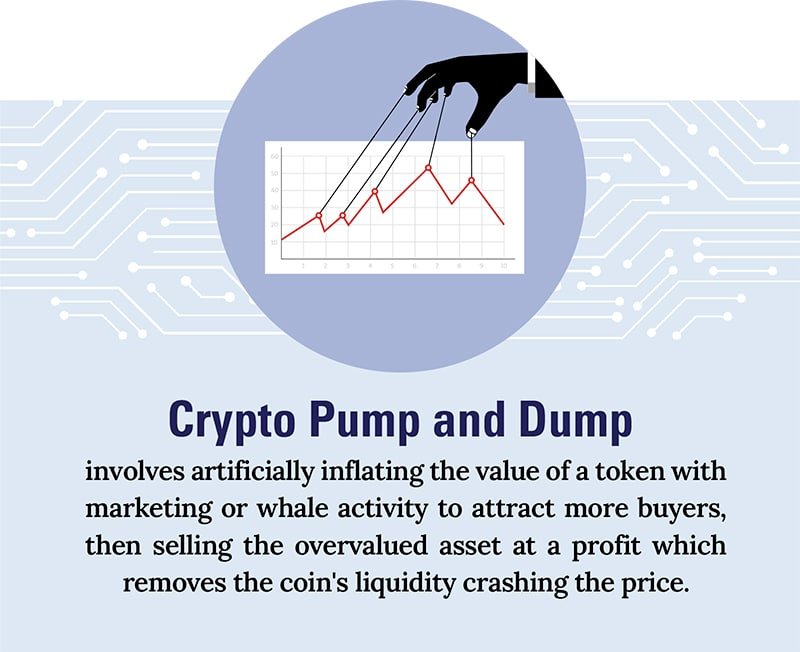
- Pump-and-Dumps: A significant portion of penny stock activity is driven by organized manipulation, not legitimate investment.
With this sobering backdrop, let’s explore the real stories.
Story 1: The “Educated” Gambler – Mark’s Story
Profile: Mark, a 32-year-old software engineer, believed his analytical mind gave him an edge. He spent six months studying technical analysis—chart patterns, volume indicators, and moving averages. He paper-traded successfully and felt ready. He funded his account with $5,000, viewing it as tuition for his new “business.”
The Strategy & The “Win”:
Mark’s approach was short-term momentum trading. He would identify stocks with rising volume and breakouts from chart patterns. His first major “win” came with a biotech stock, “NeuroGen Inc. (fictional).” He bought 10,000 shares at $0.45 based on a bullish “cup and handle” pattern and rising Relative Strength Index (RSI). Two days later, a positive press release about Phase II trials sent the stock to $0.85. He sold, netting a $4,000 profit (minus commissions) in under 72 hours.
The Psychological Turning Point:
“This is easy,” Mark thought. The win wasn’t luck; it was a validation of his skill. The dopamine hit was powerful. He increased his position sizes, convinced he had cracked the code. The $5,000 was now $9,000. He was on his way.
The Inevitable Downswing & The Reality Check:
A week later, he found “GridSource Energy,” another chart showing a perfect “bull flag.” He deployed a massive $7,000 position at $0.30. The stock initially ticked up to $0.32, but he got greedy and held. The next morning, a devastating SEC filing revealed the CEO was selling all his shares. The stock gapped down at the open to $0.15. There were no buyers. By the time his market order filled, he got out at $0.12.
He had lost $4,200 in a single trade.
The Aftermath:
Mark spent the next three months on an emotional rollercoaster, trying to win back his losses. He became erratic, chasing stocks, and ignoring his own rules. He violated his number one rule: “Always use a stop-loss.” When his account dwindled to $1,500, he stepped away, defeated. The $5,000 “tuition” was gone.
The Real Story Lesson:
- A single win is not a strategy. It can be statistical noise or luck.
- Psychology is 80% of the game. Greed, fear, and the inability to accept a loss are far more destructive than a bad chart read.
- Risk management is non-negotiable. Without strict position sizing and stop-losses, one trade can wipe out a dozen gains.
Story 2: The Pump-and-Dump Victim – Linda’s Story
Profile: Linda, a 58-year-old retired teacher, was looking for a way to supplement her fixed income. She joined a free online “investment group” on social media that promised “exclusive tips.” The community was vibrant and the moderator, “TraderJohn,” seemed knowledgeable and charismatic.
The Strategy & The “Win”:
This wasn’t a strategy; it was seduction. TraderJohn started posting about “CloudCompute Inc.,” a company he claimed had a secret contract with a tech giant. The story was compelling. He posted screenshots of his own six-figure position. The community was abuzz with excitement. FOMO (Fear Of Missing Out) gripped Linda. She invested $3,000 at $0.10 per share. Over the next two weeks, as more people from the group bought in, the stock climbed to $0.18. She felt like part of a winning team.
The Psychological Turning Point:
She was thrilled not just by the $1,400 paper profit, but by the sense of belonging. She ignored the niggling voice that asked why a successful trader would share his secrets for free. When others in the group posted their own gains, it reinforced her decision.
The Inevitable Downswing & The Reality Check:
One morning, the stock opened at $0.19. Then, it began to fall. $0.16… $0.12… $0.09. The selling was relentless. Linda frantically checked the group. TraderJohn was posting, “HOLD THE LINE! THIS IS A TEST OF FAITH! INSTITUTIONS ARE TRYING TO SHAKE US OUT!” She held. By 11 a.m., the stock was at $0.04. The volume was staggering. By the afternoon, TraderJohn and his promotional posts had been deleted. The group was in chaos. Linda finally sold for a total of $300. She later discovered the SEC had halted the stock and charged the perpetrators with a pump-and-dump scheme. TraderJohn and his associates had sold their entire positions at the peak, creating the selling pressure that crashed the stock.
The Aftermath:
Linda felt not just financial loss, but deep shame and violation. She had been conned. She lost $2,700 and, more importantly, her trust. She swore off individual stocks entirely.
The Real Story Lesson:
- If you don’t know the sucker at the table, it’s you. Unsolicited, “can’t-miss” tips from unverified sources are almost always manipulation.
- Community euphoria is a danger signal, not a confirmation. Pump-and-dumps rely on social proof to override individual critical thinking.
- There is no “secret” information. Legitimate information is public through SEC filings.
Read more: An Autist’s Analysis: My 500-Hour Deep Dive Into $PLTR
Story 3: The Disciplined System Trader – David’s Story (The Rare Success)
Profile: David, a 45-year-old former military analyst, approached penny stocks not as a lottery ticket, but as a probabilistic business. He spent two years developing, backtesting, and forward-testing a mechanical trading system before risking real capital. He started with a $10,000 account, which was a small, risk-designated portion of his overall portfolio.
The Strategy:
David’s system was based on specific, quantifiable criteria:
- Universe: Only SEC-reporting companies on the OTCQX or OTCQB.
- Liquidity Filter: Minimum average daily volume of $100,000.
- Catalyst: Must have a recent, material news event (e.g., FDA approval, major contract).
- Entry/Exit: Precise rules for entry point, position size (never more than 5% of his account), and a hard stop-loss at 15% below his entry price.
- Profit-Taking: A predefined sell point at a 25-30% gain.
He maintained a detailed trading journal, analyzing every trade—win or lose.
The “Win” and The “Loss”:
David’s wins were boring. He bought “DataStream Logic” after a contract announcement, and it hit his 25% profit target in a week. He sold without emotion. Another trade, “BioHeal Corp.,” triggered his 15% stop-loss after a competitor announced negative news. He took the $150 loss and moved on. His success was not defined by one spectacular trade, but by his risk-to-reward ratio and win rate. He knew that if he was right only 40% of the time, his 2:1 reward-to-risk ratio would still make him profitable over the long run.
The Psychological Discipline:
David felt no euphoria from wins and no despair from losses. He was executing a system. The hardest part was sitting on his hands for weeks when his system’s criteria weren’t met by any stocks. He fought the urge to “just make one trade.”
The Aftermath:
After one year, David’s account was up 22%. This was an excellent return, but it wasn’t the 1,000% explosion of internet lore. It was the result of grinding, disciplined work. He continued for three more years with similar, consistent results, slowly compounding his capital. He never blew up his account because his risk management made it mathematically impossible.
The Real Story Lesson:
- Sustainable success is a function of process, not prophecy. It’s about a system with a positive expectancy.
- Risk management is the cornerstone. Protecting your capital is more important than making a profit on any single trade.
- Emotional detachment is the trader’s superpower. Treating trading as a business eliminates destructive emotional cycles.
- Success is often slow and boring. The “get rich quick” narrative is a myth for all but the luckiest few.
Comparative Analysis: What Separates David from Mark and Linda?
| Factor | Mark (The Gambler) | Linda (The Victim) | David (The System Trader) |
|---|---|---|---|
| Foundation | Technical Analysis | Social Proof / Hype | Systematic, Rules-Based Process |
| Risk Management | Inconsistent, Abandoned | Nonexistent | The Core of the Strategy |
| Psychology | Emotional (Greed/Fear) | Gullible, FOMO-Driven | Disciplined, Detached |
| Position Sizing | Erratic, Often Too Large | All-In Based on Tip | Fixed Percentage (e.g., 5%) |
| View of Losses | A Failure to be Avenged | A Catastrophe | A Cost of Doing Business |
| Long-Term Outcome | Account Blow-Up | Account Blow-Up | Sustainable, Modest Growth |
The table reveals a clear pattern: the common denominator in failure is a lack of a disciplined, risk-first process. The common denominator in the rare success is the rigorous implementation of one.
The Darker Stories: Beyond Financial Loss
The narrative often focuses on monetary loss, but the real damage can run deeper.
- Psychological Toll: The constant volatility can lead to anxiety, sleep deprivation, and clinical depression. The cycle of euphoric wins and devastating losses is a known trigger for addictive and compulsive behaviors akin to gambling addiction.
- Relational Strain: The secrecy and stress of hiding losses from a partner, or the obsession with watching charts, can destroy marriages and family relationships.
- Identity Crisis: For those who tie their self-worth to their trading success, a significant loss is not just a financial event but a profound personal failure.
Read more: The Allure and Agony: A Beginner’s Guide to Penny Stocks in the USA
Conclusion: From Pennies to Profits? A Sober Verdict
The real stories of penny stock traders lead us to an inescapable conclusion. The journey “from pennies to profits” is not a path paved with easy money and guaranteed success. For the vast majority, it is a road littered with financial loss, psychological distress, and broken trust.
The fairy tale is a dangerous illusion. The real story is that sustained profitability in penny stock trading is exceptionally rare, requires immense discipline, specialized knowledge, and emotional fortitude, and is statistically unlikely for the average individual.
The David’s of the world exist, but they are the 1%. They are not lucky; they are systematic businesspeople who have turned trading into a rigorous, unsexy profession. The Marks and Lindas represent the 99%—the cautionary tales who learn a very expensive lesson.
If you are still compelled to explore this path, let these real stories be your guide. Emulate David’s process:
- Educate yourself relentlessly, focusing on risk management above all else.
- Develop a mechanical system and test it without real money.
- Risk only capital you can afford to lose completely.
- Treat it as a business, not a game or a lottery.
For everyone else, the most profitable decision you may ever make is to choose a different, more reliable path to wealth building—such as diversified investing in low-cost index funds—and spare yourself the almost-inevitable agony that lies behind the seductive question, “From Pennies to Profits?”
Frequently Asked Questions (FAQ) Section
Q1: I’ve seen people on social media with verified huge gains. Are they all fake?
A1: Not all, but a significant number are misleading. Tactics include:
- Paper Trading: Showing gains from a simulation account.
- Selective Posting: Only showing the winners and never the many losers.
- The “Bag Holder” Lie: Showing a large paper profit on a stock with no liquidity; they couldn’t actually sell at that price.
- Pump-and-Dump Leadership: They are the ones doing the pumping and show their buys, but never show their sells before the crash. Always be deeply skeptical of performance claims from unverified sources.*
Q2: Is it possible to make a living trading penny stocks?
A2: It is possible in the same way it’s possible to make a living as a professional poker player—extremely difficult, requiring immense skill, discipline, and a large enough starting bankroll to withstand drawdowns. For every person who succeeds, thousands fail. It is not a reliable or recommended career path for the vast majority. The stress, inconsistent income, and high risk make it an unsuitable primary income source for most.
Q3: What is the single most important trait of a successful trader?
A3: While knowledge is important, the single most important trait is emotional discipline. The ability to stick to a trading plan without deviation, to accept small losses without panic, and to take profits without greed is what separates the rare professional from the amateur. The market is a mechanism for transferring money from the impatient and emotional to the patient and disciplined.
Q4: I’ve lost a lot of money. How do I know if I should stop or keep going?
A4: This is a critical question. You should seriously consider stopping completely if:
- You are trading with money earmarked for essentials (rent, bills, debt repayment).
- The stress is negatively impacting your health or relationships.
- You are constantly breaking your own trading rules.
- You are “chasing losses” by taking on even greater risk to win back money.
- If you cannot articulate a clear, written trading plan with defined risk management rules, you are not trading—you are gambling. Stopping is the most financially and psychologically sound decision you can make.
Q5: Are there any ethical or legitimate penny stock companies?
A5: Yes. There are legitimate small companies, particularly in sectors like biotechnology or specialized technology, that trade as penny stocks because they are in the early, pre-revenue stages of development. The key is to find companies that are SEC-reporting (file 10-K and 10-Q forms) and trade on the higher OTC tiers (OTCQX or OTCQB). These companies provide transparency, but they are still extremely high-risk investments due to their size and stage of development.
Q6: What is a better alternative for a beginner who wants high growth?
A6: A far safer and more reliable alternative is to invest in a broad-market index ETF (like one tracking the S&P 500) or a sector-specific ETF (like one for cloud computing or genomics). This gives you diversified exposure to high-growth segments of the economy without the company-specific risk, illiquidity, and manipulation rampant in the penny stock world. You can also use fractional shares to invest in well-established, high-growth large-cap companies with a small amount of capital.
Disclaimer: This article is for educational and informational purposes only. The trader stories presented are archetypes based on common psychological and financial patterns and are not depictions of specific individuals. This content does not constitute financial advice, an offer to buy or sell, or a recommendation regarding any investment strategy. Trading penny stocks involves substantial risk, including the complete loss of your investment. You should consult with a qualified financial professional before making any investment decisions. The author and publisher are not liable for any losses or damages related to the information in this guide.
Read more: Earnings Season Gambling: The WSB Guide to Playing High-Volatility ER Reports