Executive Summary
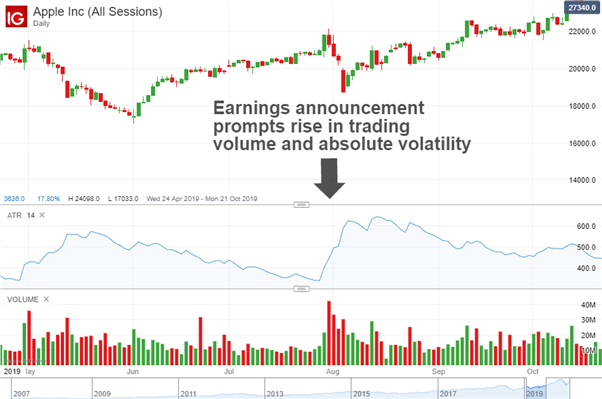
Earnings season is the bi-annual Super Bowl for the WallStreetBets community. It is a period of concentrated, high-stakes volatility where fortunes can be made or incinerated in the moments after a company reports its quarterly results. For the disciplined and knowledgeable, it represents a structured opportunity to profit from predictable market mechanics. For the unprepared, it is a financial trap of unparalleled efficiency. This guide is not a celebration of this gambling spirit, but a masterclass in understanding the arena. We will dissect the entire lifecycle of an earnings trade, from the initial scouting of a company to the complex options strategies employed, and the critical, often-ignored exit plan. We will demystify the forces of Implied Volatility (IV) and IV Crush, explain the concept of the “Expected Move,” and provide a rigorous framework for managing the immense risks involved. This is the WSB guide to earnings season: a manual for navigating the euphoria and terror of the most volatile nights on the trading calendar.
Introduction: The Casino Opens Its Doors
Four times a year, the market transforms. The steady grind of daily price action gives way to a series of binary, high-drama events where a company’s past three months of performance are judged in a single, post-market instant. For the WSB denizen, this is not about long-term value investing. It’s about predicting a single moment of market psychology and positioning oneself to capitalize on the explosive volatility that follows.
The allure is undeniable. The potential for triple-digit percentage returns in a matter of minutes is a siren song. But this game is played with financial live ammunition. The same mechanics that create explosive gains can lead to a 100% loss of capital with equal speed. This guide aims to replace blind YOLO-ing with calculated, high-risk strategy. We will explore how to think about earnings, not just what to bet on.
Part 1: The Anatomy of an Earnings Report – More Than Just EPS and Revenue
To play the game, you must understand the playing field. An earnings release is a multi-layered event.
1.1 The Three-Act Structure
- The Earnings Release: This is the initial data dump, typically occurring at 4:05 PM or 4:10 PM ET. It contains the headline numbers:
- Earnings Per Share (EPS): Did the company beat, meet, or miss analyst estimates?
- Revenue: Did the top-line number exceed expectations?
- Guidance: What does the company project for the next quarter and/or full year? This is often more important than the results for the past quarter.
- The Conference Call (5:30 PM ET): This is where management provides color on the results. The Q&A session with analysts can reveal crucial details about profit margins, demand trends, and potential headwinds. A single cautious comment from a CEO can tank a stock that just beat on both EPS and Revenue.
- The After-Hours & Next-Day Reaction: The initial algorithmic reaction to the headline numbers is often violent but can be misleading. The true, sustained direction often reveals itself during the conference call and in the following day’s trading session as larger, institutional capital digests the full story.
1.2 The Real Drivers of Price Action
While EPS and revenue are the stars, the market’s reaction is driven by a more nuanced set of factors:
- Guidance vs. The Headline: A company can beat on last quarter’s results but provide weak guidance and see its stock plummet. The market is a forward-looking machine.
- Metrics That Matter: For tech companies, it might be user growth or cloud revenue. For a biotech, it’s clinical trial updates. For a retailer, it’s same-store sales and inventory levels. Knowing the key performance indicators (KPIs) for the specific company and sector is crucial.
- The “Whisper Number”: This is an unofficial, often higher, expectation circulating among traders. A company can beat the official consensus estimate but miss the “whisper number” and still sell off.
Part 2: The WSB Arsenal – Instruments of Mass Creation and Destruction
The choice of how to bet is as important as the bet itself. WSB favors instruments that maximize leverage and volatility.
2.1 The Weapon of Choice: Weekly Options
Earnings trades are almost exclusively executed using options, specifically those expiring the same week or, for the truly degenerate, the next day (1DTE – One Day To Expiration).
- Why Options? Leverage. A small amount of capital can control a large notional value of stock, amplifying gains (and losses).
- The Attraction of Weeklies: Shorter-dated options are cheaper, allowing for more contracts and higher potential returns. They also have higher gamma, meaning their delta can change rapidly with a small move in the stock, leading to explosive percentage gains.
2.2 The Core Betting Strategies
A. The Directional YOLO (The Pure Gambler)
This is the classic WSB play: picking a direction and going all-in.
- The Bullish Bet: Long Call Options
- Thesis: You believe the company will smash earnings and guide higher, sending the stock price soaring.
- Setup: Buying OTM (Out-of-The-Money) or ATM (At-The-Money) call options expiring that week.
- The Dream: The stock gaps up 15%. Your OTM calls, bought for $1.00, are now worth $5.00—a 400% return overnight.
- The Bearish Bet: Long Put Options
- Thesis: You believe the company will miss and/or guide lower, cratering the stock.
- Setup: Buying OTM or ATM put options.
- The Dream: The stock gaps down 15%. Your puts print massive gains.
The Immense Risk: You must be correct on both direction and magnitude. A 5% move in the right direction might not be enough to overcome the headwinds you face.
B. The Volatility Play (The Sophisticated Degenerate)
This strategy is for those who are confident a big move is coming but are unsure of the direction.
- The Straddle: Buying both an ATM call and an ATM put with the same strike and expiration.
- Thesis: You are betting the stock will move violently in either direction. Your profit comes from the one side that goes deep ITM, ideally covering the cost of both options and then some.
- Break-Even: The stock must move more than the total debit paid for the straddle, up or down.
- The Strangle: A cheaper, less aggressive version of the straddle. Buying an OTM call and an OTM put.
- Thesis: Same as the straddle, but you are betting on an even larger move.
- Break-Even: The stock must move outside the range created by the strike prices plus/minus the total debit paid.
Part 3: The Invisible Enemy – Understanding Implied Volatility (IV) and IV Crush
This is the single most important concept for any earnings trader to master. Failure to understand it is the primary reason for catastrophic losses.
3.1 Implied Volatility (IV): The Price of Fear and Greed
- What it is: IV is a metric, derived from an option’s price, that reflects the market’s expectation of future volatility. It is expressed as an annualized percentage.
- The Earnings Effect: In the days and hours leading up to an earnings report, uncertainty is at its peak. This uncertainty is priced into the options, causing IV—and therefore the premium of all options—to skyrocket. You are buying options when they are most expensive.
3.2 IV Crush: The Silent Killer
- What it is: The moment the earnings report is released, the uncertainty that was built into the option prices vanishes. The “implied” volatility collapses back to normal levels. This collapse in IV causes the time value portion of the option’s premium to evaporate, regardless of which way the stock moves.
- The Devastating Impact: Imagine you buy a straddle for a total of $8.00 ($4.00 for the call, $4.00 for the put). The stock makes a huge 10% move after earnings. However, IV crush instantly reduces the value of your options by 40%. Your $8.00 straddle is now worth $4.80 at the open, despite the massive move. You’ve lost 40% of your capital overnight. If the stock doesn’t move enough to overcome this crush, your position can be wiped out.
The Iron Rule: The post-earnings move must be greater than the market’s Expected Move (which is priced in via high IV) for a simple long options strategy to be profitable.
Part 4: The WSB Earnings Playbook – A Step-by-Step Guide
This is a systematic framework for approaching an earnings trade, from scouting to execution.
Step 1: Scouting the Target – The Pre-ER Due Diligence
Do not pick a stock at random. Your scouting should be methodical.
- Sector & Sentiment: Is the company in a hot sector (e.g., AI, Semiconductors) where expectations are sky-high, making a “sell-the-news” event more likely? Or is it in a hated sector where even a modest beat could cause a massive short squeeze?
- Recent History: Look at the stock’s price action after the last 4-8 earnings reports. Is it consistently volatile? Does it tend to gap and then reverse (“fade the gap”) or does the momentum continue?
- Options Chain Analysis:
- Open Interest (OI): Look for massive walls of OI at specific strikes. These can act as magnetic pull or resistance points.
- Implied Volatility Rank (IVR): Check if the current IV is in the top percentile of its historical range. An extremely high IVR is a warning sign that you are buying at the peak of expense.
Step 2: The Strategic Decision – Picking Your Play
Based on your DD, choose a strategy that fits your conviction and risk tolerance.
- High Conviction, Clear Direction -> Directional YOLO (Long Calls/Puts). Size small. This is a low-probability, high-payoff bet.
- High Conviction, Big Move, No Direction -> Straddle/Strangle. Understand that IV Crush is your primary adversary.
- No Strong View -> Do Nothing. The best trade is often the one you don’t take. There is no shame in sitting out.
Step 3: Timing and Execution – The Art of the Entry
- When to Enter: Most traders enter their positions in the final hour before the market closes on earnings day. This minimizes the effect of theta decay on your position. Entering days in advance means you are paying for time you don’t need.
- Use Limit Orders: Never market-order options, especially during high volatility. The spreads are wide, and you will get a terrible fill.
Step 4: The Exit Strategy – Your Pre-Flight Checklist
This is the most critical step. You must have a plan for before you enter the trade.
- Scenario 1: You’re Right and It’s a Massive Win.
- Plan: Take profits at the open. Do not get greedy. The volatility will subside, and theta decay will accelerate. Selling into the initial frenzy is often the correct move.
- Scenario 2: You’re Right, But the Move is Modest.
- Plan: You may still be down due to IV Crush. Have a mental stop-loss. If your position is down 50% at the open, will you hold hoping for a drift in your direction during the conference call, or will you cut your losses? Decide beforehand.
- Scenario 3: You’re Dead Wrong.
- Plan: If the stock gaps against you and your options are down 80%, it is almost always better to sell for the remaining 20% than to hope for a miracle reversal. A 20% recovery is far more likely than a 500% recovery. “Diamond hands” on earnings options is a proven strategy for turning a 80% loss into a 100% loss.
Read more: Beyond Stocks: How WSB Is Now Moving the Needle on Crypto and Options Flow
Part 5: The Advanced Class – Selling Premium to Degenerates
For every WSB member buying options before earnings, there is a more sophisticated trader on the other side: the premium seller.
5.1 The Thetagang Approach to Earnings
This involves selling the overpriced, high-IV options that the Degenerates are so eager to buy.
- The Iron Condor: A defined-risk strategy where you sell an OTM call spread and an OTM put spread. Your bet is that the stock will stay within a defined range.
- The Strangle Sale (Naked): An advanced, high-risk strategy where you sell both an OTM call and an OTM put. You profit from IV Crush and the stock staying within your break-even points. The risk is theoretically unlimited if the stock makes a massive move in one direction.
The Psychology: This is a high-probability, low-payoff strategy. You are playing the role of the casino, collecting premium from the gamblers. One bad loss, however, can wipe out weeks of gains.
Part 6: A Case Study – The NVIDIA (NVDA) Earnings Rollercoaster
Let’s examine a real-world example that encapsulates all these concepts.
- The Setup (May 2024): NVIDIA, the AI darling, is reporting earnings. Expectations are astronomically high. IV on weekly options is in the 90th percentile. The market’s “Expected Move” is ±8.5%.
- The Degenerate Play: A trader buys the weekly $950 strike calls for $45.00. They need NVDA to gap up significantly above $995 just to break even.
- The Thetagang Play: A trader sells an iron condor, betting NVDA will stay between $900 and $1,000.
- The Report: NVDA smashes expectations, guides higher, and the stock gaps up 9% the next day, to ~$1,000.
- The Outcome:
- The Degenerate: The $950 calls are now deep ITM. However, due to IV Crush, they are worth $52.00 at the open—a gain of only 15%. The trader was right on direction and magnitude, but the high entry cost and IV Crush severely capped their returns.
- The Thetagang: The iron condor is blown through on the upside. The trader faces a significant, but defined, loss.
This case illustrates the brutal efficiency of the earnings options market. Even being spectacularly right can lead to modest returns.
Conclusion: Embrace the Casino, But Know the Odds
Earnings season trading is the purest expression of the WSB ethos: high risk, high reward, and a relentless focus on short-term catalysts. It can be exhilarating and profitable, but it is fundamentally a form of sophisticated gambling.
The traders who survive and thrive are not the ones who post the single biggest gain; they are the ones who manage their risk effectively across dozens of trades. They understand that IV Crush is a tax on hope, that the “Expected Move” is a hurdle to overcome, and that an exit strategy is more valuable than a conviction.
The allure of the earnings YOLO will always be there. The true mark of an evolved trader is the discipline to sometimes walk away from the table, preserving capital for a trade with a better edge. In this high-stakes casino, the most valuable chip you have is not your capital, but your knowledge.
Read more: Rookie Mistakes: How to Lose Your Life Savings in 5 Days (A WSB Cautionary Tale)
Frequently Asked Questions (FAQ)
Q1: What is the single biggest mistake beginners make with earnings plays?
- A: Ignoring IV Crush. They find a stock that moves 6% after earnings and are confused when their long call option lost 50% of its value. They were right on the direction but were defeated by the mechanics of volatility.
Q2: Is it better to hold through earnings or trade the reaction the next day?
- A: This is a core strategic question. Holding through earnings is a binary gamble on the immediate reaction. Trading the next day allows you to see the full picture (including the conference call) and trade a more sustained trend, but you miss the initial gap and must contend with IV Crush having already happened. There is no “better,” only what fits your risk profile.
Q3: What is a “pin risk” and how does it relate to earnings?
- A: Pin risk occurs when the stock price closes very near your short option’s strike price at expiration. It creates uncertainty over whether you will be assigned on your short position. For earnings plays using weekly options that expire shortly after the report, pin risk is a genuine concern for those selling premium.
Q4: How can I calculate the “Expected Move” for a stock?
- A: The simplest method is to look at the ATM straddle price. If the ATM straddle (call + put) is trading for $10, the market is implying an expected move of ±$10. Most brokerage platforms and data services now display this calculation automatically.
Q5: I had a great earnings win. Should I immediately reinvest it into the next earnings play?
- A: This is a classic psychological trap known as the “hot hand fallacy.” Each earnings trade is an independent event. The smart move is to book the win, return your trading capital to its base level, and methodically research the next opportunity without the emotional pressure of “playing with house money.”
Q6: Where is the best place to find a reliable earnings calendar?
- A: Most major financial websites (Yahoo Finance, Bloomberg, MarketWatch) have accurate calendars. Your brokerage platform (Thinkorswim, Fidelity) will also have one integrated with its trading tools, often allowing you to see expected move and IV directly on the calendar.
Keywords: Earnings Report, Earnings Season, IV Crush, WallStreetBets, Options Trading, Volatility, Expected Move, Straddle, Strangle, YOLO, Risk Management.
Author Bio & Disclaimer: This article was written by a team with expertise in derivatives trading, volatility analysis, and risk management. It is intended for educational purposes only and does not constitute financial advice, nor a recommendation to buy or sell any security or employ any specific strategy. Trading options, especially around earnings, is exceptionally risky and can lead to the rapid and complete loss of your entire investment. You are solely responsible for your own investment decisions and should consult with a qualified financial advisor before acting on any information contained herein. Past performance is not indicative of future results.
Read more: Thetagang vs. Degenerates: The Civil War Inside Wall Street Bets