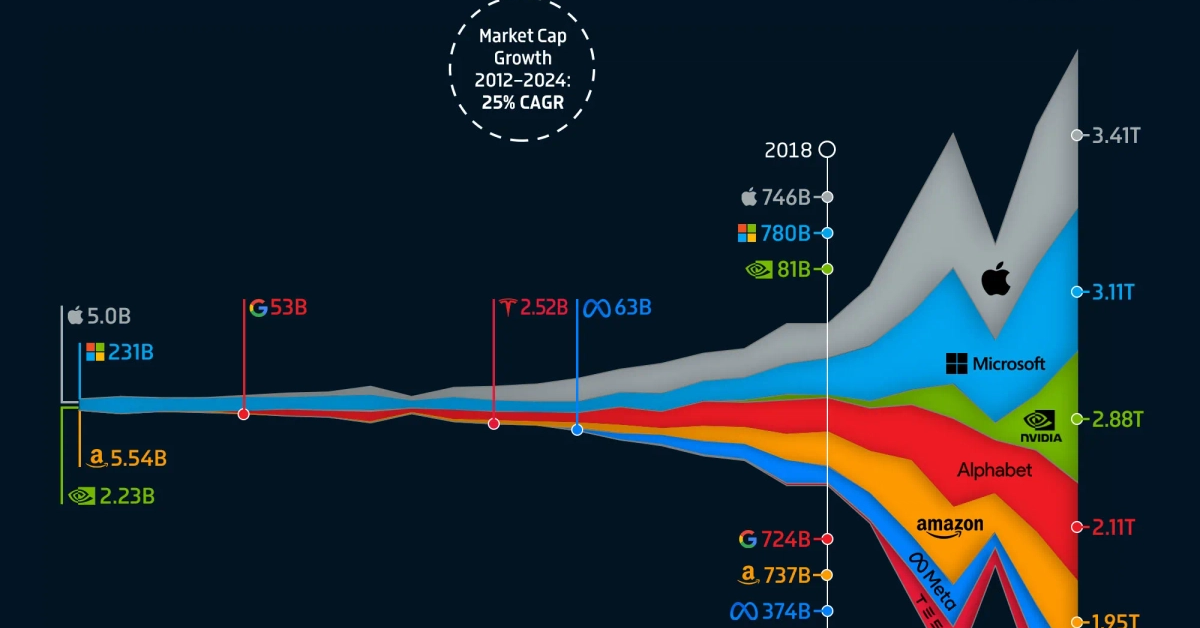
For the better part of the last decade, the narrative of the US stock market, and particularly the tech sector, has been dominated by a colossus: the “Magnificent Seven.” This elite group—comprising Alphabet (Google), Amazon, Apple, Meta Platforms (Facebook), Microsoft, Nvidia, and Tesla—has driven index returns, captivated investor imagination, and fundamentally reshaped the global economy. Their collective gravitational pull is so strong that the performance of the S&P 500 has become heavily reliant on their fortunes.
However, a critical question now emerges for investors: What comes next?
Relying solely on these behemoths carries inherent risks. Their massive scale makes exponential growth increasingly challenging, regulatory scrutiny is intensifying globally, and their valuations already bake in near-perfect execution for years to come. The law of large numbers is a formidable adversary.
The savvy investor, therefore, must look beyond the horizon. The dynamic nature of technology means that the next wave of transformative companies is already taking shape in the shadows of these giants. Identifying these future leaders requires a blend of thematic foresight, rigorous fundamental analysis, and a disciplined process. This article serves as a guide to that endeavor. We will deconstruct the investment landscape, explore the most promising emerging themes, and provide a framework for spotting the tech growth stocks that have the potential to define the next market cycle.
Part 1: Understanding the Post-Magnificent Seven Landscape
Before we can identify what’s next, we must first understand the legacy of the current titans and why the market is ripe for a new cohort of leaders.
The Magnificent Seven’s Legacy and the Law of Large Numbers
The Magnificent Seven earned their status by creating and dominating entire industries: search and digital advertising, cloud computing, social networking, consumer electronics, and AI hardware. Their success was built on powerful network effects, immense data moats, and relentless innovation.
Yet, a company worth over $2 trillion cannot double in size as easily as one worth $20 billion. For Microsoft or Apple, finding an additional $200 billion in market cap requires launching a product or service that is, in itself, larger than the vast majority of public companies. This is the “law of large numbers” in action. While their absolute growth may remain impressive, their percentage growth rates are naturally decelerating. This creates an opportunity for smaller, more agile companies to deliver superior returns.
The Seedbed for the Next Wave: A Confluence of Macro and Micro Trends
Several powerful forces are creating a fertile environment for the next generation of tech leaders:
- Technological Maturation: Foundational technologies pioneered by the Magnificent Seven, like cloud infrastructure (AWS, Azure, Google Cloud), have become cheap and ubiquitous. This allows startups to build sophisticated products without massive upfront capital expenditure, a phenomenon known as the “democratization of innovation.”
- The AI Tidal Wave: The generative AI revolution, while currently led by Nvidia and Microsoft-backed OpenAI, is creating a vast ecosystem of enablers and beneficiaries. From specialized AI chips to application-layer software, the value chain is long and ripe for specialization.
- Specialization Over Generalization: The Magnificent Seven are horizontal platforms. The next wave will likely include “vertical SaaS” and specialized tech companies that solve deep, complex problems for specific industries (e.g., healthcare, finance, manufacturing) in ways generalists cannot.
- Geopolitical and Regulatory Shifts: Concerns over data sovereignty, supply chain resilience, and national security are driving massive investment in areas like semiconductor manufacturing (the CHIPS Act), cybersecurity, and defense technology, creating new avenues for growth outside the consumer-centric models of the past.
Part 2: Thematic Hunting Grounds for the Next Wave
Instead of simply looking for “the next Apple” or “the next Google,” investors should focus on the powerful, durable themes that are likely to generate outsized growth over the next 5-10 years. Here are the most promising thematic hunting grounds.
Theme 1: The AI Ecosystem Beyond Nvidia
Nvidia is the undisputed king of the AI hardware boom, supplying the essential picks and shovels (GPUs) for the gold rush. But a full-scale ecosystem is emerging around it.
- Specialized Semiconductors (ASICs): While GPUs are versatile, the insatiable demand for more efficient AI processing is fueling a rise in Application-Specific Integrated Circuits (ASICs). Companies like AMD is a established player making a strong push, but newer architectures from companies like Arm Holdings are also crucial. Furthermore, companies designing chips for specific AI workloads, such as inference at the edge (rather than training in massive data centers), represent a compelling niche.
- AI Infrastructure and MLOps: Building and deploying AI models is complex. This has spawned a new software category called MLOps (Machine Learning Operations). Companies in this space provide the tools to manage the entire AI lifecycle—data preparation, model training, deployment, monitoring, and governance. Datadog and Snowflake have expanded powerfully into this arena, while pure-plays are emerging.
- The Application Layer: This is where AI meets the end-user. While Microsoft Copilot is a horizontal play, specialized AI applications in areas like drug discovery (Recursion Pharmaceuticals), legal document analysis, and creative content generation are showing immense promise. These companies are embedding AI directly into high-value workflows, creating sticky products and strong value propositions.
Theme 2: Digital Resilience: Cybersecurity and Cloud-First Infrastructure
As the world’s digital footprint expands, so does its attack surface. Cybersecurity is no longer a discretionary IT expense but a non-negotiable pillar of modern business. This trend is secular and evergreen.
- Cloud-Native Security: The shift to cloud and remote work has rendered traditional perimeter-based security obsolete. The “Zero Trust” model, which assumes no user or device is trusted by default, is now the standard. Companies like CrowdStrike and Zscaler are leaders in this space, offering platforms that protect endpoints, identities, and data regardless of location. Their platform approach creates strong switching costs and recurring revenue.
- Identity and Access Management (IAM): As the foundational layer of Zero Trust, IAM is critical. Companies that manage user identities and privileges across a fragmented application landscape are sitting in a high-growth choke point.
- Secure Cloud Infrastructure: Even the underlying infrastructure of the cloud is being rethought for security. Companies offering confidential computing (encrypting data even while in use) or secure, multi-cloud networking solutions are addressing fundamental concerns for enterprises and governments.
Theme 3: The “Unsexy” Revolution: Vertical SaaS and B2B Enablers
Some of the most profitable tech companies are those you rarely hear about in the mainstream news. They are the digital engines powering specific, often “unsexy,” industries.
- Vertical SaaS: These are software companies built for a single industry. Examples include Veeva Systems for the life sciences industry, Procore Technologies for construction management, and Toast for the restaurant industry. They succeed by developing an incredibly deep understanding of their customers’ workflows, creating products that are far more integral and difficult to replace than a generic horizontal tool.
- FinTech Infrastructure: The digitization of finance goes beyond consumer-facing apps like Robinhood. A vast infrastructure layer is being built to modernize payments, banking, and compliance. Companies like Block (through its Square and Cash App ecosystems) are creating two-sided networks, while others focus on B2B payments, embedded finance, and back-office automation for financial institutions.
Theme 4: Frontier Tech: The Next Platform Shifts
True growth investors always keep one eye on the distant horizon, where the next platform shifts are germinating.
- The Metaverse (Enterprise-First): While the consumer-facing metaverse has faced hype cycles, its enterprise applications are gaining tangible traction. Using virtual and augmented reality for design collaboration, employee training, and remote maintenance in industries like engineering, manufacturing, and healthcare is a real and growing market. Companies like Unity Software provide the real-time 3D development platform that powers many of these experiences.
- Quantum Computing (Speculative but Potentially Transformative): We are in the very early, “pre-commercial” innings of quantum computing. However, the companies building the hardware and software for this next computational paradigm could eventually unlock solutions to problems that are intractable for today’s classical computers—from material science to drug discovery and financial modeling. This is a high-risk, potentially astronomical-reward area suitable for only the most speculative portion of a portfolio.
- Climate and Energy Tech: The global transition to a sustainable economy is arguably the largest capital reallocation in history. This is spawning a new generation of tech companies focused on renewable energy management, grid storage, carbon accounting, and sustainable agriculture. This theme is supported by powerful regulatory tailwinds (e.g., the Inflation Reduction Act) and a fundamental shift in corporate and societal priorities.
Part 3: The Analytical Framework: How to Vet a Potential Growth Stock
Identifying a promising theme is only the first step. The crucial second step is a rigorous, disciplined analysis of individual companies within that theme. Here is a framework to separate the potential winners from the also-rans.
1. The Moat: Sustainable Competitive Advantage
A company’s “moat” is what protects it from competitors and ensures its profits are durable. Look for:
- Network Effects: Does the product become more valuable as more people use it? (e.g., a marketplace, a social platform).
- Switching Costs: Is it difficult or expensive for customers to leave? (e.g., deeply embedded SaaS workflows, data migration challenges).
- Intellectual Property: Does the company possess patented technology, proprietary algorithms, or unique data sets that cannot be easily replicated?
- Brand Power: Does the brand command loyalty and allow for premium pricing?
Red Flag: A company competing purely on price in a crowded market with no discernible moat.
2. The TAM (Total Addressable Market): Room to Run
A great company needs a large market to conquer. Is the TAM large and, ideally, expanding? A company with a $1 billion product in a $5 billion market will eventually hit a ceiling. A company with a $100 million product in a $100 billion market has a long growth runway ahead.
Red Flag: A small or stagnant TAM, or a company that is already capturing a very high percentage of its available market.
3. The Financials: Quality of Growth
Scrutinize the numbers beyond just top-line revenue growth.
- Revenue Growth vs. Profitability: High revenue growth is essential, but it shouldn’t come at any cost. Look for a path to profitability or, even better, improving unit economics and expanding gross margins over time.
- Recurring Revenue: Does the company have a subscription-based model (SaaS) that creates predictable, high-visibility revenue? Metrics like Net Revenue Retention (NRR) are critical—an NRR over 100% indicates that the existing customer base is growing, a sign of a healthy, sticky product.
- Balance Sheet Health: A strong cash position with little debt provides the fuel to weather economic downturns and invest in R&D and acquisitions.
Red Flag: Consistently negative free cash flow with no clear path to improvement, or burning cash solely on customer acquisition with poor retention.
4. The Management Team: Vision and Execution
A great idea is nothing without a great team to execute it.
- Track Record: Does the leadership team, particularly the CEO, have a history of success and integrity?
- Capital Allocation: How wisely is the company reinvesting its profits? Are they funding smart R&D or making expensive, dilutive acquisitions?
- Transparency: Does management communicate clearly with shareholders, admitting mistakes and laying out a coherent long-term strategy?
Red Flag: A founder/CEO with excessive control through dual-class share structures and a history of erratic behavior or overpromising.
Read more: The OTCQX Advantage: Finding Higher-Quality Penny Stocks in the US Market
Part 4: A Prudent Approach to Portfolio Construction
Finding the next wave of growth stocks is exciting, but it must be approached with discipline and an understanding of risk.
- Diversification is Non-Negotiable: Any single small or mid-cap tech stock carries significant idiosyncratic risk. Building a portfolio of 10-20 companies across different themes (AI, Cybersecurity, Vertical SaaS) mitigates the impact of any one company failing.
- Position Sizing: Allocate capital responsibly. These should be smaller, strategic positions within a broader, diversified portfolio that likely still includes some of the more stable Magnificent Seven or other large-cap stocks. A common strategy is to use the “core and explore” approach, where the “core” is built with established giants and ETFs, and the “explore” segment is for these higher-risk, higher-reward opportunities.
- A Long-Term Time Horizon: True growth takes time. These investments require a minimum 3-5 year horizon to allow the company’s strategy to play out. Avoid the temptation to trade based on short-term quarterly volatility.
- Continuous Monitoring and Reassessment: The tech landscape evolves rapidly. A company that looks promising today may see its moat erode tomorrow. Regularly review your holdings against the analytical framework to ensure the original investment thesis remains intact.
Conclusion: The Journey Beyond Begins Now
The era of the Magnificent Seven is not over. They will likely remain formidable forces for years to come. However, the next chapter of wealth creation in the US tech market will be written by the companies that are currently navigating their growth inflection points, solving critical problems in specialized markets, and riding the next wave of technological disruption.
By shifting focus from the giants of yesterday to the themes of tomorrow—the AI ecosystem, digital resilience, vertical SaaS, and frontier tech—and by applying a disciplined, analytical framework, investors can position themselves to identify and capitalize on the next wave of US tech growth stocks. The journey beyond the Magnificent Seven is not without risk, but for the informed and patient investor, it is a journey brimming with opportunity.
Read more: Sector Spotlight: 2 Overlooked US Penny Stocks in the Renewable Energy Boom
Frequently Asked Questions (FAQ)
Q1: Is it time to sell my Magnificent Seven stocks?
A: Not necessarily. The Magnificent Seven are not “bad” companies. They are massive, profitable, and still innovative. The key is to view them differently. They are now more akin to foundational “blue-chip” holdings that provide stability and steady growth, rather than hyper-growth rockets. A balanced portfolio can include both these established leaders for stability and a selection of emerging growth stocks for potential upside.
Q2: Where can I find research on these smaller, emerging tech companies?
A: Beyond mainstream financial news, consider these sources:
- Company Investor Relations Pages: For official SEC filings, earnings call transcripts, and presentations.
- Specialized Financial Media: Outlets like The Information, Stratechery, and certain sections of Bloomberg and Reuters often provide deeper dives into emerging tech trends.
- Analyst Reports from Boutique Firms: While large investment banks may not cover very small companies, smaller, specialized firms often do.
- Industry-Specific Publications: To understand a Vertical SaaS company, read the trade publications for the industry it serves (e.g., a construction tech magazine for Procore).
Q3: How much of my portfolio should I allocate to this “next wave” search?
A: There is no one-size-fits-all answer, as it depends entirely on your risk tolerance, investment horizon, and overall financial goals. A common conservative approach is to limit speculative, high-risk investments to a small percentage (e.g., 5-15%) of your total equity portfolio. Always ensure your core financial foundation (emergency fund, retirement savings in diversified funds) is secure first.
Q4: Are ETFs a good way to invest in these themes?
A: Absolutely. For most investors, ETFs are a prudent and efficient way to gain exposure to these next-wave themes without the company-specific risk. ETFs like the Global X Artificial Intelligence & Technology ETF (AIQ), WisdomTree Cloud Computing Fund (WCLD), or ARK Innovation ETF (ARKK) provide diversified exposure to baskets of companies within AI, cloud computing, and disruptive innovation, respectively. Always check an ETF’s holdings, expense ratio, and strategy before investing.
Q5: What is the biggest mistake investors make when hunting for the next big growth stock?
A: Chasing hype and stories over fundamentals. Getting swept up in a compelling narrative without verifying the underlying business mechanics—the strength of its moat, the quality of its financials, the realism of its TAM, and the capability of its management—is a recipe for disappointment. Another critical mistake is having a short time horizon and panic-selling during the inevitable volatility that comes with small-cap growth stocks. Patience and due diligence are the ultimate antidotes.