Introduction: The Law of Large Numbers and the Search for the Next Ascent
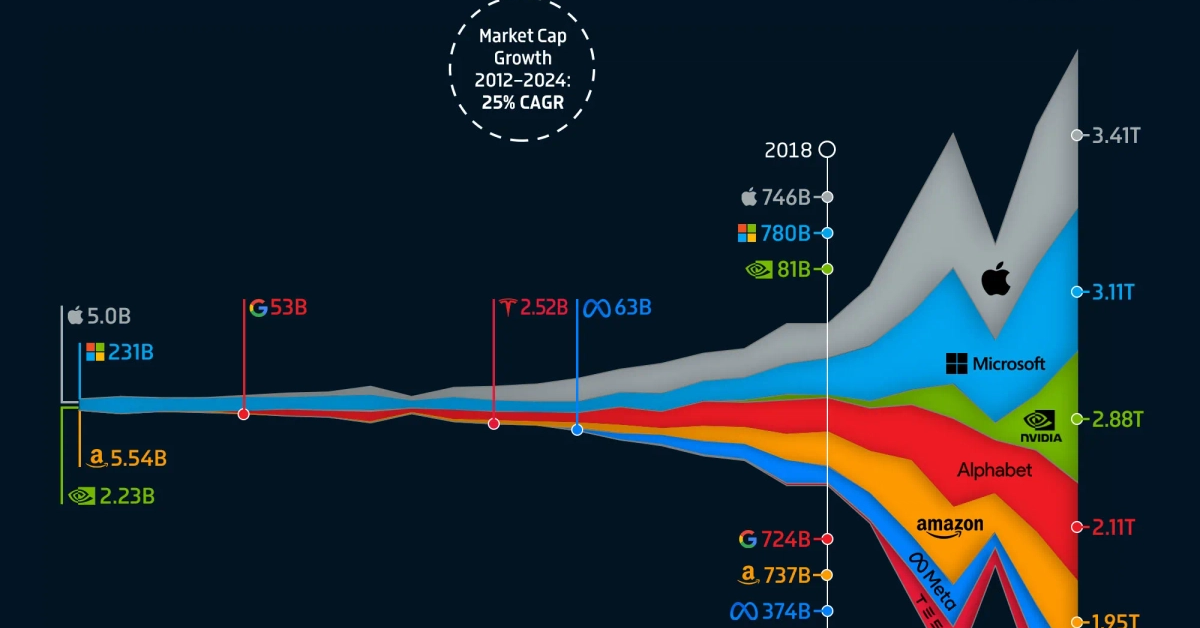
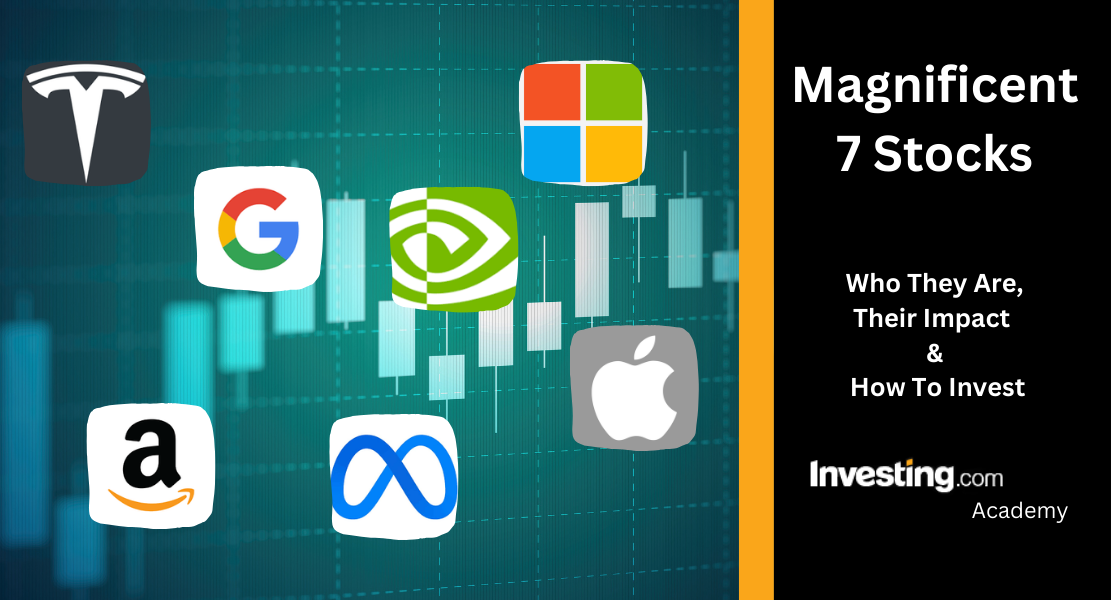
For the better part of a decade, the narrative of the U.S. stock market has been dominated by a select group of technology behemoths: the “Magnificent Seven”—Apple, Microsoft, Alphabet (Google), Amazon, Nvidia, Tesla, and Meta Platforms (Facebook). These companies have delivered staggering returns, driven global indices, and fundamentally reshaped our economy and daily lives. Their success is a testament to their powerful platforms, immense competitive moats, and world-class execution.
However, for the forward-looking investor, a critical question emerges: Where is the next wave of exponential growth coming from?
The “Law of Large Numbers” presents a formidable challenge. It becomes progressively harder for a company with a $2 trillion market cap to double in value than for a company with a $20 billion market cap. While the Magnificent Seven are not going away and will likely remain core holdings for years, their future returns may shift from explosive growth to more stable, albeit still impressive, appreciation driven by earnings and dividends.
This article is a guide for investors looking to venture “beyond the known universe” of the Magnificent Seven. We will define a framework for identifying the next generation of high-growth U.S. tech leaders, explore the most promising thematic frontiers, analyze specific companies that exemplify these trends, and provide a disciplined strategy for building a portfolio of future giants.
Section 1: The Magnificent Seven’s Legacy – A Blueprint, Not a Relic
Before we look beyond, we must understand what made the Magnificent Seven so successful. Their rise was not random; it followed a repeatable pattern that we can use as a blueprint.
The Common DNA of a Tech Titan:
- Platform Business Model: They don’t just sell a product; they create an ecosystem. Microsoft’s Windows/Office/Azure, Apple’s iOS/hardware, Amazon’s e-commerce/cloud/AWS, and Google’s search/advertising ecosystem create powerful network effects. The more users, the more valuable the platform becomes, creating a nearly unassailable competitive advantage or “moat.”
- Massive Total Addressable Market (TAM): They targeted markets that were either enormous or had the potential to become enormous. They didn’t just want a piece of the pie; they aimed to create new pies altogether. Cloud computing, digital advertising, and personal computing were all fields with global, trillion-dollar potential.
- Proprietary Technology and Relentless Innovation: At their core, each company achieved a fundamental technological breakthrough—whether in search algorithms, social networking, electric vehicle powertrains, or GPU architecture for AI. They then continuously reinvested profits into R&D to stay ahead of the curve.
- Visionary Leadership: Founders like Bezos, Jobs, Gates, and Zuckerberg possessed an unwavering long-term vision, often prioritizing market share and future potential over short-term profitability.
The Magnificent Seven are now maturing. Their growth is becoming more correlated with the overall economy. The opportunity for alpha—returns above the market average—increasingly lies in identifying the companies that are currently building the platforms, defining the TAMs, and developing the proprietary technologies for the next decade.
Section 2: The Screening Framework – How to Spot a Future Leader
Finding the next wave requires more than just picking small tech stocks. It requires a disciplined framework to separate truly disruptive companies from mere hype. Here are the key criteria to evaluate:
1. TAM (Total Addressable Market): Is the company operating in a market with significant headroom for growth? A $10 billion TAM is good, but a $100 billion+ TAM is what allows for multi-bagger returns. Look for companies creating or leading new categories.
2. Sustainable Competitive Advantage (The Moat): What prevents competitors from copying their success? This can be:
* Network Effects: The value of the service increases with each new user (e.g., a marketplace, a software ecosystem).
* Data Advantage: Proprietary data that improves the product and creates a feedback loop (e.g., AI training data).
* Intellectual Property: Patents, proprietary algorithms, or trade secrets that are difficult to replicate.
* High Switching Costs: It is too expensive, complex, or risky for customers to leave.
3. Robust Financial Health & Metrics: Beyond just revenue growth, scrutinize:
* Revenue Growth Rate: Consistently high (e.g., >25-30% YoY) is a baseline for “high-growth.”
* Gross Margin: High and/or expanding gross margins indicate a scalable, valuable product that isn’t competing on price.
* Operating Leverage: The path to profitability. Are sales and marketing costs rational? Is the company showing evidence that it can eventually convert top-line growth into bottom-line profits?
* Balance Sheet: A strong cash position with manageable debt provides the fuel to weather downturns and invest in growth without constant dilution.
4. The “X-Factor” – Vision and Execution: Does the leadership team have a clear, compelling vision for the future? Do they have a track record of executing on their promises? Assess the quality of management through earnings calls, shareholder letters, and their strategic decisions.
Section 3: The New Frontiers – Four Thematic Hunting Grounds
The next wave of tech giants will likely emerge from seismic shifts in technology and society. Here are four of the most fertile thematic frontiers for investors to explore.
Theme 1: The Enterprise AI & Data Cloud Ecosystem
While Nvidia is the clear “picks and shovels” winner in the AI gold rush, the real value will be created by the companies that use these tools to build the next generation of enterprise software.
- The Thesis: Every company will become an AI company. This requires a new stack of infrastructure and tools for data management, AI model deployment, and application integration. This goes far beyond just training models; it’s about making AI operational, secure, and scalable within large organizations.
- Exemplar Companies:
- Snowflake (SNOW): The data cloud company. Snowflake’s platform allows businesses to consolidate, analyze, and share massive amounts of structured and semi-structured data. It is the foundational data layer upon which AI and machine learning applications are built. Its consumption-based model is highly scalable.
- Datadog (DDOG): Provides observability and security for cloud applications. As companies deploy more complex, AI-driven applications across multiple clouds, the need to monitor performance, log data, and ensure security becomes paramount. Datadog is a critical tool for modern DevOps and IT teams.
- Palantir (PLTR): A pioneer in data analytics, now leveraging its Foundry platform to deploy its Artificial Intelligence Platform (AIP) for enterprises. Palantir helps large organizations (from governments to industrials) integrate their siloed data and deploy bespoke AI logic to optimize operations, from supply chains to battlefield logistics.
Theme 2: The Cybersecurity Mesh
As the world digitizes and moves to the cloud, the attack surface for malicious actors expands exponentially. The old model of a “walled castle” firewall is obsolete. The new paradigm is a “cybersecurity mesh”—a flexible, modular security architecture that integrates distributed tools to protect data, identities, and devices anywhere they exist.
- The Thesis: Cybersecurity is no longer a discretionary IT expense; it is a non-negotiable, perpetual cost of doing business. The shift to cloud and hybrid work creates relentless demand for best-in-class solutions.
- Exemplar Companies:
- CrowdStrike (CRWD): A leader in endpoint security, its Falcon platform uses AI and a massive threat graph to stop breaches. It has successfully expanded into adjacent modules like identity protection, cloud security, and threat intelligence, creating a powerful platform effect.
- Zscaler (ZS): Pioneered the “Zero Trust” security model. Instead of connecting to a corporate network, users connect directly to Zscaler’s cloud, which inspects all traffic and provides secure access to internal applications, rendering the traditional VPN obsolete.
- Palo Alto Networks (PANW): While a more established player, it has aggressively transformed itself into a platform company through acquisitions and organic development. Its portfolio covers firewalls, cloud security, and security operations, making it a one-stop shop for large enterprises.
Theme 3: The Fintech & Payments Revolution 2.0
The first wave of Fintech focused on disrupting consumer banking and payments (PayPal, Square/Block). The next wave is digitizing the vast, complex, and archaic world of B2B finance, global commerce, and embedded finance.
- The Thesis: Trillions of dollars in B2B payments and enterprise financial processes are still managed with manual workflows, paper checks, and legacy software. Digitizing this space offers a TAM that dwarfs consumer peer-to-peer payments.
- Exemplar Companies:
- Block (SQ): While known for its Seller and Cash App ecosystems, its focus on creating a cohesive, integrated “financial services highway” for both businesses and individuals gives it a unique platform advantage. Its TBD division is focused on building an open developer platform for the future of finance.
- Global-e Online (GLBE): A leader in the global e-commerce enablement space. It provides a platform that allows direct-to-consumer brands and retailers to easily sell internationally by handling cross-border logistics, localization, customs, and payments. It is a key enabler of the global, digital-first economy.
- Flywire (FLYW): Focuses on vertical-specific, high-value payment flows like education (tuition), healthcare (medical bills), and travel. Its platform simplifies complex payments for both the payer and the recipient, solving real pain points in large, important industries.
Theme 4: The Intelligent Automation and Robotics Wave
This theme moves beyond pure software to the integration of AI with the physical world. It encompasses everything from software robots that automate back-office tasks to physical robots that automate warehouses and factories.
- The Thesis: Persistent labor shortages and the need for efficiency are forcing a structural shift towards automation across the economy. AI is making these systems smarter, more flexible, and more cost-effective.
- Exemplar Companies:
- UiPath (PATH): A leader in Robotic Process Automation (RPA). Its software “robots” mimic human actions to automate repetitive, rule-based computer tasks (e.g., data entry, invoice processing). This frees up human workers for higher-value activities and creates massive ROI for enterprises.
- Symbotic (SYM): This company provides a fully automated warehousing and supply chain system using a fleet of autonomous robots and AI software. Its systems, which are deployed for giants like Walmart, can dramatically increase warehouse density and efficiency, addressing a critical bottleneck in modern logistics.
Read more: Wall Street’s Blind Spot: 2 Undervalued Penny Stocks Flying Under the Radar
Section 4: Case Study Analysis – A Deep Dive on Snowflake and CrowdStrike
Let’s apply our screening framework to two exemplar companies to see the theory in practice.
Snowflake (SNOW) Analysis:
- TAM: The market for data cloud, data warehousing, and analytics is enormous, estimated to be well over $100 billion and growing as data becomes the new oil.
- Moat (Competitive Advantage):
- Architectural Advantage: Its unique architecture separates storage and compute, allowing for unprecedented scalability and cost-efficiency that legacy players like Oracle or Teradata cannot easily match.
- Data Sharing: Its ability to allow secure, live data sharing between organizations (even competitors on the platform) without moving data is a powerful network effect.
- High Switching Costs: Once an enterprise has built its entire data analytics stack on Snowflake, migrating petabytes of data and retraining teams is a monumental task.
- Financial Health:
- Revenue Growth: Consistently high, though naturally moderating as it scales.
- Gross Margin: Product gross margins are exceptionally high (~75%), indicating a highly scalable software product.
- Operating Leverage: The company is focused on driving towards non-GAAP profitability, demonstrating a path to sustainable earnings.
- X-Factor: Leadership under CEO Frank Slootman (who previously led ServiceNow’s incredible growth) is highly respected for its operational discipline and sharp focus.
CrowdStrike (CRWD) Analysis:
- TAM: The cybersecurity market is perpetually growing, with TAM estimates consistently revised upwards. CrowdStrike’s expansion into new modules (identity, cloud, log management) continuously expands its own served TAM.
- Moat (Competitive Advantage):
- Threat Graph: Its single, AI-powered platform is fed by trillions of security events per week from its global customer base. This creates an insurmountable data advantage; the more customers it has, the smarter its AI becomes, and the better it protects all customers.
- Platform Effect: The “land-and-expand” model is incredibly effective. Customers start with endpoint protection and then easily add modules for identity, cloud security, etc., all from a single, unified console.
- Financial Health:
- Revenue Growth: Robust and consistent, even at its scale.
- Gross Margin: High (~76-78%) and stable.
- Profitability: The company has already achieved GAAP profitability, a rare feat for a growth company of its age, demonstrating strong financial discipline.
- X-Factor: Founder-led by CEO George Kurtz, a renowned cybersecurity expert, the company has maintained a relentless innovation cadence and a clear vision of “stopping breaches.”
Section 5: Portfolio Strategy and Risk Management
Investing in the next wave is inherently riskier than investing in the established Magnificent Seven. A disciplined strategy is paramount.
1. Embrace a Venture Capital Mindset: Understand that not all your picks will succeed. Some will fail, some will muddle along, and a few winners will drive the vast majority of your returns. Your portfolio should reflect this reality.
2. Position Sizing is Critical: Allocate smaller, more manageable amounts to these high-growth, high-volatility stocks compared to your core holdings. A 1-3% portfolio allocation to a promising but unproven company is prudent; a 10% allocation is speculative.
3. Diversify Across Themes: Don’t put all your eggs in one thematic basket. Build a “basket of futures” by owning companies across Enterprise AI, Cybersecurity, Fintech, and Automation. This protects you if one theme takes longer to mature than expected.
4. Monitor, Don’t Just Hold: The fundamentals that made you invest can change. Regularly check quarterly earnings, management commentary, and competitive positioning. Has the growth rate collapsed? Is the competitive moat being eroded? Is management failing to execute? Be prepared to sell if the original thesis breaks.
5. Patience is a Superpower: These are long-term investments. They will experience gut-wrenching volatility and drawdowns of 30-50% or more, even without a change in fundamentals. You must have the conviction and patience to hold through these periods if you believe in the long-term story.
Read more: A Realistic Look at the Odds: What Percentage of Penny Stocks Actually Succeed?
Conclusion: The Journey from Speculation to Stalwart
The journey “Beyond the Magnificent Seven” is a search for the companies that will define the next chapter of technological innovation and economic growth. It requires moving from the comfort of established giants to the dynamic, and sometimes turbulent, landscape of emerging leaders.
By focusing on a disciplined framework—evaluating TAM, Moat, Financials, and Management—and hunting in the fertile thematic grounds of Enterprise AI, Cybersecurity, Fintech, and Automation, investors can significantly improve their odds of identifying the future titans of the tech sector.
This process is not about replacing the Magnificent Seven but about complementing them with a curated portfolio of tomorrow’s leaders. The goal is to find the companies that are currently on their own steep growth trajectory, with the potential to one day join the ranks of the very giants we study today. It is a challenging but potentially highly rewarding endeavor for those who do their homework and manage their risks with care.
Frequently Asked Questions (FAQ)
Q1: Why not just keep investing in the Magnificent Seven? They are proven winners.
A: There is absolutely a case for maintaining core positions in the Magnificent Seven. They are incredibly strong companies. However, for the “growth” portion of a portfolio, seeking alpha means looking for the next leg of growth. The Magnificent Seven’s sheer size makes exponential returns more difficult. Diversifying into the potential future leaders can enhance a portfolio’s long-term return profile.
Q2: How do I balance the risk of these smaller companies with the stability of my overall portfolio?
A: Through position sizing and asset allocation. Your core portfolio should likely consist of index funds (like an S&P 500 ETF) and stable, large-cap stocks. Allocate a smaller, specifically designated “satellite” portion (e.g., 10-20% of your total portfolio) to these higher-risk, higher-reward opportunities. Within that satellite portfolio, ensure you are diversified across several companies and themes.
Q3: Many of these companies aren’t profitable. Why is that acceptable?
A: In high-growth tech, reinvestment for future market leadership is often prioritized over short-term profitability. The key is to see a path to profitability. Look for:
- High and growing gross margins (proving the underlying business model is sound).
- Improving operating margins over time.
- Management providing a clear timeline or plan for achieving profitability.
A company burning cash with no plan and low gross margins is dangerous. A company burning cash to acquire customers in a massive TAM with 80% gross margins is making a strategic investment.
Q4: What are the biggest red flags to watch out for?
A:
- Slowing Revenue Growth: For a “high-growth” stock, a sharp deceleration in revenue growth is the number one warning sign.
- Deteriorating Gross Margins: This suggests pricing pressure or an un-scalable cost structure.
- High Customer Concentration: If one customer represents >20% of revenue, losing them could be catastrophic.
- Management Turnover or Lack of Transparency: A sudden exodus of key executives or evasive answers on earnings calls are major concerns.
- Mounting Losses with No Clear Path to Profitability: As mentioned, reinvestment is fine, but burning cash indefinitely is not.
Q5: Should I invest in individual stocks or are there ETFs for this?
A: Both are valid options, with different risk profiles.
- ETFs: Funds like the ARK Innovation ETF (ARKK), Global X Cloud Computing ETF (CLOU), or First Trust Cloud Computing ETF (SKYY) provide instant diversification across a theme. This is a lower-risk way to gain exposure, but you also own the weaker companies along with the strong ones.
- Individual Stocks: Offers the potential for higher returns if you successfully pick the winners, but carries significantly more company-specific risk. This requires more time, research, and risk tolerance.
Q6: Where can I do my own research on these companies?
A: Start with primary sources:
- Investor Relations Websites: Find quarterly earnings presentations, SEC filings (10-K, 10-Q), and shareholder letters.
- Earnings Calls: Listen to the management discussion. Are they confident and clear?
- Financial Data Platforms: Yahoo Finance, Bloomberg, and Morningstar provide consolidated data and news.
- Independent Analysis: Read analysis from reputable sources, but always form your own conclusions.
Disclaimer: This article is for informational and educational purposes only and should not be construed as specific investment, financial, or legal advice. The companies mentioned are for illustrative purposes only and are not recommendations. All investing involves risk, including the possible loss of principal. Investors should conduct their own due diligence and consult with a qualified financial advisor before making any investment decisions. Past performance is not indicative of future results.
Read more: Your Penny Stock Watchlist: 5 US Companies to Monitor This Quarter