The story is a familiar one, often whispered in online forums and promoted in flashy newsletters: the tale of an ordinary person who turns a few hundred dollars into a fortune by investing in a little-known penny stock. It’s the modern-day gold rush, a tantalizing narrative of rapid wealth and financial liberation that stands in stark contrast to the slow, steady grind of traditional investing.
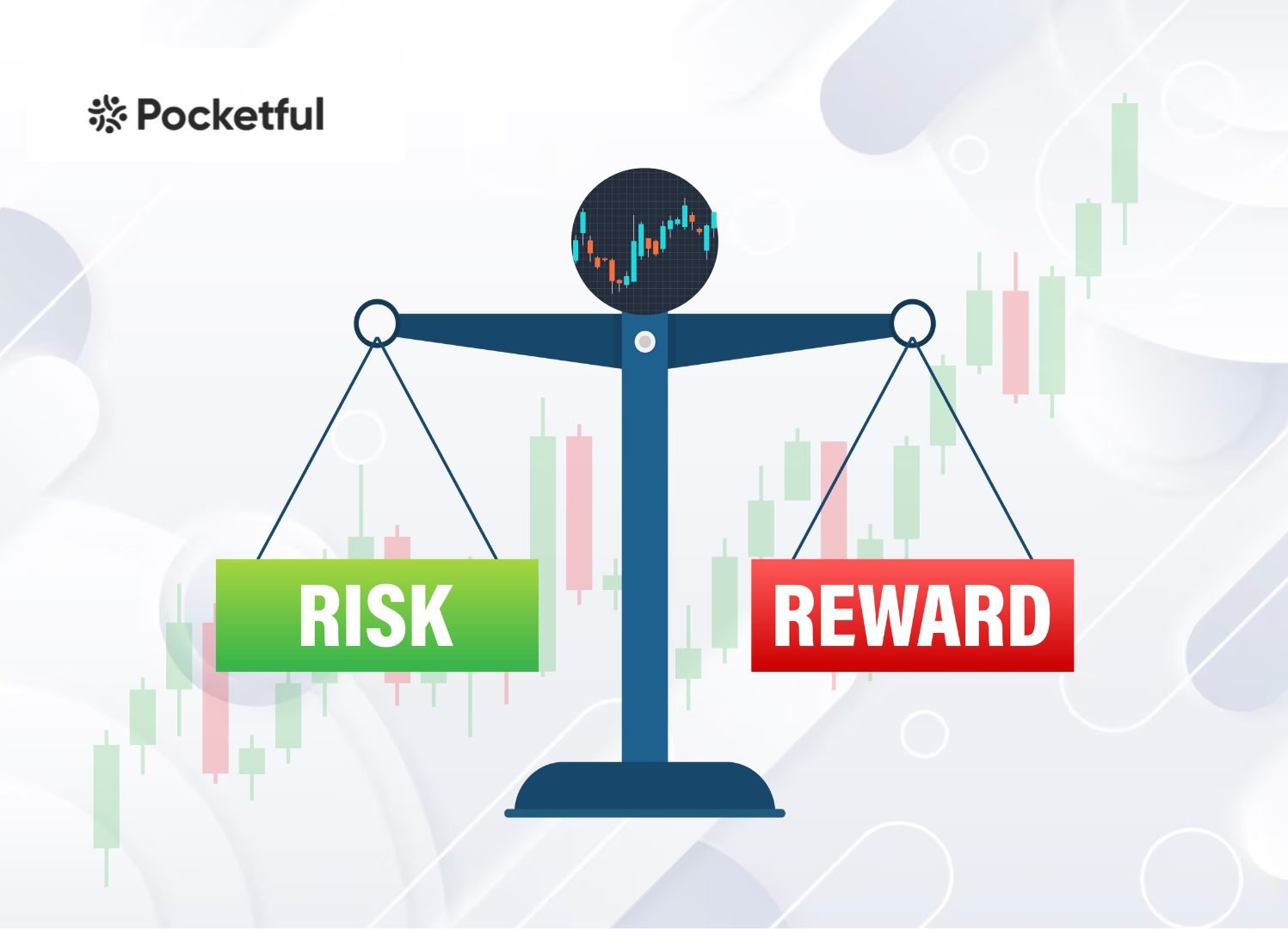
But behind this alluring facade lies a different, more common reality—one of precipitous declines, fraudulent schemes, and shattered portfolios. The penny stock market is a high-stakes arena where the potential for extraordinary gains is equally matched by the risk of total loss. To navigate it successfully requires not luck, but a clear-eyed, unemotional understanding of its inherent mechanics, dangers, and occasional opportunities.
This article moves beyond the hype to provide a realistic, thorough examination of penny stocks in the USA. We will dissect what they are, the severe risks that define them, the disciplined strategies that can tilt the odds slightly in your favor, and the psychological fortitude required to participate. Our goal is not to scare you away or lure you in, but to equip you with the knowledge to make informed, rational decisions about whether this volatile corner of the market has a place in your financial plan.
Part 1: Defining the Frontier – What Exactly Are Penny Stocks?
Before analyzing the risks and rewards, we must first establish a clear definition. The term “penny stock” is often used loosely, but it has specific meanings from both regulatory and practical standpoints.
The SEC Definition and Key Characteristics
The U.S. Securities and Exchange Commission (SEC) generally defines a penny stock as a security that meets the following criteria:
- Price: Trades at less than $5 per share.
- Market Capitalization: Often issued by small, micro-cap, or nano-cap companies (typically under $300 million, and often under $50 million).
- Listing: Not listed on a national securities exchange (like the NYSE or NASDAQ). Instead, they trade “over-the-counter” (OTC).
This last point is critical. The vast majority of penny stocks trade on OTC markets, such as the OTCQX, OTCQB, and the OTC Pink Sheets (now known as OTC Pink). These platforms have significantly less stringent reporting requirements than national exchanges.
Key Characteristics of Penny Stock Companies:
- Limited Operating History: They are often start-ups, developmental-stage companies, or firms in financial distress.
- Low Liquidity: There are few buyers and sellers, making it difficult to enter or exit a position without significantly affecting the stock’s price.
- Minimal Public Information: They are not required to file detailed, audited financial reports with the SEC (10-K, 10-Q), making fundamental analysis extremely challenging.
- High Volatility: With low liquidity and small share floats, prices can swing wildly on minimal trading volume.
The Psychological Allure: Why Are We Drawn to Them?
Understanding the psychology behind penny stock investing is key to managing its dangers.
- The Affordability Illusion: A $500 investment can buy you 10,000 shares of a $0.05 stock. This creates a false sense of significance and the dream of a “moonshot.” In contrast, the same $500 might only buy a few shares of a blue-chip company like Apple, which feels less dramatic.
- The Lottery Mentality: For many, buying a penny stock is akin to buying a lottery ticket. The low entry cost fuels the “what if” fantasy of a life-changing payday.
- Confirmation Bias and Survivorship Bias: We hear the success stories—the one stock that went from pennies to dollars. We don’t hear about the thousands that went to zero. This skewed perception makes the gamble seem more reasonable than it is.
- **The Fear of Missing Out (FOMO): Pump-and-dump schemes and social media hype can create a frenzy, making investors fear they will miss a once-in-a-lifetime opportunity if they don’t act immediately.
Part 2: The Perilous Landscape – A Deep Dive into the Risks
The rewards of penny stocks are speculative; the risks are concrete and ever-present. A prudent investor must internalize these dangers before committing a single dollar.
1. The Liquidity Trap: “You Can’t Get Out”
Liquidity refers to how easily an asset can be bought or sold without affecting its price. Penny stocks are notoriously illiquid.
- The Scenario: You own 50,000 shares of a $0.10 stock. The quoted “ask” price is $0.11. You decide to sell, but when you place your order, you discover there are no buyers willing to purchase 50,000 shares at that price. To sell your entire position, you may have to lower your price significantly—perhaps to $0.08 or even lower. Your large sell order can single-handedly crash the stock’s price.
- The Consequence: You can be trapped in a losing position, watching the value evaporate with no way to exit. The “bid-ask spread” (the difference between the buying and selling price) is often very wide in illiquid stocks, meaning you start your investment at an immediate loss.
2. The Scourge of Fraud: Pump-and-Dump and Beyond
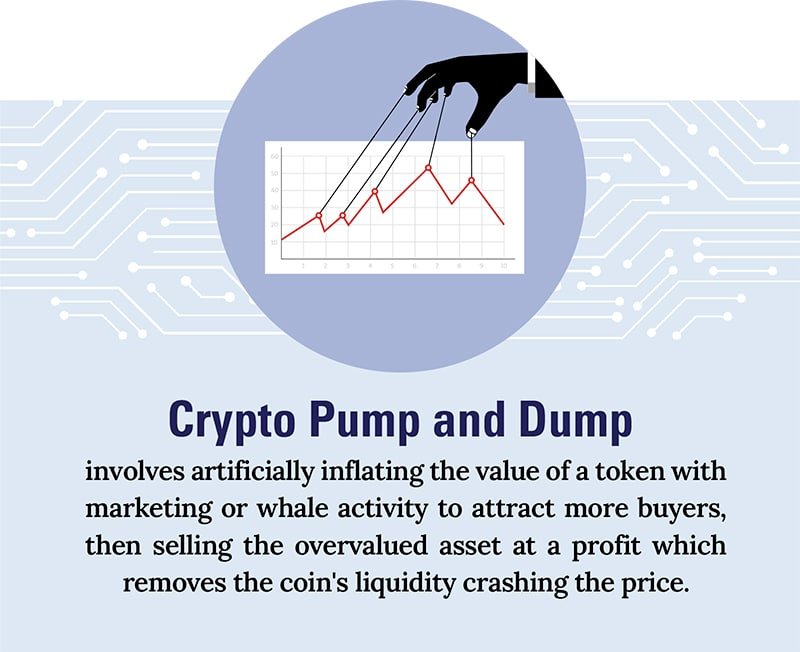
The OTC market is the prime hunting ground for fraudsters due to its light regulation. The most common scheme is the “pump-and-dump.”
- How It Works:
- Accumulation: Promoters or insiders quietly accumulate a large position in a super-cheap stock.
- The Pump: They then launch a aggressive, misleading promotional campaign using spam emails, fake news articles, paid newsletters, and social media (especially Twitter and Telegram). They make false claims about revolutionary technology, imminent contracts, or buyout offers to create a buying frenzy.
- The Dump: As unsuspecting investors pile in, driving the price up, the promoters sell their entire holdings at the inflated price.
- The Crash: Once the promotion stops and the promoters have sold, the buying pressure vanishes. The stock price collapses, often to pre-pump levels or lower, leaving retail investors with massive losses.
These operations are sophisticated and can be incredibly convincing. They often use boiler-room tactics and create a veneer of credibility with fake analyst reports and celebrity endorsements.
3. The Information Vacuum: Flying Blind
Informed investing is built on reliable data. With penny stocks, this data is either non-existent or unreliable.
- Lack of SEC Filings: Companies on major exchanges must file quarterly (10-Q) and annual (10-K) reports that are audited by independent accounting firms. Many OTC companies are not subject to these requirements. The financial information they do provide may be unaudited, outdated, or presented in a misleading way.
- No Analyst Coverage: Major Wall Street firms do not cover penny stocks. There are no teams of analysts building detailed financial models, visiting company facilities, or providing earnings estimates. You are largely on your own.
- Suspect Promotional Material: The primary source of “information” is often the company itself or paid promoters, whose interests are directly opposed to yours. Distinguishing between fact and fiction is a monumental task.
4. Financial Instability and Bankruptcy Risk
Penny stock companies are often in a precarious financial state. They may have:
- No revenue or consistent revenue streams.
- Mounting losses and negative cash flow.
- High levels of debt or unfavorable financing terms.
- A business model that is unproven or has already failed.
The risk of bankruptcy, delisting, or simply the company ceasing operations is high. When a penny stock goes to zero, there is no recovery. Your investment is wiped out entirely.
5. Extreme Volatility and Market Manipulation
Low share prices and small “floats” (the number of shares available for public trading) make these stocks incredibly easy to manipulate. A single large trader can orchestrate a “short and distort” campaign (betting against a stock and then spreading negative rumors) or a coordinated pump. This leads to price swings of 50%, 100%, or more in a single day, driven not by company fundamentals but by market mechanics and manipulation.
6. The Brokerage Hurdle
Many mainstream brokerage firms (like Fidelity, Vanguard, and Charles Schwab) either restrict trading in certain OTC stocks or charge significant fees for each transaction. These fees can be a flat rate (e.g., $6.95 per trade) which, on a small $100 trade, represents a 7% cost—a huge hurdle to overcome just to break even.
Part 3: The Glimmer of Reward – Is There a Method to the Madness?
Despite the overwhelming risks, it is undeniable that some companies that start as penny stocks do succeed. Companies like Monster Beverage Corp (MNST) and True Religion Jeans had humble, penny-stock beginnings before becoming multi-billion dollar enterprises. The key is to understand that finding these rare gems requires a disciplined, skeptical, and research-intensive approach that is the antithesis of gambling.
The Profile of a “Quality” Penny Stock
While still high-risk, a penny stock with legitimate potential may exhibit some of the following traits:
- Strong, Transparent Management: A leadership team with a proven track record, significant insider ownership (so their interests are aligned with shareholders), and clear, regular communication.
- A Healthy Balance Sheet: Look for companies with cash on hand and minimal debt. A company burning through cash with no clear path to profitability is a ticking time bomb. (Finding this data is the hard part, but some OTCQX companies do provide it).
- A Viable Product or Service in a Growing Market: The company should have a real, defensible business—not just a vague concept. Is there a clear customer base? Is the product/service competitive?
- Uplisting Potential: A company that is working to meet the requirements to “uplist” to a major exchange like NASDAQ is often a positive sign. This process requires them to clean up their reporting, increase their share price, and meet certain governance standards.
- Trading on a Higher OTC Tier: The OTC Markets Group categorizes companies:
- OTCQX® Best Market: The highest tier, with some reporting standards and financial requirements.
- OTCQB® Venture Market: The venture stage marketplace for early-stage companies, requiring some basic disclosure.
- OTC Pink® Open Market: The lowest tier with no standards; this is where the vast majority of speculative and problematic stocks reside. Focusing your search on the OTCQX and OTCQB tiers can help filter out the worst offenders.
A Disciplined Strategy for the Cautious Speculator
If, after understanding the risks, you choose to allocate a small portion of your portfolio to penny stocks, a disciplined strategy is non-negotiable.
- 1. Position Sizing and Portfolio Allocation: This is the most important rule. Penny stocks should be considered speculation, not investment. Allocate only “risk capital”—money you are fully prepared to lose completely. A common guideline is no more than 5-10% of your total speculative portfolio, and even that should be spread across several picks. Never bet the farm.
- 2. Intensive, Skeptical Due Diligence:
- Read All SEC Filings: If the company files with the SEC (some on OTCQX do), read the 10-K and 10-Q from cover to cover. Pay attention to the “Risk Factors” and “Management’s Discussion and Analysis” (MD&A) sections.
- Research Management: Look up the CEO and CFO on LinkedIn. What is their background? Have they been involved with failed companies in the past?
- Verify Promotional Claims: If you see a promotional email, be deeply skeptical. Search for the company name plus “scam,” “pump and dump,” or “investor relations” to see what independent sources are saying.
- 3. Focus on Fundamentals, Not Hype: Ignore the stock chart and the message board frenzy. Focus on the business itself: Is revenue growing? Are margins improving? Is the company generating cash? If you can’t answer these questions because the data isn’t available, that is a major red flag.
- 4. Have a Clear Exit Strategy:
- Profit-Taking: Decide in advance at what price you will take profits. Greed is the enemy. Taking partial profits as a stock rises can help lock in gains.
- Stop-Loss Orders: Use stop-loss orders to limit your downside. Decide the maximum loss you are willing to take (e.g., 25-30%) and set a stop-loss order to automatically sell if the price hits that level. Caution: In highly volatile and illiquid penny stocks, stop-loss orders can execute at a worse price than expected (“slippage”).
- 5. Embrace a Long-Term Mindset (Contrarily): While day-trading penny stocks is a recipe for disaster, taking a longer-term view on a company you have thoroughly vetted can allow its business fundamentals to develop, insulating you from daily manipulation and volatility.
Read more: From Retards to Regarded: How WallStreetBets is Quietly Shifting from Meme Stocks to Macro Bets
Part 4: The Toolbox – Essential Resources for the Penny Stock Trader
Navigating this space requires the right tools to access information and execute trades.
- Brokerage Accounts: Choose a broker that allows OTC trading with reasonable fees. Interactive Brokers, E*TRADE, and Fidelity are known for their OTC market access, but always check their specific fee schedules.
- Research Platforms:
- OTC Markets Website: The primary source. You can see a company’s official tier, its profile, and any available news or financials.
- SEC’s EDGAR Database: For any company that files reports, this is the definitive source.
- InvestorHub & StockTwits: These social platforms can provide sentiment and crowd-sourced DD, but they are also filled with pumps and misinformation. Use them to gauge hype, not for investment decisions.
- Financial News: Sources like Bloomberg, Reuters, and Benzinga sometimes cover significant news from larger OTC companies.
Conclusion: A Realistic Reconciliation
The world of penny stocks is a financial frontier—a land of immense potential shadowed by profound danger. The hype, perpetuated by promoters and our own psychological biases, paints a picture of easy wealth. The reality is a market characterized by information asymmetry, rampant fraud, and structural disadvantages for the retail investor.
The cold, hard truth is that for the vast majority of people, penny stocks are a losing game. The odds are stacked heavily against you. The most prudent financial path for building long-term wealth remains a diversified portfolio of quality, established companies, index funds, and bonds.
However, for the individual who understands these risks and still wishes to proceed, the path forward is one of extreme caution, discipline, and education. It requires the patience of a forensic accountant, the skepticism of a investigative journalist, and the emotional detachment of a professional poker player.
If you choose to speculate, do so with eyes wide open. Allocate only capital you can afford to lose, conduct exhaustive due diligence, and never confuse a rising chart with a sound business. In the high-stakes theater of penny stocks, the ultimate reward is not just financial gain, but the preservation of your capital in an environment designed to take it from you.
Read more: The WSB Sentiment Gauge: These 5 Under-$10 Stocks Are Getting Pumped This Week
Frequently Asked Questions (FAQ)
Q1: Can I actually get rich trading penny stocks?
- While it is statistically possible, it is extremely unlikely. For every person who scores a massive win, there are thousands who lose their entire investment. The narrative of getting rich is promoted to draw people in, but it is not a reliable or repeatable wealth-building strategy. Viewing it as a form of high-risk speculation or entertainment, rather than a path to riches, is a healthier perspective.
Q2: What’s the difference between a penny stock and a regular stock?
- The primary differences are price, listing, and regulation. Penny stocks trade for under $5, usually on OTC markets with minimal reporting requirements. Regular stocks are typically listed on major exchanges (NYSE, NASDAQ), have higher prices, and are subject to strict SEC reporting and auditing standards, providing investors with much greater transparency and liquidity.
Q3: Are all OTC stocks bad?
- No, but the majority are highly speculative. The OTC market also includes:
- Foreign companies that choose not to list on a U.S. exchange (e.g., Roche Holding).
- Small companies that are legitimate but not yet large enough for a major exchange.
- Companies emerging from bankruptcy.
The key is to use the OTC tier system (OTCQX, OTCQB, Pink) as a initial filter and then conduct deep due diligence on any company that passes.
Q4: How can I spot a pump-and-dump scheme?
- Red flags include:
- Unsolicited Hype: You receive spam emails or see social media posts with excessive, urgent language (“BREAKING!”, “HUGE NEWS!”, “Don’t miss out!”).
- Vague Claims: Promotions focus on “groundbreaking technology” or “imminent contracts” without providing verifiable details.
- Pressure to Act NOW: Creating a false sense of urgency to prevent you from doing your own research.
- Anonymous Sources: Promoters hiding behind pseudonyms or using fake news websites.
- Rapid, Unexplained Price Increase: A stock’s price surges on high volume with no fundamental company news to justify it.
Q5: What percentage of my portfolio should I put in penny stocks?
- Most financial advisors would recommend 0%. If you are an experienced investor with a high risk tolerance, a common suggestion is to allocate no more than 5-10% of your total “speculative” portfolio, which itself should be a small portion of your overall net worth. This money should be considered at high risk of total loss.
Q6: Is it better to invest in penny stocks or trade them?
- “Investing” in the traditional sense—buying and holding for years—is exceptionally risky with penny stocks due to their high failure rate. However, short-term “trading” based on technical charts is also perilous due to manipulation and low liquidity. The most viable approach for those who participate is a hybrid: a medium-term “speculative hold” based on deep fundamental research, with a clear exit strategy for both profits and losses.
Q7: Where is the best place to get reliable information on a penny stock?
- Start with the primary sources:
- The company’s page on the OTC Markets website.
- The SEC’s EDGAR database (for filers).
- The company’s own official investor relations website.
Be deeply skeptical of third-party newsletters, forums, and social media posts, as they are often part of promotional campaigns.