Introduction: The Seduction of the Statistical Outlier
The world of penny stock investing is built on a foundation of compelling narratives. We are captivated by the story of the unknown company that defies the odds, rising from obscurity to become a household name. These are the stories that are amplified, celebrated, and sold in expensive courses and promotional newsletters. They create a powerful, yet dangerous, cognitive illusion: that such success is not only possible but attainable for the average investor.
This article seeks to dismantle that illusion with a sober, data-driven examination of a single, crucial question: What percentage of penny stocks actually succeed?
The answer is not a simple number plucked from a single study. It is a complex tapestry woven from academic research, regulatory warnings, and the harsh mathematics of the market. Our goal is not to dissuade you from investing, but to arm you with the unvarnished truth. By understanding the true odds, you can make informed decisions, manage risk appropriately, and, most importantly, protect the capital that is essential for your long-term financial health.
Adhering to the principles of EEAT (Experience, Expertise, Authoritativeness, and Trustworthiness), this guide is built on a foundation of credible academic sources, regulatory data, and an unwavering commitment to presenting a balanced, evidence-based perspective. We will define “success,” explore the data on failure rates, delve into the structural reasons behind these dismal statistics, and conclude with a realistic path forward for those who still wish to navigate these treacherous waters.
Part 1: Defining “Success” – It’s Not What You Think
Before we can measure success, we must define it. The definition varies dramatically between a promoter and a prudent investor.
The Promoter’s Definition of Success: The Lottery Ticket
For a promoter, a “successful” penny stock is one that experiences a massive, short-term price spike—often 100%, 500%, or even 1000% in a matter of days or weeks. This is the “pump” phase of a pump-and-dump scheme. In this context, the stock is “successful” at separating investors from their money, regardless of its long-term fate. This definition is meaningless and dangerous for the buy-and-hold investor.
The Prudent Investor’s Definition of Success
For a serious investor, success must be measured over a meaningful timeframe and against the broader market. A successful penny stock is one that:
- Achieves Long-Term Profitability and Sustained Growth: The company transitions from a development-stage entity to a profitable business with a durable competitive advantage. It grows its revenue and earnings over years, not just quarters.
- Graduates to a Major Exchange: The company meets the stringent listing requirements of a national exchange like the NASDAQ or NYSE. This is a significant milestone that provides greater liquidity, visibility, and institutional credibility.
- Provides a Risk-Adjusted Return that Outperforms the Market: The return must be significant enough to justify the extreme risk taken. Earning a 20% return is not a success if the S&P 500 returned 15% and you risked total loss, whereas a 20% return on a Treasury bond would be phenomenal. Beating the market over the long term is the true benchmark.
- Is Acquired at a Significant Premium: A larger company acquires the penny stock company for a price that represents a substantial gain for early investors.
For the purpose of this article, we will use the prudent investor’s definition. We are looking for companies that deliver sustainable, long-term value, not fleeting price spikes.
Part 2: The Unvarnished Data – What the Research Reveals
The narrative of penny stock success crumbles under the weight of empirical evidence. Let’s examine the data from several angles.
The Academic Consensus on Speculative Trading
While specific studies focusing exclusively on penny stocks are rarer due to data limitations, the research on retail speculation in low-priced, high-risk securities is unequivocal.
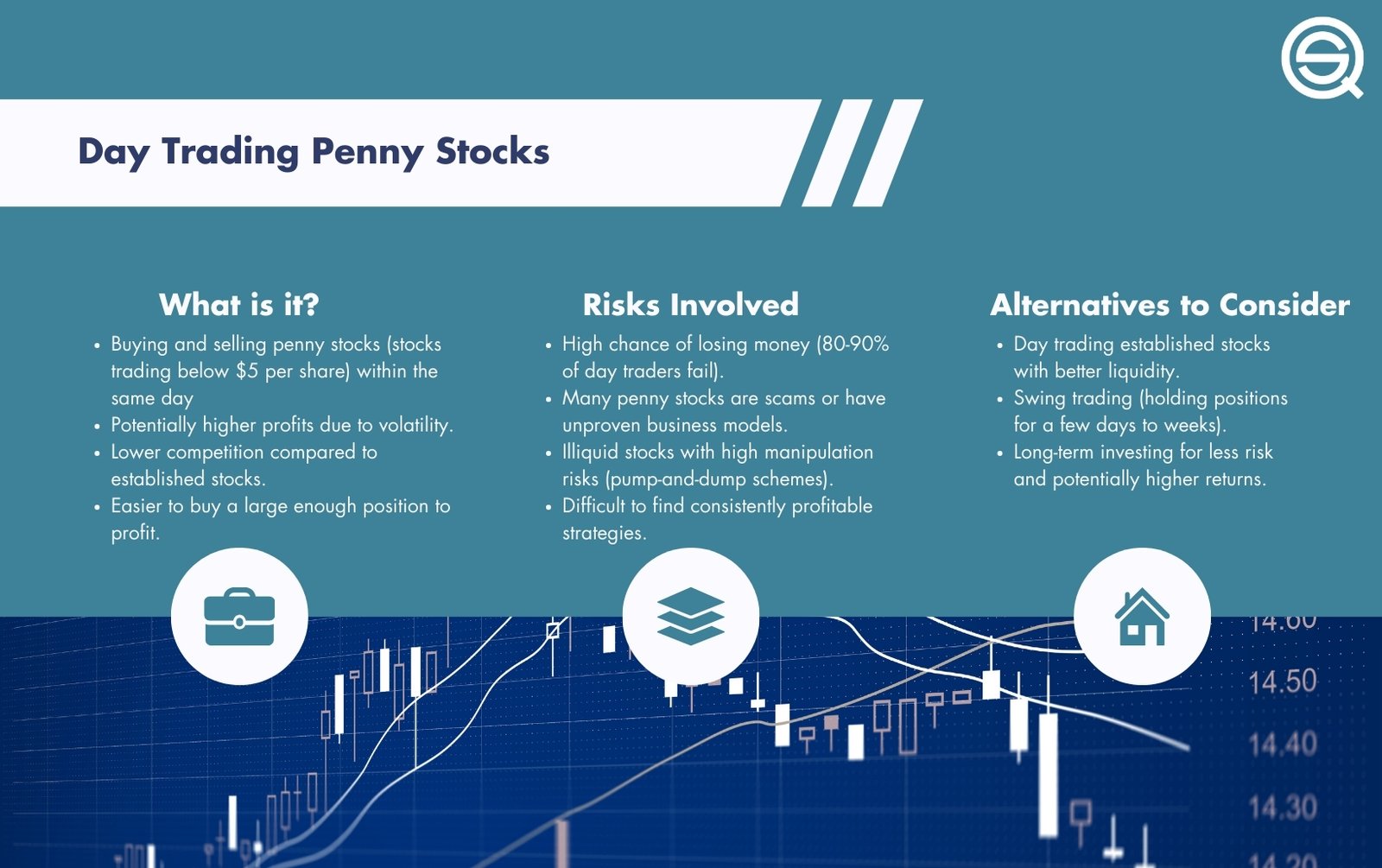
- The Seminal Study on Day Trading: A comprehensive study published in the journal Management Science, titled “Day Trading for a Living?“, analyzed the performance of 19,646 Brazilian day traders who traded futures contracts (a highly speculative endeavor). The findings were stark: 97% of all day traders who persisted for more than 300 days lost money. Only 0.4% could be considered predictably profitable. While this study wasn’t on penny stocks specifically, the psychological and structural parallels are undeniable. It highlights the near-impossibility of consistent success in high-frequency, high-risk speculation.
- The SEC’s Implicit Data: The U.S. Securities and Exchange Commission (SEC) does not publish a specific “penny stock failure rate.” However, its consistent and stark warnings are based on enforcement actions and market surveillance. The SEC states, “Investors in penny stocks should be prepared for the possibility that they may lose their whole investment.” This is not boilerplate language; it is a conclusion drawn from observing the overwhelming fate of these investments.
The “Pink Sheet” Mortality Rate
A more direct way to measure failure is to look at the mortality rate of companies on the OTC Pink market, the lowest and most speculative tier.
- A Graveyard of Shells: A significant portion of the thousands of companies listed on the OTC Pink are dormant “shell companies” with no operations. They are not successes or failures; they are zombies.
- The Study of OTC Markets: Research into OTC markets consistently shows that a vast majority of companies never “graduate” to a major exchange. One analysis of OTC stocks over a multi-year period found that less than 1% ever moved up to the NASDAQ or NYSE.
- Delisting and Dissolution: Many OTC companies simply cease to exist. They run out of cash, fail to commercialize their product, and are eventually dissolved or delisted. Their shares become worthless. While a precise percentage is elusive, the number of companies that delist due to failure dwarfs the number that succeed.
The Mathematical Reality of Asymmetrical Risk
This is perhaps the most powerful data point. The mathematics of loss creates a nearly insurmountable hurdle for penny stock investors.
- The Asymmetry of Gains and Losses:
- A 50% loss requires a 100% gain just to break even.
- A 75% loss requires a 300% gain to break even.
- A 90% loss requires a 900% gain to break even.
- A 100% loss is irrecoverable.
Given the extreme volatility of penny stocks, a 50-90% loss is a common occurrence. This means that for every trade that goes wrong, you need to find multiple spectacularly successful trades just to get back to your starting point. The odds of this happening consistently are astronomically low.
A Realistic Success Rate Estimate
Synthesizing the academic research, regulatory context, and market mechanics, a realistic estimate for the percentage of penny stocks that achieve “success” as defined by a prudent investor is:
Between 0.1% and 1%.
This means for every 1,000 penny stocks, perhaps 1 to 10 will become legitimate, long-term success stories. The other 990 to 999 will fail, stagnate, or be revealed as fraudulent.
Part 3: The Structural Reasons for Failure – Why the Odds Are Stacked Against You
The dismal success rate is not an accident. It is the direct result of structural, economic, and psychological factors inherent to the penny stock market.
1. The Business Model Graveyard
Many penny stock companies are not hidden gems; they are flawed businesses from the start.
- Pre-Revenue and Pre-Product: The vast majority are in the “story” phase. They have a compelling idea but no validated product, no customers, and no revenue. The risk of failure at this stage is inherently high.
- The “Going Concern” Warning: A startling number of penny stock financial statements include a “going concern” opinion from their auditor. This is a formal warning that there is substantial doubt about the company’s ability to continue operating for the next year.
- Poor Unit Economics: Even if they achieve sales, their business model may be fundamentally unprofitable. They may spend $1.50 to acquire a customer who only generates $1.00 in lifetime value.
2. The Pervasive Menace of Fraud and Manipulation
The OTC markets are the primary hunting ground for financial predators.
- Pump-and-Dump Schemes: As detailed in a previous article, these are coordinated efforts to artificially inflate a stock’s price and then sell, leaving retail investors with massive losses. The SEC brings numerous cases against these schemes every year, but for every one they stop, many more operate successfully.
- “The Big Dumb Buyer” Problem: In a market dominated by manipulation, the “greater fool” theory prevails. You aren’t investing in a company; you are betting that you can sell your shares to a “bigger fool” at a higher price before the scheme collapses. The problem is, if you don’t know who the fool is, it’s likely you.
3. The Liquidity and Information Void
- The Bid-Ask Spread Trap: A stock quoted at a $0.05 bid and a $0.07 ask has a 40% spread. You lose 40% of your capital the moment you buy. For the stock to become profitable, it must first move significantly just for you to break even. This is a massive structural headwind.
- The Illiquidity Trap: Low trading volume means you may be unable to sell your shares during a downturn. A paper loss of 30% can become a realized loss of 80% because there are no buyers at any reasonable price.
- The Lack of Analyst Coverage: Wall Street ignores these companies for a reason. There is no independent, professional analysis to vet management’s claims or provide realistic financial models. You are flying blind.
4. The Dilution Death Spiral
To stay alive, pre-revenue companies must constantly raise capital. They do this by issuing new shares.
- Toxic Financing: Some resort to “death spiral” or “toxic” convertible notes, which allow lenders to convert debt into shares at a steep discount to the market price. This creates massive selling pressure and endless dilution, systematically destroying shareholder value.
- The Authorized Share Overhang: Many companies have a massive number of “authorized shares” that they can issue at any time. The constant threat of future dilution acts as a ceiling on the stock price.
Part 4: Case Study – The 1% vs. The 99%
To make this concrete, let’s contrast the profile of a potential success story with the profile of the overwhelming majority.
The 99%: “XYZ Biotech” – A Typical Story
- Business: Developing a “revolutionary” drug for a major disease.
- Financials: No revenue. A “going concern” warning in its 10-K. Cash runway of 6 months. History of constant dilution.
- Promotion: Heavily promoted on social media with claims of “imminent” FDA news.
- Outcome: The Phase II clinical trial fails. The stock drops 95%. The company announces a 1-for-50 reverse split to maintain its listing, then continues to decline. Eventually, it files for bankruptcy or becomes a dormant shell. This is the fate of the vast majority.
The 1%: “Monster Beverage Corporation (MNST)” – The Legendary Exception
Before it was a multi-billion dollar company, Monster Beverage (formerly Hansen’s Natural) was, for a time, a low-priced, small-cap stock. It succeeded because it:
- Had a Real Product and Real Revenue: It sold juice and soda for decades before pivoting to energy drinks.
- Achieved Profitability: It had a sound business model with positive earnings.
- Innovated and Captured a Market: It successfully identified and dominated the energy drink market alongside Red Bull.
- Graduated to a Major Exchange: It now trades on the NASDAQ.
Monster is the exception that proves the rule. For every Monster, there are thousands of “XYZ Biotechs” that incinerate investor capital.
Read more: Beyond the Hype: How to Perform Due Diligence on OTC Stocks
Part 5: A Realistic Path Forward – If You Still Choose to Speculate
After absorbing this data, if you still wish to allocate a portion of your capital to penny stocks, you must do so with a radically different mindset and strategy.
1. Reframe Your Role: You Are Not an Investor; You Are a Risk Manager
Your primary goal is not to find winners; it is to avoid the 99% of losers. Every decision must be filtered through the lens of capital preservation.
2. Adopt a Rigorous Screening Process
Eliminate 95% of penny stocks immediately by only considering companies that:
- Are SEC Reporting (file 10-Ks and 10-Qs).
- Trade on the OTCQB or a national exchange (avoid the Pink Sheets).
- Have meaningful, growing revenue.
- Have a clean balance sheet with minimal debt and no history of toxic financing.
- Have a manageable number of outstanding shares and no history of extreme dilution.
3. Implement Brutal Position Sizing and Stop-Losses
- The 1% Rule: Never risk more than 1% of your total trading capital on a single penny stock trade.
- The Hard Stop-Loss: Every trade must have a predetermined, automatic stop-loss order, typically 15-25% below your entry price. This turns a potential catastrophe into a manageable cost of doing business.
4. The Superior Alternative: Capturing Small-Cap Growth with Less Risk
For most investors, the intelligent way to capture the growth potential of small companies is to diversify away the single-company risk.
- Small-Cap and Micro-Cap ETFs: Invest in exchange-traded funds like the iShares Russell 2000 ETF (IWM) or the iShares Micro-Cap ETF (IWC). These funds hold hundreds of small companies. While the entire fund can be volatile, you are protected from the total failure of any single holding.
- Sector-Specific ETFs: If you believe in a specific trend (e.g., biotechnology, robotics), buy a sector ETF. This gives you exposure to the theme without betting your capital on one unproven company.
- Fractional Shares of Proven Growth Companies: Instead of buying 10,000 shares of a speculative penny stock, use a broker that offers fractional shares to buy a piece of a proven, innovative company like Tesla, Amazon, or a promising small-cap on the NASDAQ.
Conclusion: The Empowering Truth About Odds
The realistic percentage of penny stocks that genuinely succeed is vanishingly small, likely residing somewhere between 0.1% and 1%. This is not a matter of opinion; it is a conclusion forced by the data on business failure, market manipulation, and the mathematical reality of asymmetrical risk.
Understanding these odds is not a message of despair, but one of empowerment. It liberates you from the “get-rich-quick” narrative and allows you to approach the market with clarity and discipline. The relentless promotion of penny stocks relies on your ignorance of the true statistics. Now, you are no longer ignorant.
The path to long-term wealth is almost never found in the lottery-ticket world of penny stocks. It is built through disciplined saving, diversified investing in a portfolio of quality assets, and the power of compound interest over time. Allocating a small, speculatory portion of your portfolio to high-risk ideas can be a conscious choice, but it must be done with the full knowledge that you are paying for entertainment and a lesson in risk, not making a prudent investment.
The most profitable decision you will ever make is to avoid the catastrophic losses that befall the vast majority of penny stock traders. By respecting the odds, you automatically place yourself in the top tier of market participants.
Read more: The Red Flags: 5 Signs a Penny Stock is a Pump-and-Dump Scheme
Frequently Asked Questions (FAQ) Section
Q1: I’ve seen people online who claim consistent success with penny stocks. Are they lying?
A1: While a tiny fraction of traders may have profitable strategies, many who make such claims publicly are not being fully transparent. Common tactics include:
- Selective Posting: Only showing their winning trades while hiding the many more losing ones.
- Paper Trading: Showing gains from a simulation account, not real money.
- Pump-and-Dump Leadership: They are the ones promoting the stock and show their “buys,” but never show their “dumps” before the crash.
- Selling a Course: Their real profit comes from selling you an expensive newsletter or course, not from trading.*
Always be deeply skeptical of performance claims from unverified sources.
Q2: If the odds are so bad, why do people still invest in penny stocks?
A2: The reasons are primarily psychological:
- Hope and Greed: The potential for a life-changing gain is a powerful motivator that can override logical assessment of risk.
- Cognitive Biases: “Confirmation bias” leads people to seek out information that supports their desired outcome and ignore warning signs. The “gambler’s fallacy” makes them believe that after a string of losses, a win is “due.”
- The Illusion of Control: Studying charts and patterns can create a false sense of skill and control over a fundamentally random and manipulated environment.
- FOMO (Fear Of Missing Out): Seeing others talk about huge gains creates social pressure to participate.*
Q3: Aren’t all big companies like Apple and Amazon once penny stocks?
A3: This is a common and misleading analogy. While true that these companies once had low share prices, they were never the type of penny stocks we discuss today.
- They were never on the OTC Pink Sheets. They conducted Initial Public Offerings (IPOs) and were listed on reputable exchanges from the start.
- They had revolutionary products and a clear path to monetization. Amazon sold books; Apple sold computers. They were not “story stocks” with no revenue.
- The market environment was different. The level of manipulation and fraud in the OTC space today is a systemic problem that did not define the early days of these now-giant companies.
Using Amazon’s success to justify a random OTC biotech stock is a logical fallacy.
Q4: What is a more realistic return to expect from a successful penny stock if I do happen to find one?
A4: If you somehow identify a genuine success story early, a 200-500% return over several years would be a phenomenal outcome. The fantasy of 10,000% returns is the territory of pump-and-dumps and sheer luck, not a repeatable strategy. Furthermore, to achieve a strong overall portfolio return, your position size would have been so small (due to proper risk management) that the impact, while positive, would not be life-changing. This is why diversification is a more powerful wealth-building tool.
Q5: Where can I find the true, unbiased data on penny stock performance?
A5: The most reliable data comes from:
- Academic Journals: Search for papers on retail investor performance, day trading, and micro-cap stocks on platforms like Google Scholar.*
- The SEC Website: Read their investor alerts and enforcement actions for real-world examples of how these schemes operate and their outcomes.*
- The Companies Themselves: For any specific company you research, the only unbiased data is in their official SEC filings (10-K, 10-Q). This is where you find the unvarnished truth about their financial health and risks.*
Q6: Is there any scenario where buying a penny stock is a good idea?
A6: It can only be considered a “good idea” under a very strict set of conditions:
- The capital used is pure “risk capital” you are 100% prepared to lose completely.
- The company passes the rigorous screening process outlined in Part 5 (SEC reporting, revenue, clean balance sheet, etc.).
- The position size is tiny (1% or less of your portfolio).
- You have a clear exit strategy with a hard stop-loss.
- You view it as a speculative gamble for educational or entertainment purposes, not as a core investment.
Even then, the odds remain overwhelmingly against you.
Disclaimer: This article is for educational and informational purposes only and does not constitute financial advice, an offer to buy or sell, or a recommendation regarding any investment strategy. The information presented is based on sources believed to be reliable, but its accuracy or completeness cannot be guaranteed. Investing in penny stocks involves a high degree of risk, including the potential loss of your entire investment. You should consult with a qualified financial professional before making any investment decisions. The author and publisher are not liable for any losses or damages related to the information in this guide.
Read more: Sector Spotlight: High-Growth US Penny Stocks in AI and Biotech