In the high-octane, neon-lit casino of modern finance, a new, ultra-short-term game has captured the imagination of a generation of traders: Zero Days to Expiration (0DTE) options. For the uninitiated, the concept sounds like something out of a cyberpunk thriller—a financial instrument that lives and dies within a single trading day, offering the potential for exponential gains or catastrophic losses before the closing bell rings.
Fueled by the memefied, adrenaline-fueled culture of online communities like WallStreetBets (WSB), 0DTE trading has exploded in popularity. It’s the digital-era embodiment of the age-old gambling instinct, repackaged with complex Greek letters and real-time data feeds. The narrative is seductive: turn a few hundred dollars into a down payment for a Lamborghini with one perfectly timed trade. The counter-narrative, often whispered but just as real, is the swift path to financial ruin, symbolized by the ironic “food stamps line.”
But what is the reality behind the hype? Is 0DTE trading a legitimate strategy for the disciplined, or is it purely a speculative trap for the uninformed? This article delves deep into the world of zero-day options, separating the mathematical truth from the social media mythology. We will explore the mechanics, the profound risks, the potential (but narrow) opportunities, and the psychological fortitude required to even consider engaging with what is arguably the most dangerous instrument available to retail traders.
Part 1: Deconstructing the Beast – What Are 0DTE Options?
To understand the frenzy, we must first understand the instrument.
A Primer on Options Basics
An option is a contract that gives the buyer the right, but not the obligation, to buy or sell an underlying asset (like the S&P 500 index, tracked by the SPY ETF) at a specific price (the strike price) on or before a specific date (the expiration date).
- Call Option: Gives the holder the right to buy the asset. You buy a call if you believe the price will rise.
- Put Option: Gives the holder the right to sell the asset. You buy a put if you believe the price will fall.
The buyer of the option pays a premium to the seller (or writer) for this right. The maximum loss for the buyer is 100% of that premium. The seller, however, faces theoretically unlimited risk for a limited potential gain (the premium received).
The “Zero Days” Twist
Traditional options might have weeks, months, or even years until expiration. 0DTE options are those that expire on the very same trading day they are traded. This simple fact radically alters their characteristics:
- Extreme Time Sensitivity (Theta Decay): Options lose value as time passes, a phenomenon known as “theta decay.” For longer-dated options, this decay is slow and gradual. For a 0DTE option, theta decay is exponentially violent. The option’s time value evaporates at an accelerating rate throughout the day, collapsing to zero at the moment of expiration. This makes them a terrible asset to hold; they are melting ice cubes.
- Purely Directional Bets: With almost no time value left, a 0DTE option’s price is almost entirely determined by its “intrinsic value”—how far it is in-the-money. This makes them a pure, high-leverage bet on the short-term direction of the underlying asset. There is no room for error, and there is no time for a ” thesis to play out.”
- High Leverage, Low Absolute Cost: Because they have such a short lifespan, 0DTE options are cheap in absolute dollar terms. A trader might only spend $100 to control the equivalent of tens of thousands of dollars worth of the S&P 500. This low entry point is a siren’s call, creating the illusion of “affordable” risk while masking the extreme leverage at play. A 1% move in the underlying index can result in a 50%, 100%, or even 500% move in the option’s price.
Part 2: The Ecosystem of 0DTE Mania
The rise of 0DTE trading isn’t just a financial phenomenon; it’s a cultural one, driven by a perfect storm of technological and social factors.
The WallStreetBets Culture
The r/WallStreetBets subreddit and its offshoots have become the epicenter of a new, irreverent trading culture. Its hallmarks include:
- Gamification: Trading is framed not as a method of long-term wealth building, but as a high-score game. The language is filled with gaming and gambling terminology (“YOLO,” “all in,” “tendies”).
- Loss Porn as Social Currency: Paradoxically, massive losses are often celebrated and upvoted more than modest gains. This normalizes financial ruin and creates a perverse incentive for reckless behavior.
- The “Lambo or Food Stamps” Dichotomy: This meme perfectly encapsulates the binary, high-stakes mindset. It reinforces the idea that there are only two outcomes: spectacular success or abject failure, with no middle ground.
- Anti-Establishment Sentiment: There’s a deep-seated distrust of traditional financial advisors and “boomer” strategies like index fund investing. 0DTE trading is seen as a way to beat the system on your own terms.
The Role of Brokerage Apps
Platforms like Robinhood, Webull, and others have democratized market access, for better or worse. Their sleek, user-friendly interfaces make buying a complex derivative as easy as ordering a ride-share. Features like:
- Commission-Free Trading: Eliminates the friction and cost that once acted as a minor barrier to hyper-active trading.
- Instant Deposits: Allows for immediate reinvestment of funds, fueling a cycle of rapid-fire decisions.
- Push Notifications and Confetti: Provide constant, dopamine-driven feedback that reinforces trading activity.
While these innovations are not inherently bad, they can create an environment where the gravity of the risks being taken is psychologically diminished.
The Institutionalization of 0DTE
It’s crucial to understand that 0DTE options were not invented by retail traders. They were created by and for large institutions—market makers, hedge funds, and professional trading firms—as tools for sophisticated strategies like:
- Gamma Hedging: Market makers who sell options to the public need to dynamically hedge their own risk by buying or selling the underlying asset. This activity can itself exacerbate market volatility, particularly on days with large options expiration.
- Tail Risk Hedging: A fund might buy cheap 0DTE puts as a form of “insurance” against a sudden, sharp market drop on any given day.
Retail traders have essentially walked onto a battlefield designed for professional armies, armed with what amounts to a speculative pea-shooter.
Part 3: The Inescapable Math – Why the Odds Are Stacked Against You
The allure of 100-baggers is powerful, but the cold, hard mathematics of probability and options pricing reveals a much grimmer picture for the average 0DTE trader.
The Triple Threat of Risk
- Theta Decay: The Invisible Tax
Imagine buying a 0DTE call option for $1.00 at 9:30 AM. For you to make money, the underlying asset doesn’t just need to go up; it needs to go up fast enough to overcome the relentless erosion of time value. If the market is flat for the first two hours, your option might be worth only $0.30, even though the price hasn’t moved against you. You are fighting against a clock that is permanently ticking against you. - Implied Volatility (IV) Crush
Options are more expensive when uncertainty is high, a factor priced in as Implied Volatility (IV). 0DTE options, especially on indices like the SPX, often have elevated IV in the morning due to uncertainty about the day’s move. If you buy an option during a period of high IV and the market subsequently enters a calm, low-volatility period, the value of your option can plummet—even if it moves in the right direction. This “IV crush” can be as devastating as theta decay. - The Bid-Ask Spread
For highly liquid 0DTE options on the SPX or SPY, the bid-ask spread is usually tight. However, for less liquid underlyings or far out-of-the-money strikes, the spread can be wide. This means the moment you buy the option, you are already at a loss. If you buy an option for $1.00 (the ask price) and the best immediate sell price (the bid) is $0.90, the underlying needs to move just for you to break even. This spread acts as a direct transaction cost that favors market makers over retail.
The Probability Problem
The pricing of options is not arbitrary; it’s based on complex mathematical models like the Black-Scholes formula. These models essentially calculate the probability of an option expiring in-the-money.
A far out-of-the-money 0DTE option is cheap for a reason: the market-implied probability of it finishing in-the-money is very low, often well below 10%. Buying these options is mathematically equivalent to buying a lottery ticket. While the potential payoff is high, the expected value (the average outcome if you repeated the trade thousands of times) is deeply negative.
The House Always Wins: In this analogy, the collective market of option sellers (often sophisticated institutions with superior technology, data, and capital) is the “house.” They are the ones collecting the premiums from the thousands of retail traders buying these lottery tickets. Over the long run, the mathematical edge belongs to the house.
Part 4: A Glimmer of Hope? Legitimate (But Advanced) Uses
While buying 0DTE options as a directional lottery ticket is a recipe for disaster, there are more nuanced ways professionals and highly disciplined traders use them. It is critical to state that these strategies are not for beginners.
1. The Gamma Scalp
This is a professional strategy typically employed by market makers, but it can be adapted by experienced traders. The idea is to sell 0DTE options (not buy them) to collect the premium and then actively hedge the position by trading the underlying asset. This requires:
- Significant Capital: To meet margin requirements and absorb potential losses.
- Lightning-Fast Execution: Decisions and trades must be made in seconds.
- Sophisticated Risk Management: A deep understanding of gamma (the rate of change of delta) is essential.
2. Defined-Risk Spreads
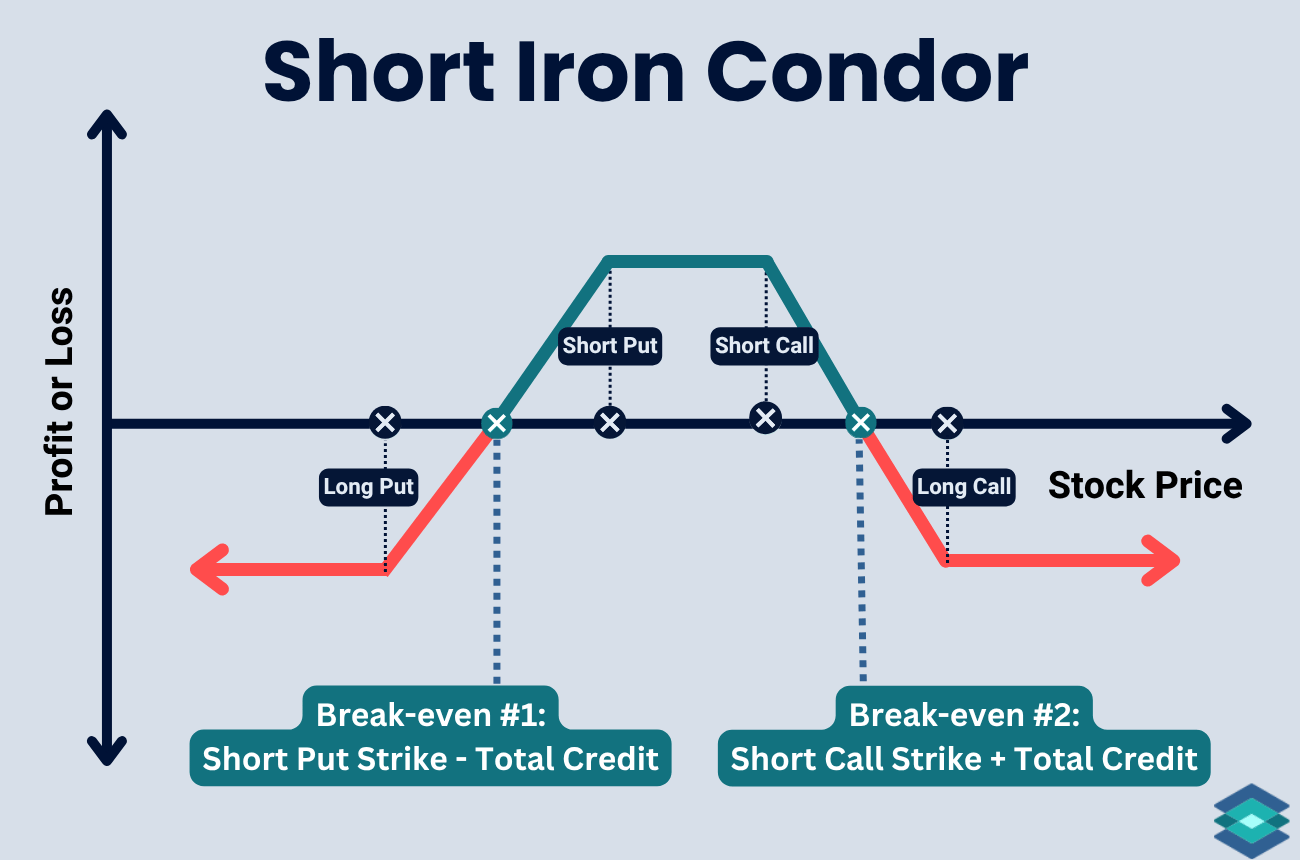
Instead of buying a naked 0DTE option, a trader might establish a spread to define their maximum risk. For example, a 0DTE credit spread involves selling one option and buying a further out-of-the-money option to cap the potential loss. While this limits risk, it also limits reward and still leaves the trader exposed to the rapid effects of theta and IV if the market moves against them.
3. Hedging an Existing Portfolio
As mentioned earlier, this is a core institutional use. A trader with a large portfolio of long-term stocks might buy a cheap 0DTE put on the SPY as a one-day hedge against a market downturn. The cost is low, and it provides peace of mind or protection against a specific event like a Fed announcement.
The Common Thread: In all these more legitimate use cases, the 0DTE option is a tactical tool within a broader, disciplined strategy. It is never the core of the strategy itself, and it is never used as a standalone “get-rich-quick” scheme.
Part 5: The Psychological Gauntlet
Trading 0DTE options is as much a psychological battle as a financial one. It preys on well-documented cognitive biases:
- Recency Bias: After a few winning trades, a trader begins to believe they have a “system” or a “gut feeling,” ignoring the role of luck.
- Overconfidence Effect: The dopamine hit from a win creates an illusion of control and skill, leading to larger, riskier bets.
- The Gambler’s Fallacy: After a string of losses, the belief that a “win is due” can lead to revenge trading and chasing losses, often with devastating consequences.
- Loss Aversion: The pain of a loss is psychologically about twice as powerful as the pleasure of an equivalent gain. In the volatile world of 0DTE, this can lead to panic selling or, conversely, holding onto a losing position in the desperate hope it will turn around (only for it to expire worthless).
The emotional rollercoaster of watching a trade swing from a 50% loss to a 100% gain and back to zero within minutes is unsustainable for most people. It leads to burnout, stress, and impaired judgment.
Read more: Small Cap, Big Potential: 3 High-Growth Stocks Flying Under the Radar
Part 6: A Path Forward – If You Must…
If, after understanding the immense risks, you are still compelled to dip your toes into these treacherous waters, the following guidelines are not a guarantee of success, but a framework for survival.
- Education Before Execution: Do not trade a single dollar until you fully understand the Greeks (Delta, Gamma, Theta, Vega), implied volatility, and how spreads work. Paper trade for months to understand the dynamics without risking real capital.
- Allocate “Fun Money” Only: Any capital allocated to 0DTE trading should be money you are 100% prepared to lose. It should be a tiny, ring-fenced portion of your overall portfolio, separate from your retirement savings, emergency fund, and long-term investments. Consider it the cost of entertainment, like going to a casino.
- Define Your Exit Before You Enter: Before placing the trade, decide on two points:
- Profit Target: At what percentage gain will you sell? (e.g., 50%, 100%). Take the profit.
- Stop Loss: At what percentage loss will you cut your losses? (e.g., 50%). Honor the stop.
The single biggest mistake is letting a winning trade turn into a loser, or holding a loser “until it comes back.”
- Avoid the Open and Close: The first and last 30-60 minutes of the trading day are often the most volatile and unpredictable due to overnight news flow and settlement activity. Consider avoiding trading during these periods.
- Stick to High-Liquidity Underlyings: Only trade 0DTE options on highly liquid products like SPY, QQQ, or SPX. This ensures tight bid-ask spreads and the ability to get in and out of positions efficiently.
Conclusion: The Sobering Reality
The narrative of “Lambo or Food Stamps” is a dangerous false dichotomy. The real outcome for the vast majority of retail 0DTE traders is not a supercar, but a slow and steady—or sometimes rapid—drain of their trading capital. The mathematical edge, the technological disadvantage, and the psychological pitfalls create a nearly insurmountable headwind.
0DTE options are not a gateway to wealth; for most, they are a gateway to losses. They are a sophisticated institutional tool that has been misappropriated as a speculative toy. The true path to sustainable wealth is far less glamorous: consistent investing in diversified assets, living below your means, and harnessing the power of compound interest over decades.
The Lamborghini dream sold on social media is a mirage. The “food stamps line” is an exaggerated meme, but the financial and emotional toll of significant, repeated losses is very real. In the high-stakes game of zero-day options, the greatest skill is not in picking the right direction, but in having the wisdom to recognize that for most, the only winning move is not to play.
Read more: Building Future Wealth: Top 5 ETFs for Set-and-Forget Investing
Frequently Asked Questions (FAQ)
Q1: I’ve seen people post massive gains on WSB. If it’s all luck, how are they doing it?
A1: For every one person who posts a 10,000% gain, there are thousands who lost everything and don’t post their “loss porn.” The ones who win big are the statistical outliers—the lottery winners. Furthermore, it’s impossible to verify if every post is real; some are exaggerations or fabrications. Basing your strategy on these outliers is a classic case of survivorship bias, where you only see the successes and not the vast sea of failures.
Q2: What’s the difference between 0DTE on SPX and SPY?
A2: Both track the S&P 500, but key differences exist:
- SPX: This is the index itself. SPX options are cash-settled (you receive cash, not shares), European-style (can only be exercised at expiration, which reduces pin risk), and offer favorable 60/40 tax treatment on long-term capital gains. They are 10x the size of SPY.
- SPY: This is an Exchange-Traded Fund (ETF). SPY options are physically settled (you can take delivery of shares), American-style (can be exercised at any time), and are smaller, making them more accessible to retail traders due to lower notional value.
Q3: Can I actually make a consistent living trading 0DTEs?
A3: It is extraordinarily difficult and rare. The combination of negative expected value, high transaction costs (via the bid-ask spread), and the intense psychological pressure makes consistent profitability akin to being a professional lottery player. The professionals who “make a living” from them are typically market makers or hedgers, not retail traders buying directional lottery tickets.
Q4: I’m down 90% on a 0DTE trade with an hour left. Should I hold and hope for a miracle?
A4: Almost certainly not. This is the “hope” phase of a trade, which is a recipe for disaster. Theta decay will accelerate in the final hour, making a recovery increasingly improbable. The most prudent action is to close the position, salvage the remaining 10%, and analyze what went wrong to learn from the mistake. Chasing losses rarely ends well.
Q5: Are there any tools or indicators that can help me trade 0DTEs more effectively?
A5: While tools can provide information, they cannot overcome the fundamental mathematical disadvantages. Some traders look at:
- Gamma Exposure (GEX): Shows levels where market makers may need to hedge, potentially acting as support or resistance.
- Volume Profile: Identifies price levels with high trading activity.
- VWAP (Volume-Weighted Average Price): A common benchmark for intraday trend.
However, these are not crystal balls. In the chaotic, short-term environment of 0DTE trading, their predictive power is limited.
Q6: Is selling 0DTE options safer than buying them?
A6: It changes the risk profile but introduces new, potentially greater dangers. When you sell a 0DTE option, you collect a small premium, but you face theoretically unlimited risk. If you sell a naked call and the market rallies violently, your losses can far exceed the premium you collected. Selling requires significant margin and an iron stomach for risk. Defined-risk strategies like credit spreads are safer in the sense that your max loss is known, but that known loss can still be 100% of the capital you risked on the trade.