
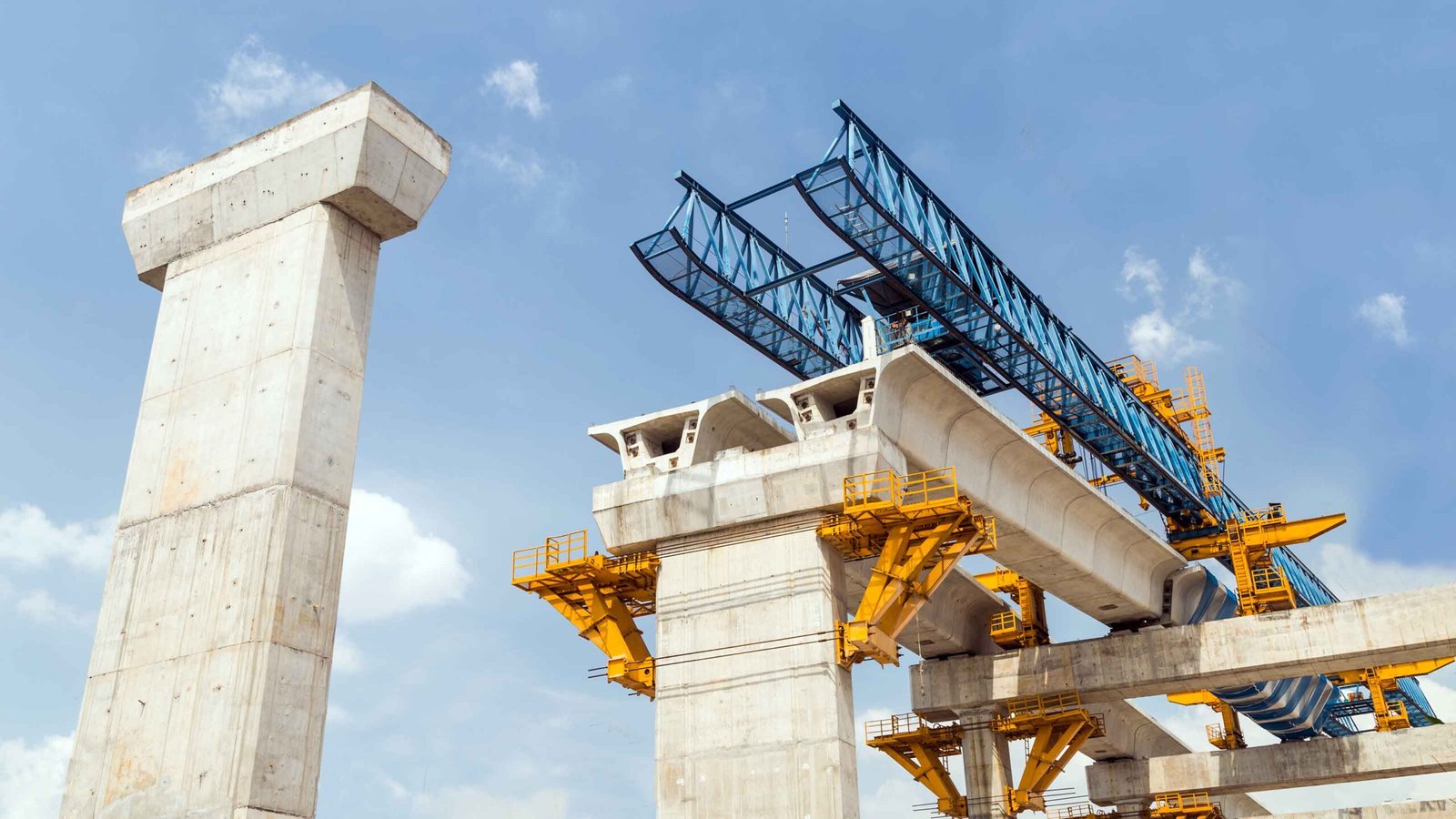
For decades, the state of America’s infrastructure has been a topic of concern, with report cards from the American Society of Civil Engineers consistently highlighting the urgent need for modernization. This long-standing challenge is now meeting an unprecedented response. The recent passage of landmark federal legislation—namely the Infrastructure Investment and Jobs Act (IIJA), the CHIPS and Science Act, and the Inflation Reduction Act (IRA)—has unleashed a tidal wave of public and private capital aimed at rebuilding the nation’s foundations.
We are at the dawn of a “Great Infrastructure Boom,” a multi-decade investment cycle that promises to reshape the American economic landscape. For investors, this represents a generational opportunity. However, navigating this complex and sprawling theme requires a discerning eye. It’s not just about construction companies; it’s about the entire ecosystem—from the raw materials and machinery to the engineering expertise and digital backbone that will support this national rebuild.
This article will analyze four stocks strategically positioned to be primary beneficiaries of this spending surge. Our selection is based on a framework of direct revenue exposure, competitive moats, financial fortitude, and experienced management—key tenets for identifying sustainable value in a thematic investment landscape.
Understanding the Unprecedented Scale of the Spending
Before diving into the specific companies, it’s crucial to understand the sheer magnitude and scope of the capital being deployed. This isn’t a single piece of legislation but a coordinated, multi-pronged effort.
- The Infrastructure Investment and Jobs Act (IIJA): Signed into law in November 2021, this is the cornerstone, allocating $1.2 trillion over a decade, with $550 billion in new federal spending. Key allocations include:
- $110 billion for roads, bridges, and major projects.
- $66 billion for passenger and freight rail.
- $65 billion for the power grid and clean energy transmission.
- $55 billion for water infrastructure.
- $42 billion for ports and airports.
- $39 billion for public transit.
- The CHIPS and Science Act: Enacted in August 2022, this act provides $52.7 billion to bolster U.S. semiconductor manufacturing, research, and supply chain security. It also includes significant investment tax credits for chip fabrication plants.
- The Inflation Reduction Act (IRA): While focused on climate and healthcare, the IRA, passed in August 2022, directs $369 billion toward energy security and climate change programs. This includes massive incentives for domestic clean energy manufacturing, electric vehicle (EV) adoption, and grid modernization, which are deeply intertwined with physical infrastructure needs.
The key takeaway is the catalytic effect of this government spending. It is designed to unlock even larger sums of private investment. For example, a $1 billion federal grant for a high-speed rail project might be matched by state funds and private debt, creating a total project value of $3-4 billion. This multiplier effect is what fuels a true “boom.”
Stock #1: Caterpillar Inc. (CAT) – The Titan of Tangible Assets
Sector: Industrials – Farm & Heavy Construction Machinery
Ticker: CAT (NYSE)
Company Overview & Expertise:
Caterpillar is not just a company; it is a global institution and a barometer for global economic activity. For nearly a century, the iconic yellow machines from Caterpillar have been at the heart of every major infrastructure project on Earth. The company manufactures a vast portfolio of construction and mining equipment, diesel and natural gas engines, industrial gas turbines, and diesel-electric locomotives. Its expertise lies not only in manufacturing durable, high-performance machinery but also in its unparalleled global dealer network and its growing focus on services and digital solutions.
Direct Link to Infrastructure Bills:
Caterpillar is the most direct and obvious play on the infrastructure boom. Its equipment is indispensable for virtually every project funded by the IIJA.
- Earthmoving & Construction: Bulldozers, excavators, and wheel loaders from Caterpillar will be used to clear land, dig foundations, and move materials for new roads, bridges, airports, and rail lines.
- Energy & Grid: The company’s generators and turbines will play a role in providing power for construction sites and in the modernization of the energy grid. Furthermore, Caterpillar is developing solutions for microgrids and renewable energy integration.
- Materials Handling: The increased production of domestic steel, cement, and aggregates (driven by demand) will require Caterpillar’s mining and quarrying equipment.
The CHIPS Act also indirectly benefits Caterpillar, as the construction of massive, complex semiconductor fabrication plants requires an immense amount of heavy machinery.
Competitive Moat & Authoritativeness:
Caterpillar’s moat is exceptionally wide and consists of several layers:
- Brand & Reputation: The CAT brand is synonymous with reliability and durability in the most demanding environments.
- Global Dealer Network: Its network of 172 independent dealers worldwide provides an insurmountable advantage. This network offers localized sales, parts, and service, creating a sticky customer relationship and a massive, high-margin recurring revenue stream from after-market parts.
- Economies of Scale: Its massive manufacturing footprint allows it to source materials and produce equipment at a scale competitors cannot match.
- Digital & Services Growth: With its Cat Connect technology platform, the company is leveraging telematics and data analytics to help customers improve fleet management, reduce downtime, and lower operating costs. This services segment is less cyclical and boasts higher margins than equipment sales.
Financial Fortitude & Trustworthiness:
Caterpillar is a financial powerhouse. It has consistently generated strong free cash flow, which it has returned to shareholders through a dividend that it has paid for over 90 years and a robust share buyback program. Its balance sheet is strong, allowing it to invest in R&D for new technologies like autonomous vehicles and electric machinery, ensuring it remains at the forefront of its industry. Management has a proven track record of navigating economic cycles, making it a relatively lower-risk way to play the infrastructure theme.
Investment Thesis: Caterpillar is the foundational pick for the infrastructure boom. Its indispensable equipment, unrivalled service network, and strategic pivot to high-margin services make it a durable beneficiary poised to convert federal dollars into sustained revenue and profit growth for years to come.
Stock #2: Martin Marietta Materials (MLM) – The Bedrock of Building
Sector: Materials – Building Materials
Ticker: MLM (NYSE)
Company Overview & Expertise:
If Caterpillar moves the earth, Martin Marietta provides what the earth is moved for. This company is one of the leading suppliers of heavy building materials—primarily aggregates (crushed stone, sand, and gravel)—necessary for virtually all construction projects. Aggregates form the base layer for roads, the foundation for buildings, and are a key component of concrete and asphalt. Martin Marietta operates a network of quarries, distribution yards, and shipping terminals primarily in the fast-growing Southeastern, Northeastern, and Western United States.
Direct Link to Infrastructure Bills:
The connection here is simple, fundamental, and incredibly powerful. There is no infrastructure without aggregates.
- Roads & Bridges: The IIJA’s $110 billion for roads and bridges is a direct order book for Martin Marietta. A single lane-mile of interstate highway can require up to 25,000 tons of aggregates.
- Public Transit & Airports: New rail lines, subway extensions, and airport runways all require a massive aggregate base.
- Heavy & Non-Residential Construction: The boom in manufacturing plant construction (driven by the CHIPS and IRA acts) and other commercial projects will further drive demand.
A critical aspect of the aggregates business is the “geographic monopoly.” Transporting heavy, low-value materials like gravel over long distances is economically unfeasible. Therefore, quarries located near major infrastructure projects hold immense pricing power. Martin Marietta’s strategic location of its assets positions it perfectly to serve the regions where much of this new construction will occur.
Competitive Moat & Authoritativeness:
Martin Marietta’s competitive advantages are deeply embedded in its business model:
- Resource Ownership: The company owns the mineral rights to its quarries. These are valuable, long-life assets that are difficult and time-consuming to permit, creating a huge barrier to entry for competitors.
- Pricing Power: Due to the high cost of transportation, aggregates are a local business. This allows well-positioned companies like Martin Marietta to raise prices consistently, often above the rate of inflation, as local demand increases.
- Vertically Integrated Operations: The company also produces cement, ready-mixed concrete, and asphalt. This allows it to capture more value from a single project by supplying multiple linked materials.
- Strategic Acquisitions: Martin Marietta has a disciplined history of acquiring smaller, regional players to consolidate the industry and expand its geographic footprint, further strengthening its market position.
Financial Fortitude & Trustworthiness:
The aggregates business is renowned for its high margins and cash-flow generation once a quarry is operational. Martin Marietta has a strong balance sheet and a history of prudent capital allocation. It returns significant capital to shareholders through a growing dividend and strategic acquisitions. The company’s management is known for its operational excellence and deep industry expertise, providing confidence in its ability to execute and capitalize on the multi-year tailwind from federal spending.
Investment Thesis: Martin Marietta offers a “picks and shovels” approach to the infrastructure boom. As a supplier of a fundamental, non-discretionary input, it is a direct, high-margin beneficiary with significant pricing power, making it a compelling way to gain exposure to the very bedrock of the build-out.
Stock #3: Eaton Corporation plc (ETN) – The Brains of the Modern Grid
Sector: Industrials – Electrical Components & Equipment
Ticker: ETN (NYSE)
Company Overview & Expertise:
Eaton is a sophisticated, global power management company that often operates behind the scenes but is critical to the functioning of a modern economy. Its expertise lies in designing and manufacturing a vast array of electrical components, systems, and services for managing electrical, hydraulic, and mechanical power. Key products include circuit breakers, switchgear, power distribution units, transformers, and vehicle electrification components.
Direct Link to Infrastructure Bills:
Eaton sits at the confluence of several major themes within the infrastructure spending boom, most notably grid modernization and electrification.
- Grid Resilience (IIJA): The IIJA’s $65 billion for the power grid is a direct tailwind. Eaton’s products are essential for upgrading aging electrical substations, building out resilient microgrids, and integrating renewable energy sources like solar and wind farms, which require sophisticated power management solutions.
- Electrification & EV Charging (IRA & IIJA): The shift toward electric vehicles and building electrification is a mega-trend. Eaton provides critical components for EV charging infrastructure, power management for data centers (which are growing to support digitalization), and energy-efficient electrical systems for new buildings and factories.
- Reshoring & Manufacturing (CHIPS & IRA): The construction of new semiconductor fabs and battery plants requires highly reliable, ultra-clean power. These facilities are massive consumers of electricity and need Eaton’s high-end power quality and distribution equipment to operate.
Competitive Moat & Authoritativeness:
Eaton’s authority is derived from its deep technological expertise and its role as an integrated solutions provider.
- Electrical Product Leadership: It holds leading market positions in many of its electrical product categories, supported by strong brand recognition (e.g., Cutler-Hammer, Cooper) and a vast installed base.
- Cyclical Resilience: Its business is diversified across electrical, aerospace, vehicle, and eMobility segments, providing a natural hedge against downturns in any single end-market.
- Megatrend Alignment: No company is better positioned for the secular trends of grid modernization, electrification, and digitalization. Its products are not just commodities; they are the intelligent components that make these complex systems efficient and reliable.
- Global Reach with Local Presence: Like Caterpillar, Eaton has a strong global distribution and service network that creates sticky customer relationships.
Financial Fortitude & Trustworthiness:
Eaton is a highly profitable company with a track record of consistent earnings growth and strong free cash flow conversion. It has an investment-grade credit rating and a history of increasing its dividend for over a decade. Management has strategically pivoted the portfolio over the years to focus on higher-growth, higher-margin electrical businesses, demonstrating a forward-looking and disciplined approach to capital allocation.
Investment Thesis: Eaton is the intelligent play on infrastructure. It goes beyond the physical build to the essential systems that power a modern, electrified, and digital economy. Its exposure to grid modernization, EV infrastructure, and the reshoring of manufacturing makes it a multifaceted and durable winner in the new investment cycle.
Stock #4: Deere & Company (DE) – The Digital & Sustainable Enabler
Sector: Industrials – Farm & Heavy Construction Machinery
Ticker: DE (NYSE)
Company Overview & Expertise:
Most investors know Deere & Company for its iconic green tractors and dominant position in agricultural equipment. However, this perception overlooks Deere’s massive and technologically advanced John Deere Construction & Forestry division. This segment manufactures and sells a full line of machines for earthmoving, construction, forestry, and road-building. More importantly, Deere is a leader in precision technology, using GPS, data analytics, and automation to improve efficiency.
Direct Link to Infrastructure Bills:
Deere’s construction division is a direct player in the IIJA boom, competing with Caterpillar and others. Its excavators, backhoes, and motor graders are workhorses on construction sites. However, its unique angle lies in two areas:
- Precision Earthmoving: Deere is at the forefront of automating construction equipment. Its technology allows machines to follow digital grade plans with centimeter-level accuracy, reducing material overuse, fuel consumption, and rework. This saves time and money on large-scale infrastructure projects, making Deere’s high-tech solutions increasingly attractive.
- Sustainable Infrastructure: The IRA’s focus on climate and the broader trend toward sustainability benefit Deere. The company is actively developing and deploying electric and hybrid-electric construction equipment. As government projects and corporate pledges demand lower-emission construction practices, Deere’s technological lead in this area could become a significant differentiator.
Competitive Moat & Authoritativeness:
Deere’s moat in construction is built on its technological innovation, even as it leverages the brand strength and financial muscle of its larger agricultural business.
- Technology Leadership: Deere’s investment in its “SmartGrade” and “Earthmoving” technology suites is creating a moat based on software and data, not just iron. This transforms its machines from simple tools into data-rich, productivity-enhancing assets.
- Strong Dealer Network: Similar to Caterpillar, Deere has an extensive and loyal dealer network that provides critical local support.
- Brand Reputation: The John Deere brand carries a powerful reputation for quality and innovation from the farm to the construction site.
- Cross-Pollination: Deere can leverage R&D from its agricultural division (e.g., autonomy, electrification) and apply it to its construction equipment, creating R&D efficiencies.
Read more: Small-Cap Gems: A Screening Guide to Finding Undervalued U.S. Stocks with High Growth Potential
Financial Fortitude & Trustworthiness:
Deere is a financial juggernaut. It generates substantial earnings and free cash flow, supported by a lucrative parts and service business. It has a long history of paying dividends and has demonstrated a commitment to strategic R&D investment. Its management team has successfully executed a vision to transform the company from a pure equipment manufacturer into a technology leader, instilling confidence in its ability to adapt and lead in a changing market.
Investment Thesis: Deere offers a technologically advanced and sustainable angle on the infrastructure boom. It is not just a manufacturer of construction equipment but a provider of precision solutions that improve efficiency and reduce the environmental impact of building. This dual tailwind of infrastructure spending and technological adoption makes it a unique and compelling investment.
Investment Risks & Portfolio Construction
While the long-term tailwinds are powerful, no investment is without risk. Prudent investors must consider the following:
- Macroeconomic Sensitivity: These companies are cyclical. A severe economic recession could delay private construction projects, partially offsetting public infrastructure gains.
- Inflation & Supply Chain Pressures: While many of these firms have pricing power, persistent inflation in raw materials and ongoing supply chain disruptions can squeeze margins in the short term.
- Execution Risk: The ability of federal, state, and local governments to efficiently allocate funds and approve projects can lead to delays. The “sugar rush” of spending may be more gradual than anticipated.
- Valuation: As the infrastructure theme gains popularity, these stocks may become overvalued relative to their historical norms, limiting near-term upside.
A balanced approach is key. Instead of concentrating on one stock, consider building a basket that captures different layers of the theme:
- The Core (CAT, MLM): For direct, fundamental exposure.
- The Enabler (ETN): For exposure to the electrical and technological transformation.
- The Innovator (DE): For a blend of traditional exposure and high-tech growth.
This diversification can help mitigate company-specific risks while maintaining broad exposure to the overarching trend.
Read more: The Great American Infrastructure Boom: Analyzing Stocks Set to Benefit from Government Spending
Conclusion: Building a Foundation for Long-Term Growth
The Great Infrastructure Boom is not a short-term stimulus but a long-term, structural shift in U.S. economic policy. The confluence of the IIJA, CHIPS, and IRA acts has set in motion a multi-decade investment cycle that will redefine the nation’s physical and technological landscape.
The four companies analyzed—Caterpillar, Martin Marietta, Eaton, and Deere—are not merely contractors hoping to win bids. They are established, authoritative leaders with unassailable competitive moats, critical products and services, and the financial strength to execute and reward shareholders for years to come. They represent the foundational pillars, the essential materials, the intelligent systems, and the technological innovation that will collectively build America’s future.
For investors with a long-term horizon, constructing a portfolio that includes these high-quality companies provides a compelling pathway to participating in one of the most significant investment themes of the 21st century. The groundwork has been laid; the opportunity is now to invest in the builders.
Frequently Asked Questions (FAQ)
Q1: Aren’t these stocks already overvalued because everyone knows about the infrastructure bills?
It’s true that the infrastructure theme is well-known, and these stocks have often rallied in anticipation. However, the actual disbursement of funds and the commencement of projects is a multi-year process. We are still in the early innings. Revenue and earnings growth tied to these bills will materialize over the next 5-10 years, providing a long runway for these companies to grow into their valuations. The key is to look for entry points on market pullbacks.
Q2: Why didn’t you include any pure-play construction or engineering firms?
Many engineering and construction firms are indeed beneficiaries. However, they often operate on lower margins, face intense competition, and carry higher project-specific risks (e.g., cost overruns, fixed-price contracts). The companies we selected generally have wider moats, stronger pricing power, and more predictable, high-margin recurring revenue streams (e.g., from parts and services), making them potentially more resilient and profitable investments over the full cycle.
Q3: How can I track the progress of the infrastructure spending?
Several resources are available:
- The White House: Regularly releases state-by-state fact sheets and project announcements.
- American Society of Civil Engineers (ASCE): Tracks project funding and progress.
- Company Earnings Calls: Management at firms like CAT and MLM provide detailed commentary on the demand environment and their “backlog,” which is a direct indicator of future revenue from these projects.
- Financial News & Analysis: Major outlets have dedicated sections tracking infrastructure investments.
Q4: Is it too late to invest in this theme?
Given the long-duration nature of this spending (a decade or more), it is likely not too late. While short-term valuations may fluctuate, the fundamental demand for the products and services provided by these companies is set to remain elevated for an extended period. A dollar-cost averaging strategy, where you invest a fixed amount regularly, can be an effective way to build a position while mitigating timing risk.
Q5: Are there any ETFs that focus on this theme?
Yes, there are several infrastructure-focused ETFs that provide diversified exposure. Examples include the iShares U.S. Infrastructure ETF (IFRA), the Global X U.S. Infrastructure Development ETF (PAVE), and the FlexShares STOXX Global Broad Infrastructure Index Fund (NFRA). These ETFs hold baskets of stocks, including the ones discussed, and can be a good option for investors seeking immediate diversification.