Introduction: Navigating the Unregulated Frontier
The Over-the-Counter (OTC) market is the wild west of the financial world. It’s a decentralized marketplace where thousands of stocks trade away from the bright lights and stringent regulations of major exchanges like the NASDAQ and NYSE. For investors, this frontier presents a tantalizing proposition: the chance to discover a hidden gem, a company before it becomes a household name, all at a seemingly low price.
This allure is often amplified by a constant drumbeat of hype—from promotional emails, social media pumps, and message boards filled with anonymous tips. But behind this hype often lies a starkly different reality: one of limited information, questionable business practices, and, in the worst cases, outright fraud.
The phrase “due diligence” is thrown around casually in investing circles. For OTC stocks, it is not just a best practice; it is your primary and most essential line of defense. This guide, “Beyond the Hype,” is your manual for navigating this complex landscape. We will move past the promotional noise and equip you with a systematic, skeptical, and thorough process to investigate OTC stocks. This is not about finding the next million-dollar winner; it is about avoiding the ninety-nine that will cost you your capital.
Adhering to the principles of EEAT (Experience, Expertise, Authoritativeness, and Trustworthiness), this guide is built on a foundation of regulatory facts, established financial analysis techniques, and an unwavering commitment to investor protection.
Section 1: Understanding the OTC Landscape – The Foundation of Risk
Before you analyze a single company, you must understand the environment in which it operates. The OTC market is not a monolith; it has tiers with varying levels of transparency and risk.
The OTC Market Tiers: A Hierarchy of Information
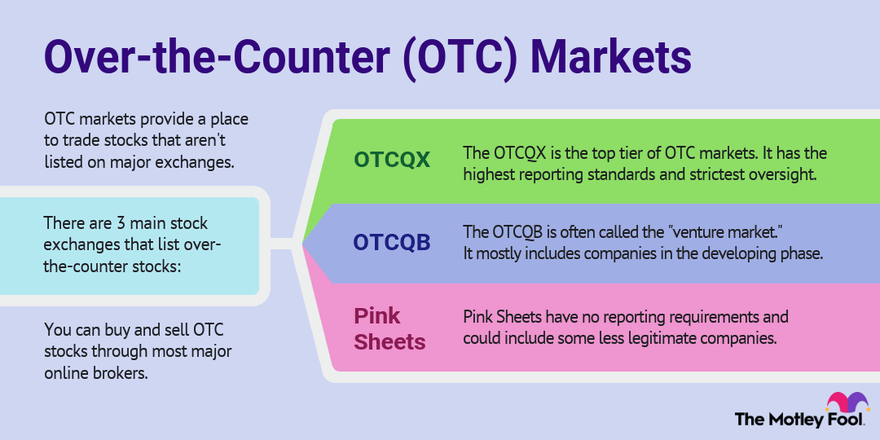
The OTC Markets Group, the primary operator of the OTC platform, has created three distinct market tiers to provide investors with some clarity. Understanding these is your first step.
- OTCQX® Best Market:
- Standards: This is the highest tier. Companies must meet high financial standards, be current in their disclosure, and undergo a qualitative review. They must also be listed on a qualified international exchange or be a U.S. community bank.
- Reporting: Most companies are SEC Reporting or provide robust disclosure via an alternative reporting standard (e.g., OTCIQ).
- Investor Implication: This is the “safest” tier for OTC investing. While still risky, the companies here provide a baseline of verified financial information. This should be the starting point for any serious OTC investor.
- OTCQB® Venture Market:
- Standards: Known as “The Venture Market,” this tier is for early-stage and developing companies. They must be current in their reporting, undergo an annual verification and certification process, and have a minimum bid price of $0.01.
- Reporting: Companies must be SEC Reporting or be compliant with the OTCQB-specific reporting requirements.
- Investor Implication: A significant step up from the Pink market, but riskier than OTCQX. These are often speculative, early-stage ventures with unproven business models.
- OTC Pink® Open Market:
- Standards: This is the lowest and most speculative tier. It has no financial standards or qualitative requirements. The “Pink” market is further categorized by the level of information the company provides:
- Current Information: Companies that are compliant with their SEC or Alternative Reporting Standard obligations.
- Limited Information: Companies with financial reporting gaps, often smaller companies with limited resources.
- No Information: Companies that do not provide any ongoing disclosure. This is the highest-risk category and should be avoided by virtually all retail investors.
- Investor Implication: The Pink market is where the vast majority of pump-and-dump schemes, shell companies, and fraudulent promotions reside. Extreme caution is required.
- Standards: This is the lowest and most speculative tier. It has no financial standards or qualitative requirements. The “Pink” market is further categorized by the level of information the company provides:
The Crucial Difference: SEC Reporting vs. Non-Reporting
This is the single most important distinction you will make.
- SEC Reporting Companies (Reporters): These companies are legally required to file periodic, audited reports with the U.S. Securities and Exchange Commission (SEC). This includes the comprehensive Form 10-K (annual report), the Form 10-Q (quarterly report), and the Form 8-K (current report) for significant events. These documents are your most reliable source of truth.
- Non-Reporting Companies: These companies are not required to file with the SEC. They may provide some information via the OTC Markets’ disclosure service, but this information is not audited by the SEC and is far less reliable.
Golden Rule: For the purposes of serious due diligence, confine your research primarily to SEC-reporting companies on the OTCQX or OTCQB tiers. The “Pink Sheets” should be treated as a minefield, not a hunting ground.
Section 2: The Due Diligence Checklist – Your Investigative Framework
Due diligence is a process, not a single action. Follow this checklist methodically for every OTC stock you consider. Do not skip steps.
Phase 1: The Initial Triage – Is This Stock an Immediate “No”?
This phase is about quickly filtering out the obvious bad actors.
- Step 1: Check the OTC Tier and Information Status.
- Where to Look: The company’s quote page on the OTC Markets website.
- What to Look For: Is the stock on OTCQX, OTCQB, or Pink? If it’s Pink, is it “Current,” “Limited,” or “No Information”?
- Red Flag: A “Pink No Information” or “Pink Limited” stock is an automatic rejection for any prudent investor.
- Step 2: Scan for the Obvious Red Flags.
- Where to Look: The company’s website, recent news, and the “Skull & Crossbones” logo on OTC Markets.
- What to Look For:
- Stock Promoters: Is the company paying stock promoters? (This must be disclosed in SEC filings). Are you receiving spam emails about it?
- Name and Ticker Changes: Frequent changes can be a sign of a company trying to shed a bad reputation.
- Reverse Splits: A history of reverse stock splits is a major red flag, often used to maintain a listing after a price collapse.
- The “Caveat Emptor” Symbol: If OTC Markets has placed a “Caveat Emptor” (Buyer Beware) warning on the stock, it is due to a public interest concern. Steer clear.
If a stock passes this initial triage, you can proceed to the deep dive.
Phase 2: The Deep Dive – Scrutinizing the Company Itself
This is where the real work begins. Your primary tool is the SEC’s EDGAR database.
- Step 3: Read the Latest 10-K Annual Report.
This is the most important document. Don’t just skim it; read it critically.- Business Description (Item 1): Do you understand what the company actually does? Is its business model plausible? Is it overly reliant on a single product or customer?
- Risk Factors (Item 1A): Read every single one. The company is legally required to disclose all material risks. This section often reads like a prophecy of what can go wrong. If the risks seem insurmountable, they probably are.
- Management’s Discussion & Analysis (MD&A) (Item 7): This is where management explains the financial results and its outlook. Is the narrative consistent with the numbers? Are they making excuses for poor performance?
- Financial Statements (Item 8):
- Balance Sheet: Look at the Cash position. Is there enough to fund operations? Check Debt levels. High debt is dangerous for a small company. Look at Shareholder Equity; if it’s negative, the company has more liabilities than assets.
- Income Statement: Is there any Revenue? Is it growing? What are the Net Losses? Are losses shrinking or expanding?
- Cash Flow Statement: Is the company generating or burning cash from operations? “Cash from Operations” is a key metric. A company bleeding cash from operations is on life support, dependent on financing.
- Step 4: Analyze the Capital Structure and Dilution.
- Where to Look: The 10-K and the most recent 10-Q.
- What to Look For:
- Authorized Shares: The maximum number of shares the company is allowed to issue.
- Outstanding Shares: The number of shares currently held by all investors.
- The Trend: Compare the outstanding shares from the current 10-K to the one from a year or two ago. Is the number steadily increasing? This is dilution, and it destroys shareholder value.
- Check for “Shelf Registrations” (Form S-3): This filing allows a company to sell new shares into the market at any time, without further SEC review, leading to instant dilution.
- Step 5: Investigate the Management and Insiders.
- Where to Look: The “Executive Compensation” and “Certain Relationships” sections of the 10-K, and the SEC Form 4 filings for insider transactions.
- What to Look For:
- Background: Do the CEO and CFO have relevant, verifiable experience? A quick web search can sometimes reveal a history of failed ventures.
- Compensation: Is management paying itself exorbitant salaries and bonuses while the company is posting significant losses?
- Insider Buying/Selling: Are insiders buying shares on the open market with their own money? This is a strong positive signal. Conversely, are they constantly selling? This is a major red flag.
- Step 6: Scrutinize the Company’s Public Face.
- The Corporate Website: Does it look professional? Is there clear, non-hypbolic information? Are the contact details legitimate?
- Press Releases: Read the last 12-18 months of press releases. Are they substantive, discussing contracts, financial results, or product development? Or are they full of fluff, using phrases like “groundbreaking,” “game-changing,” and “exploring opportunities”? Hype in press releases is a giant warning sign.
Phase 3: The External Check – Seeking Corroboration and Contradiction
- Step 7: Search for Independent Information.
- Where to Look: Google News, industry publications, and court records (PACER for federal cases).
- What to Look For: Has the company or its executives been involved in lawsuits or regulatory actions? Is there any independent, third-party media coverage that validates or contradicts the company’s claims?
- Step 8: Check the Trading Activity.
- Where to Look: Your broker’s platform or a financial data site.
- What to Look For:
- Volume: Is there consistent, organic trading volume, or is the volume sporadic and driven by spikes?
- Bid-Ask Spread: A very wide spread (e.g., Bid: $0.10, Ask: $0.15) indicates low liquidity and high risk. You will immediately be down significantly upon purchase.
Read more: Earnings Season Gambling: The WSB Guide to Playing High-Volatility ER Reports
Section 3: Case Study in Practice – Applying the Framework
Let’s apply a simplified version of this checklist to a fictional company, “XYZ BioTech Inc.,” trading on the OTCQB.
- Triage:
- Tier: OTCQB. PASS.
- Red Flags: A few promotional emails are circulating. CAUTION.
- Deep Dive (EDGAR):
- 10-K Business Description: Developing a single cancer drug, still in pre-clinical trials. HIGH RISK.
- 10-K Risk Factors: Lists 35 risks, including “We have no revenue,” “We will need substantial additional funding,” and “Our drug may not work.” STANDARD BUT SERIOUS.
- Financials:
- Cash: $2 million.
- Quarterly Net Loss: $1.5 million.
- Cash Runway: ~5 months. IMMINENT DILUTION LIKELY.
- Outstanding Shares: Increased from 50 million to 200 million in two years. SEVERE DILUTION HISTORY.
- Management: CEO’s last company went bankrupt. RED FLAG.
- Insider Transactions: Form 4s show the CEO sold shares every month for the last year. MAJOR RED FLAG.
- External Check:
- Press Releases: Mostly about presenting at non-descript investor conferences and “optimistic” outlooks with no hard data. HYPE.
- Trading: Wide bid-ask spread, low volume. ILLIQUID.
Conclusion: Without even getting to the science of the drug, the due diligence process reveals a company with a terrible financial structure, a dilutive history, insider selling, and a short cash runway. This is an easy REJECT decision. The due diligence process saved you from a almost-certain loss.
Section 4: Advanced Concepts – Understanding Shell Companies and Toxic Financing
To go truly “beyond the hype,” you must be aware of the sophisticated mechanisms used to exploit investors.
The Shell Company
A shell company is one with no or nominal operations and either no or nominal assets. While not illegal in themselves, they are often used as vehicles for fraud, specifically reverse mergers.
- How it Works: A private company wants to go public but avoids the scrutiny of an IPO by merging into a public shell. The private company’s owners now control a publicly traded entity overnight.
- The Danger: These shells often have a history and may have hidden liabilities. The new owners may have no intention of building a real business, but rather of pumping the stock and dumping their shares.
How to Spot a Potential Shell: Check the company’s history on EDGAR. If its past filings show it was a “development stage company” with no revenue for years, or if it has completely changed its business line, it may be a former shell.
Toxic Financing & Death Spiral Convertibles
This is a predatory form of funding that can destroy a company’s share price.
- How it Works: A company in desperate need of cash enters into an agreement with a specialized lender. The lender provides cash in exchange for a convertible note. The conversion price of the note is often based on a discount to the future market price (e.g., 70% of the lowest price over the next 90 days).
- The “Death Spiral”: The lender has an incentive to short-sell the stock, driving the price down. A lower stock price means they can convert their debt into more shares. They then sell these new shares, further depressing the price, and repeat the cycle. This creates a vicious downward spiral that can obliterate shareholder value.
How to Spot It: Look in the company’s 8-K and 10-K filings for financing agreements. Keywords like “variable rate convertible note,” “floorless convertible,” or “discount to market price” are major red flags.
Read more: An Autist’s Analysis: My 500-Hour Deep Dive Into $PLTR
Conclusion: The Prudent Investor’s Mindset
Performing due diligence on OTC stocks is a sober, time-consuming, and often thankless task. It is more about saying “no” 99 times than finding one “yes.” The hype surrounding these stocks is designed to short-circuit your critical thinking and appeal to your greed.
The framework provided here is your antidote to the hype. By understanding the OTC landscape, methodically working through a checklist, focusing on SEC filings, and being aware of advanced predatory schemes, you transform yourself from a potential victim into a informed investigator.
Remember the core tenets of OTC investing:
- Prioritize Information: Stick with SEC-reporting companies on the OTCQX or OTCQB.
- Embrace Skepticism: If it sounds too good to be true, it is.
- Beware of Dilution: It is the silent killer of shareholder value.
- Size Your Positions Appropriately: Any capital allocated to OTC stocks should be considered high-risk speculation, not core investing. Never risk more than you can afford to lose.
The greatest profit you will ever make in the OTC market is the loss you avoided by doing your homework.
Frequently Asked Questions (FAQ) Section
Q1: What is the single most important document for OTC due diligence?
A1: The company’s most recent Annual Report on Form 10-K filed with the SEC. This document provides a comprehensive overview of the business, its risks, its financial health, and its management. It is the cornerstone of any serious investigation.
Q2: A stock I’m looking at is on the OTC Pink “Current Information” tier. Is it safe?
A2: “Safe” is a relative term. While “Current Information” is the best category within the Pink tier, it is still the highest-risk major category. These companies are not subject to the same qualitative or financial standards as OTCQB or OTCQX companies. You must be extra vigilant and assume the risk is significantly higher. For most investors, it’s best to avoid the Pink tier altogether.
Q3: How can I tell if a company is about to do a reverse split?
A3: A company must announce a reverse split before it happens. Look for a filing on SEC Form 8-K or a definitive proxy statement on Form DEF 14A where shareholders are asked to approve an increase in authorized shares or a reverse split. A history of reverse splits is a major red flag for a struggling company.
Q4: What does it mean if a company’s “Shareholder Equity” is negative?
A4: Negative shareholder equity (or a “deficit”) means the company’s total liabilities exceed its total assets. In essence, the company has negative net worth. This is a sign of severe financial distress and often implies the company has accumulated significant losses over time. It is a major red flag.
Q5: I found a promising OTC stock. Where can I find unbiased discussion or analysis?
A5: True, unbiased analysis is rare. Be extremely wary of public message boards (like iHub or StockTwits) and most YouTube channels, as they are often filled with promoters and pumpers. The most unbiased source is the company’s own SEC filings. For external perspective, try to find industry-specific trade journals or blogs that might discuss the company’s technology or market, rather than its stock price.
Q6: The company has a great story and a product that seems revolutionary. The financials are bad, but couldn’t it still be the next big thing?
A6: This is the “story stock” trap. While it’s possible, it is statistically very unlikely. For every story stock that succeeds, thousands fail. The financials are not just numbers; they are a report card on management’s ability to execute that great story. Consistently bad financials (no revenue, high cash burn, constant dilution) indicate that the story is not translating into a viable business. Always weigh the narrative against the cold, hard data in the financial statements.
Disclaimer: This article is for educational and informational purposes only and does not constitute financial advice, an offer to buy or sell, or a recommendation to invest in any security. Investing in OTC stocks involves substantial risk, including the complete loss of your investment. The information provided is based on sources believed to be reliable, but its accuracy or completeness cannot be guaranteed. You should conduct your own due diligence and consult with a qualified financial professional before making any investment decisions. The author and publisher are not liable for any losses or damages related to the information in this guide.
Read more: The Allure and Agony: A Beginner’s Guide to Penny Stocks in the USA