Executive Summary
The meme stock phenomenon, catalyzed by the GameStop saga of January 2021, was more than a market event; it was a regulatory earthquake. It exposed profound structural vulnerabilities and philosophical rifts within the U.S. financial system, placing the Securities and Exchange Commission (SEC) squarely in the crosshairs of Congress, Wall Street, and Main Street. The question is no longer if regulators will act, but how and when. Under the leadership of Chair Gary Gensler, the SEC has launched a sweeping review of the very mechanics that enabled the mania: payment for order flow, gamification of trading apps, settlement cycles, and the rules governing short selling. This article provides a forensic analysis of the SEC’s likely trajectory, examining the specific areas under scrutiny, the powerful industry forces pushing back, and the potential unintended consequences of a regulatory crackdown. For the retail traders of WallStreetBets and beyond, understanding this evolving regulatory landscape is as crucial as understanding a company’s balance sheet.
Introduction: The Morning After the Squeeze
In the chaotic aftermath of the GameStop short squeeze, a new phrase entered the lexicon of every retail trader: “The regulators are watching.” It was a warning, a threat, and an acknowledgment all at once. The spectacle of a video game retailer bringing multi-billion dollar hedge funds to their knees, facilitated by zero-commission trading apps and coordinated on social media, was a wake-up call for Washington.
For the SEC, an agency tasked with protecting investors and maintaining fair markets, the event was a perfect storm that revealed its rules were outdated for the digital age. The meme stock mania was not an anomaly; it was a stress test of the modern market structure, and by many measures, the system failed. This article delves into the SEC’s comprehensive response, moving beyond the headlines to analyze the specific proposals, the legal and political hurdles, and what a future, more regulated trading environment might look like for the retail “ape.”
Part 1: The Battlefield – What the Meme Stock Saga Revealed
To understand the regulatory response, one must first understand the specific market features that the meme stock frenzy exploited and exposed.
1.1 Payment for Order Flow (PFOF): The Engine of “Free” Trading
- The Mechanism: PFOF is the practice where wholesale market makers like Citadel Securities and Virtu Financial pay brokerage firms like Robinhood, Charles Schwab, and E*TRADE for the right to execute their customers’ trades. This is the foundational business model that allows for zero-commission trading.
- The Controversy: The core conflict is that a broker’s duty to achieve “best execution” for its client may be at odds with its incentive to sell order flow to the highest bidder. While brokers and market makers argue that retail traders get better prices than ever before, critics, including Gary Gensler, have questioned whether this is truly a conflict-free system.
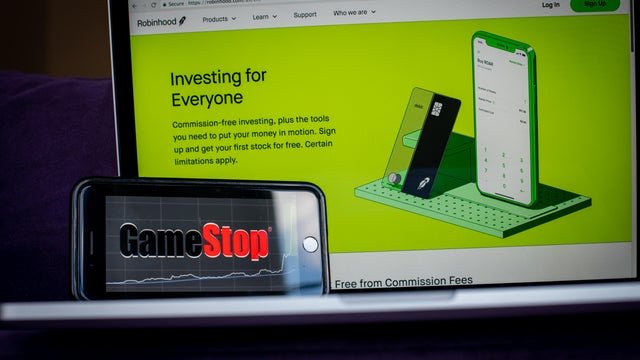
- The Meme Stock Link: During the peak of the GME frenzy, Robinhood and other brokers faced a massive liquidity crisis. They had to post billions of dollars in collateral with clearinghouses to cover the extreme volatility and risk. To reduce this risk, they controversially restricted buying in certain meme stocks, a move that many saw as a direct market manipulation that protected the market makers on the other side of their PFOF arrangements. This incident put PFOF under a political and regulatory microscope like never before.
1.2 The Gamification of Investing
- The Mechanism: Trading apps like Robinhood employ user interface (UI) and user experience (UX) designs—such as confetti animations, push notifications, and a slick, simple interface—that critics argue encourage impulsive, frequent trading rather than long-term investing.
- The Controversy: The SEC is concerned that these design features may be “digital nudges” that override a user’s better judgment. This raises questions about whether brokers are acting in their clients’ best interest or simply maximizing engagement (and their own PFOF revenue).
- The Meme Stock Link: The gamified environment was the perfect petri dish for the viral, community-driven nature of meme stock mania. It lowered the barrier to entry to near-zero, both in cost and in perceived complexity, allowing a new generation of traders to place highly complex options bets with the same ease as ordering an Uber.
1.3 Short Selling and Disclosure Rules
- The Mechanism: Hedge funds and other institutions can borrow shares and sell them, betting the price will fall. The current reporting rules for short interest are delayed and lack granularity.
- The Controversy: The meme stock squeeze was, at its core, a rebellion against perceived predatory short selling. However, it also revealed a lack of transparency. Retail traders were operating in the dark, relying on expensive, third-party data from firms like Ortex to gauge short interest, while the official data was outdated.
- The Meme Stock Link: The “ape” thesis was built on the idea of a “short squeeze.” The lack of real-time, transparent data on short positions created an information asymmetry that both fueled the frenzy and increased its risk.
1.4 Settlement Cycles and Systemic Risk
- The Mechanism: The U.S. market operates on a T+2 settlement cycle, meaning a trade executed today settles two business days later.
- The Controversy: The meme stock volatility exposed the massive collateral requirements of this system. As volatility spiked, clearinghouses demanded more collateral from brokers, leading to the buying halts. This revealed a latent systemic risk where the plumbing of the market could seize up under stress.
- The Meme Stock Link: This was the direct cause of the Robinhood trading halt, the single most controversial event of the entire saga.
Read more: Rookie Mistakes: How to Lose Your Life Savings in 5 Days (A WSB Cautionary Tale)
Part 2: The SEC’s Playbook – A Multi-Pronged Assault
Under Chair Gensler, the SEC has not proposed one single “meme stock rule.” Instead, it has launched a broad, interconnected set of proposals aimed at overhauling the entire market structure that facilitated the mania.
2.1 Reforming Equity Market Structure
This is the centerpiece of the SEC’s response, encompassing several key proposals:
- Order Competition Rule (OCR): This is the most ambitious and controversial proposal. It would require retail market orders to be sent to an auction mechanism before they could be executed by a wholesale market maker. The goal is to inject more competition into order execution and potentially disintermediate the PFOF model.
- Potential Impact: This could fundamentally challenge the zero-commission business model. If PFOF revenue declines, brokers might be forced to reintroduce commissions or find other revenue streams. Proponents argue it will lead to better prices for retail; opponents argue it will ultimately make trading more expensive and slower.
- Regulation NMS Reform: The SEC is considering enhancing disclosure around PFOF and potentially tightening the “best execution” standard that brokers must follow. This would bring more transparency to the often-opaque world of order routing.
2.2 Tackling Gamification and Conflicts of Interest
- Predictive Analytics Rule: This proposed rule is directly aimed at gamification. It would require brokers to evaluate whether their use of predictive analytics and “digital engagement practices” place the firm’s interests ahead of the investor’s. If a conflict is found, the broker must neutralize it.
- Potential Impact: This could lead to a dramatic redesign of trading apps. The confetti, push notifications for volatile stocks, and other game-like elements could be severely curtailed. The SEC is essentially arguing that a broker’s interface is a form of investment advice and should be regulated as such.
2.3 Enhancing Transparency in Short Selling
- Short Sale Disclosure Rule: The SEC has proposed a rule that would require institutional money managers to report their gross short positions monthly, and for certain large short positions to be reported daily. This data would then be made public by the SEC in an aggregated form.
- Potential Impact: This would be a monumental shift. For the first time, the public would have a much clearer, more timely view of short selling activity. This could empower both sides—allowing shorts to see crowded trades and allowing squeeze-seeking traders to identify targets with more precision.
2.4 Accelerating the Settlement Cycle
- T+1 Settlement: The SEC has already finalized the move from T+2 to T+1, which took effect in May 2024. This reduces the credit and liquidity risk in the system, making a repeat of the January 2021 collateral crunch less likely.
- Potential Impact: This is a widely supported, technical fix that reduces systemic risk. For retail traders, it means faster access to funds after a sale.
Part 3: The Legal and Political Battlefield
The SEC’s agenda is not being implemented in a vacuum. It faces fierce opposition from powerful, well-funded industry groups.
3.1 The Case Against the SEC: Industry Pushback
The brokerage industry and market makers argue that the SEC’s reforms will harm the very retail investors they claim to protect.
- The “End of Free Trading” Argument: The industry’s most potent argument is that attacking PFOF will force brokers to reinstate trading commissions, pricing out small investors and reversing the democratization of finance.
- Efficiency vs. Competition: They argue that the current wholesale market model provides exceptionally efficient, low-cost execution for retail orders, and that introducing auctions (via the OCR) will add complexity and latency, ultimately resulting in worse prices.
- Overregulation of Innovation: They frame gamification as “user-friendly design” and argue that the SEC is stifling technological innovation that has brought millions of new participants into the markets.
3.2 The Legal Challenges
The SEC’s most ambitious rules, particularly the Order Competition Rule, are almost certain to face legal challenges. Industry groups will likely sue the SEC, arguing that the agency has overstepped its statutory authority, that its cost-benefit analysis is flawed, or that it failed to follow proper procedure. These lawsuits can delay implementation for years.
3.3 The Political Dimension
The meme stock phenomenon has created strange political bedfellows. It has been criticized by both traditional pro-business Republicans and Democrats wary of market speculation. However, it has also been championed by populists on both the left and right who see it as a blow against Wall Street elites. This political fragmentation makes it difficult to build a consistent congressional consensus for or against the SEC’s actions, giving Gensler a relatively free hand, but also making the rules vulnerable to being overturned by a future administration.
Part 4: The Trader’s Dilemma – Navigating a New Regulatory Reality
For the individual trader, a new regulatory environment means adapting strategies and expectations.
4.1 The Potential End of the “Zero-Commission” Era
If PFOF is curtailed, the most direct impact will be on the cost of trading. Traders may face a choice: pay per-trade commissions or accept potentially slower and less certain trade execution.
4.2 The De-Gamified Trading Experience
Trading apps may become less like games and more like utilitarian tools. The constant stimuli designed to encourage trading may disappear, which could lead to less impulsive trading and lower volumes overall. This could reduce the volatility that meme stocks thrive on.
4.3 The New Transparency Arms Race
With better short sale data, the hunt for squeeze candidates will become more data-driven and potentially more competitive. The edge will shift from those who can spot social media sentiment to those who can best analyze the new, richer datasets provided by the SEC.
4.4 The Unintended Consequences
Regulation often creates new opportunities and risks:
- Migration to New Platforms: If U.S. equity trading becomes more regulated, speculative activity could migrate to other venues, such as crypto markets or overseas brokers, which carry their own, often greater, risks.
- New Forms of Manipulation: As transparency increases in one area, bad actors may develop new, more sophisticated methods of manipulation that are not yet on the regulatory radar.
- The “Compliant” Meme Stock: It’s possible that a new model emerges where coordinated trading activity is structured to operate within the bright lines of the new rules, creating a more formalized, yet still powerful, form of collective action.
Conclusion: The Inevitable Reckoning
The meme stock mania of 2021 was a rebellion that exposed the inner workings of the modern financial system. It was inevitable that the system’s guardians would respond. The SEC, under Gary Gensler, is not merely preparing a “crackdown” on meme stocks per se; it is attempting to comprehensively re-wire the market’s plumbing to address the structural conflicts and risks that the mania revealed.
The outcome of this effort is uncertain, caught in a tug-of-war between the ideals of investor protection and market efficiency, and the realities of industry power and political will. The zero-commission, gamified, and highly leveraged trading environment that defined the early 2020s is likely to undergo a significant transformation.
For the retail trader, the lesson is clear: the market is not a static game with fixed rules. The rules themselves are fluid and subject to change, often in response to the very strategies that become too successful. The most successful traders of the future will be those who understand not just charts and fundamentals, but also the regulatory tides that can lift or sink entire strategies overnight. The regulators are not just watching; they are rewriting the rulebook.
Read more: Beyond Stocks: How WSB Is Now Moving the Needle on Crypto and Options Flow
Frequently Asked Questions (FAQ)
Q1: Will the SEC actually ban Payment for Order Flow?
- A: An outright ban is unlikely in the short term due to fierce industry opposition. However, the SEC’s proposed Order Competition Rule is designed to create a viable alternative that could severely reduce its prevalence and profitability. The goal is to make PFOF less dominant, not necessarily to ban it outright.
Q2: Can the SEC actually stop people from posting on Reddit or coordinating trades?
- A: No, the First Amendment protects general discussion and opinion about stocks. However, the SEC can and will pursue individuals for actual market manipulation. The line is crossed when someone knowingly spreads false information to move a stock price for their own profit, or when a group of traders engages in a coordinated “pump-and-dump” scheme. General sentiment and shared due diligence are protected; orchestrated manipulation is not.
Q3: How will T+1 settlement affect my trading?
- A: For most retail traders, the effect will be minimal but positive. The most noticeable change is that when you sell a stock, the cash from the sale will settle in your account and become available for withdrawal one business day sooner than before. It also reduces the risk of broker-imposed trading restrictions during periods of extreme volatility.
Q4: I use Robinhood. Should I be worried about my account?
- A: Your assets in a brokerage account are protected by SIPC insurance. The concern is not the safety of your holdings, but the potential for changes to the platform’s functionality and cost structure. If the PFOF model is disrupted, Robinhood may be forced to change its business model, which could mean the introduction of fees or a less “gamified” interface.
Q5: What is the timeline for these SEC proposals to become law?
- A: The regulatory process is slow. After a proposal is released, there is a public comment period (often 30-60 days). The SEC then reviews the comments and may issue a final rule, which can take many more months. Once finalized, rules often have a compliance date months or years in the future. Furthermore, major rules are almost always challenged in court, which can delay implementation for years. The T+1 settlement rule was a relatively fast process taking about two years; more controversial rules like the OCR could take much longer.
Q6: Where can I read the actual SEC proposals and submit a comment?
- A: All SEC rule proposals and releases are published on its official website (sec.gov). You can search for them by their release number (e.g., “34-96495” for the Order Competition Rule). The website provides instructions on how to submit comments electronically. While most comments are from industry professionals, the SEC is legally required to read and consider all public comments.
Keywords: SEC, Regulation, Meme Stock, WallStreetBets, GameStop, AMC, Market Manipulation, Payment for Order Flow, Citadel Securities, Gamification, Gary Gensler.
Author Bio & Disclaimer: This article was written by a team with expertise in financial regulation, market structure, and securities law. It is intended for educational purposes only and does not constitute legal or financial advice, nor a recommendation to buy or sell any security. The regulatory landscape is fluid and subject to change. You are solely responsible for your own investment and legal decisions and should consult with a qualified financial advisor and/or attorney before acting on any information contained herein. The views expressed are an analysis of potential regulatory actions and are not a guarantee of future SEC policy.
Read more: Beyond Stocks: How WSB Is Now Moving the Needle on Crypto and Options Flow