Keywords: Federal Reserve, Fed Pivot, Market Meltdown, WallStreetBets, WSB, Inflation, Interest Rates, Quantitative Tightening, Trading Strategy, Retail Trading, Macro Investing, Recession, Risk-On, Risk-Off.
Executive Summary
The single greatest force moving global markets is the U.S. Federal Reserve. Its multi-pronged battle against inflation—through interest rate hikes and Quantitative Tightening (QT)—has created a high-stakes standoff. The entire financial ecosystem is now gripped by one question: Will the Fed successfully engineer a “soft landing” (a pivot to lower rates without causing a severe recession), or will its policies trigger a “hard landing” (a sharp economic downturn and market meltdown)? This article analyzes this macro battlefield not from the perspective of Wall Street titans, but through the lens of the retail trading collective known as WallStreetBets (WSB). We will deconstruct the “Fed Pivot” narrative, explore the “Market Meltdown” thesis, and investigate the specific, high-risk, high-reward strategies the WSB community is deploying to profit from the ensuing volatility. This is a guide to understanding the most significant financial story of our time and the unconventional players betting on its outcome.
Introduction: The Ape in the Macro Arena
The image of the “WallStreetBets Ape” as a mindless, reactionary gambler is a profound misconception. While the community thrives on memes, jargon, and high-risk strategies, its engagement with complex macroeconomic themes has deepened significantly since the GameStop saga. The Fed’s actions are no longer a distant concern for economists; they are the direct determinant of whether a YOLO trade on a tech stock or a leveraged ETF will moon or be obliterated.
This quarter, the community is not just watching the Fed—it is actively betting on the outcome of its policy decisions. This article delves into the two dominant, opposing narratives, the data driving them, and the specific assets and strategies being deployed. We will move beyond the hype to provide a structured analysis of the most significant trade in the world right now.
Part 1: The Battlefield – Understanding the Fed’s Tools and the Pivot Narrative
To understand the bets, one must first understand the war the Fed is waging.
1.1 The Fed’s Arsenal: How We Got Here
The Federal Reserve has two primary tools to combat inflation:
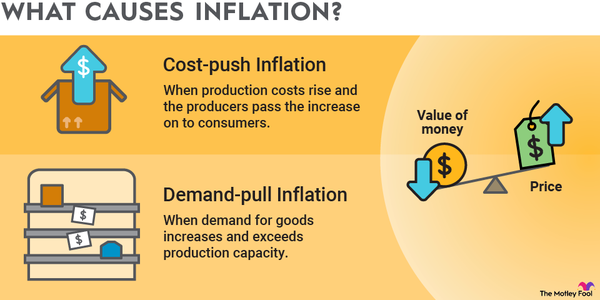
- Interest Rate Hikes: By raising the Federal Funds Rate, the Fed makes borrowing more expensive for consumers and businesses. This cools demand for everything from houses and cars to business expansion, theoretically slowing the economy and bringing down prices.
- Quantitative Tightening (QT): This is the reverse of the Quantitative Easing (QE) that dominated the post-2008 era. The Fed is allowing its massive balance sheet of Treasury bonds and Mortgage-Backed Securities to mature without reinvesting the proceeds. This removes liquidity from the financial system, tightening monetary conditions further.
The Fed’s mandate is to achieve “maximum employment and stable prices.” With unemployment low, its entire focus has been on crushing the inflation that surged to 40-year highs in 2022.
1.2 The “Fed Pivot” Thesis: The Bull Case
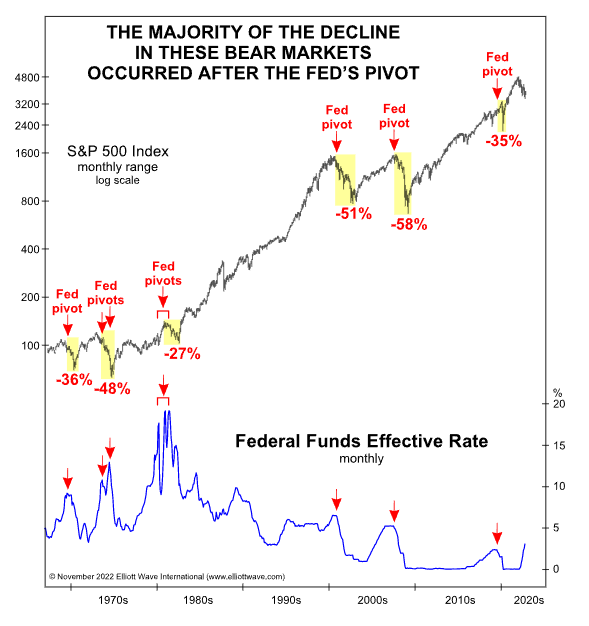
The “Pivot” is the holy grail for bull markets. It refers to the point at which the Fed stops hiking rates (the “Pause”) and, more importantly, begins to cut rates again. The market doesn’t wait for the actual cuts; it rallies in anticipation of them.
Arguments for an Imminent Pivot:
- Lagging Indicators Showing Progress: The Consumer Price Index (CPI) and Personal Consumption Expenditures (PCE) have fallen significantly from their peaks. While still above the 2% target, the direction is what traders focus on.
- Cracks in the Economy: Proponents point to leading indicators like the Inverted Yield Curve, declining manufacturing data, and rising jobless claims as signs that the Fed’s medicine is already working and that further hikes risk overdoing it.
- The “Soft Landing” Dream: The belief is that the Fed, having front-loaded aggressive hikes, can now afford to be patient and will pivot at the first clear sign of a recession to prevent it from becoming deep and protracted.
- Regional Banking Stress: The collapses of Silicon Valley Bank and Signature Bank in early 2023 revealed the fragility created by rapid rate hikes. A Pivot thesis argues that the Fed will be forced to ease policy to prevent broader financial instability.
What a Pivot Would Mean for Markets:
A pivot would be a massive “risk-on” signal. It would mean cheaper money, higher valuations for growth stocks, and a green light for speculative assets. It would be a rocket fuel for the very assets WSB loves most.
1.3 The “Market Meltdown” Thesis: The Bear Case
The opposing view is that the Fed’s actions will inevitably break something in the economy, leading to a severe recession and a corresponding crash in asset prices.
Arguments Against an Imminent Pivot:
- Sticky and Persistent Inflation: While headline inflation has fallen, core inflation (excluding food and energy) has proven more stubborn. Key components like services inflation, shelter costs, and wage growth remain elevated, suggesting the inflation fight is far from over.
- The Fed’s Credibility: Fed Chair Jerome Powell has been unequivocal: the Fed is committed to restoring price stability and will not pivot prematurely. The mantra is “higher for longer.” The Meltdown thesis takes the Fed at its word, believing it will err on the side of overtightening to avoid the 1970s mistake of stopping too soon.
- The Lag Effect: The full impact of interest rate hikes can take 12-18 months to filter through the economy. We may have only felt the effects of the first few hikes, with the bulk of the pain still ahead.
- Valuation Reality Check: Even after the 2022 bear market, some market segments (particularly mega-cap tech) trade at rich valuations that may not be sustainable in a high-rate, slowing-growth environment. A recession would crush corporate earnings, making these valuations look even more stretched.
What a Meltdown Would Mean for Markets:
A hard landing would trigger a “risk-off” stampede. Stocks would fall, credit markets would seize up, and speculative assets would be hit hardest. In this scenario, preservation of capital becomes the primary goal.
Part 2: The WSB Playbook – Decoding the Ape’s Macro Bets
The WSB community is not a monolith, but its collective action is visible in options flow, discussion trends, and price movements in specific, high-leverage instruments. Here’s how they are positioning for both outcomes.
2.1 Betting on the Pivot: The YOLO Playbook for Risk-On
This cohort is leaning into the hope of easier money. Their bets are concentrated in assets that are most sensitive to interest rates.
Asset Class 1: Long-Duration Growth & Tech Stocks
- Thesis: High-growth, often unprofitable companies are valued on their distant future earnings. When interest rates fall, the discounted present value of those future earnings skyrockets. They are the ultimate “pivot play.”
- WSB Favorites:
- ARK Innovation ETF (ARKK): Cathie Wood’s flagship fund is a pure-play basket of disruptive, long-duration tech. It got annihilated in 2022 and is now a leveraged bet on a Fed pivot.
- Crypto-Linked Equities: Coinbase (COIN) and MicroStrategy (MSTR). These stocks act as proxies for Bitcoin and the broader crypto market, which is highly correlated to liquidity conditions. A pivot means more liquidity, which flows into crypto.
- Speculative Tech: Names like Palantir (PLTR), Roku (ROKU), and Teladoc (TDOC). These are former WSB darlings that are deeply out of favor but would see massive percentage gains in a sustained risk-on rally.
Asset Class 2: Leveraged Long ETFs
- Thesis: Why just go long when you can go super-long? These instruments provide amplified exposure to a market rally.
- WSB Favorites:
- TQQQ (3x Long NASDAQ-100 ETF): The king of WSB leverage. A 1% move in the NASDAQ-100 becomes a ~3% move in TQQQ. In a full-blown pivot rally, TQQQ could see exponential gains.
- SOXL (3x Long Semiconductor ETF): Semiconductors are the “picks and shovels” of the tech world and are incredibly cyclical. A pivot bet is a bet on a new tech cycle, making SOXL a popular, albeit extremely volatile, vehicle.
- SPXL (3x Long S&P 500 ETF): A broader, but still highly leveraged, bet on a general market melt-up.
Asset Class 3: Out-of-the-Money (OTM) Call Options
- Thesis: The classic WSB strategy. Instead of buying the underlying stocks or ETFs, traders are buying short-dated, OTM call options on them. This provides insane leverage. If the pivot happens and the underlying asset rips higher, these cheap options can produce returns of 1,000% or more. The bet is not just on direction, but on the magnitude and timing of the move.
2.2 Betting on the Meltdown: The “Regard” Bear Playbook
A smaller, but increasingly vocal, segment of WSB is preparing for an economic downturn. Their strategies are more complex and often involve instruments that profit from fear and volatility.
Asset Class 1: Leveraged Inverse ETFs
- Thesis: These ETFs are designed to move in the opposite direction of their underlying index. They are a direct bet on market decline.
- WSB Favorites:
- SQQQ (3x Inverse NASDAQ-100 ETF): The bearish counterpart to TQQQ. If the tech-heavy NASDAQ falls, SQQQ rises. It’s the go-to instrument for betting against a pivot.
- SPXU (3x Inverse S&P 500 ETF): A leveraged bet against the broader market.
- A key caveat: These are decay instruments. They are designed for short-term holding due to the compounding effects of daily resets. Holding them for weeks in a sideways or volatile market can lead to losses even if the overall trend is down.
Asset Class 2: Put Options
- Thesis: Buying put options gives the holder the right to sell a stock at a specific price. They are used to bet on a price decline. WSB traders will buy puts on overvalued stocks, broad market ETFs like SPY or QQQ, or even on the leveraged long ETFs themselves (e.g., buying puts on TQQQ).
- The “Gamma Squeeze” in Reverse: Just as call buying can fuel a rally, aggressive put buying can force market makers to hedge by selling the underlying asset, potentially accelerating a decline.
Asset Class 3: Volatility (VIX) Products
- Thesis: The CBOE Volatility Index (VIX), known as the “fear gauge,” spikes during market panics.
- WSB Favorites:
- VXX/UVXY: These are Exchange-Traded Notes (ETNs) that track short-term VIX futures. They are notoriously complex and suffer from extreme decay, but during a sharp market sell-off, they can produce explosive, short-term gains. They are the quintessential “meltdown lottery ticket.”
Read more: Riding the Wave: 2 Top US Tech Stocks Dominating the AI Revolution
Part 3: The Data Behind the Dialogue – What WSB is Actually Doing
Beyond the anecdotal posts of gain/loss porn, we can analyze concrete data to gauge WSB’s collective positioning.
- Unusual Options Activity (UOA): Scanners that track large, non-standard options trades frequently flag massive volumes of OTM calls on TQQQ, SPY, and COIN, or large blocks of puts on the same. This provides a real-time pulse on where the “smart money” or, in this case, the “coordinated ape money” is flowing.
- Social Sentiment Analysis: Tracking the frequency of tickers like “TQQQ,” “SQQQ,” and “COIN” on the WSB subreddit and related Discord channels provides a qualitative measure of crowd enthusiasm. A surge in “TQQQ” posts often correlates with a short-term top as the trade becomes crowded, while a rise in “SQQQ” chatter can signal growing fear.
- Flow Data: Premium services like FlowAlgo and Cheddar Flow provide clear evidence of the community’s bias. Throughout 2023, the data has shown a persistent and overwhelming skew towards call buying, indicating that the median WSB participant is structurally long and betting heavily on the Pivot narrative.
Part 4: The Synthesis – A Realistic Outlook and Risk Management for the Ape
The greatest risk for any trader is falling in love with a single narrative. The reality is that the path forward is bimodal: it’s either Pivot or Meltdown, with a narrow and difficult-to-achieve “soft landing” in between.
4.1 The Most Likely Scenario: A Rocky, Choppy Path
The consensus among many professional economists is not for a clear-cut victory for either thesis in the immediate term. The more probable path is one of continued volatility.
- Pivot Hopium vs. Data Dependency: Every new CPI and jobs report will trigger a violent swing between the two narratives. A hot inflation print will send SQQQ soaring and TQQQ tanking. A cool print will do the opposite. This creates a trader’s market, not an investor’s market.
- The Fed is Trapped: The Fed is caught between still-too-high inflation and emerging signs of economic weakness. Its communications will likely remain deliberately vague, leading to whipsaw action as the market parses every word from Chairman Powell.
4.2 A Primate’s Guide to Risk Management
In this environment, the traders who survive and thrive will be those who prioritize risk management above all else.
- Position Sizing is Everything: A YOLO trade should be exactly that—a small, calculated gamble with capital you are prepared to lose entirely. The bulk of one’s portfolio should not be in TQQQ or SQQQ. The volatility will destroy an over-leveraged account.
- Define Your Thesis and Your Exit: Before entering a trade, ask: What am I betting on? (e.g., “I’m betting CPI comes in cool next week”). Then, define your exit for both being right (profit target) and wrong (stop-loss). If your thesis is proven wrong, exit the trade. Do not “diamond hands” a macro bet.
- Beware of Leveraged ETF Decay: Understand that instruments like TQQQ and SQQQ are not designed for long-term holding. They can bleed value in sideways or volatile markets due to beta slippage.
- Respect the IV (Implied Volatility): Buying options ahead of major events like CPI or Fed meetings is expensive. You are not only betting on direction but also on a move large enough to overcome the high premium you paid. Consider defined-risk options strategies like vertical spreads to mitigate this cost.
- Diversify Your Narrative Exposure: The smartest play might be to have small, tactical positions on both sides, adjusting as new data arrives. This is different from “hedging”—it’s about staying agile and participating in macro-driven moves in either direction.
Read more: Hidden Gems: 3 Undervalued US Stocks Flying Under the Radar
Conclusion: The Ape Who Knew Too Much
The WallStreetBets community has evolved from a fringe group of meme stock traders into a formidable, if unconventional, force in the market. Its engagement with the Fed pivot/meltdown narrative is a testament to how macroeconomics has become democratized. The “apes” are no longer just throwing darts; they are analyzing CPI reports, parsing FOMC statements, and deploying sophisticated, if dangerously leveraged, strategies to express their views.
The quarter ahead will be defined by the tension between the hope for a Fed pivot and the fear of a market meltdown. For the disciplined WSB trader, this volatility is not a threat but an opportunity. By understanding the underlying forces, respecting the immense risks, and managing their capital with prudence, they can navigate the storm. The ultimate winner will not be the one who perfectly predicted the outcome, but the one who managed their risks well enough to survive the journey, regardless of whether the final chapter is written by Powell or by panic.
Frequently Asked Questions (FAQ)
Q1: What exactly is a “Fed Pivot”?
- A: A Fed Pivot is a significant shift in monetary policy. It begins with a “pause” in interest rate hikes, but the true pivot the market craves is the beginning of a cycle of interest rate cuts and/or a reversal from Quantitative Tightening (QT) back to Quantitative Easing (QE). The market typically rallies in anticipation of this shift.
Q2: Why does WallStreetBets care so much about the Federal Reserve?
- A: The Fed controls the cost of money. When rates are low and liquidity is abundant (a “dovish” Fed), speculative, high-growth, and unprofitable companies thrive. When the Fed is “hawkish” and raises rates, it crushes these very assets. Since WSB’s favorite plays are in these speculative areas, the Fed’s policy is the single biggest determinant of their success or failure.
Q3: What is the difference between TQQQ and SQQQ?
- A: TQQQ is a triple-leveraged ETF that aims to deliver 3x the daily return of the NASDAQ-100 index. It is a bet on tech stocks going up. SQQQ is its inverse counterpart; it aims to deliver 3x the daily inverse return. It is a bet on tech stocks going down. Both are extremely volatile and suffer from decay, making them unsuitable for long-term buy-and-hold investing.
Q4: Is betting on a Fed Pivot the same as betting on a “soft landing”?
- A: Not necessarily. A “soft landing” is the ideal scenario where the Fed pivots after it has tamed inflation without causing a recession. However, the market could also rally on a pivot that happens because of a “hard landing” (a severe recession). In this case, the initial pivot rally might be followed by a reality check as poor economic data and falling earnings emerge.
Q5: What is the biggest risk when trading based on these macro narratives?
- A: The biggest risk is narrative addiction—becoming so convinced of one outcome that you ignore contradictory data and hold onto losing positions. The Fed’s path is data-dependent, and the data can change quickly. The second biggest risk is using excessive leverage, which can magnify losses and lead to a margin call or a total loss of capital during a whipsaw market.
Q6: Where can I find reliable data to follow this story?
- A:
- Fed Communications: Federal Reserve website, FOMC statements, Chairman Powell’s press conferences.
- Economic Data: Bureau of Labor Statistics (CPI, Jobs Report), Bureau of Economic Analysis (PCE).
- Market Data: CBOE (VIX), your brokerage platform (options flow, volume).
- Context & Analysis: Reputable financial news (Bloomberg, Reuters, The Wall Street Journal) and primary sources from the Fed itself. Always be wary of financial influencers with a clear, unshakable bias.
Author Bio & Disclaimer: This article was written by a team with expertise in market macroeconomics and behavioral finance. It is intended for educational purposes only and does not constitute financial advice, nor a recommendation to buy or sell any security. All trading and investment activities involve substantial risk, and the use of leveraged and inverse products carries a high level of risk and is not suitable for all investors. The examples provided are for illustrative purposes only. You are solely responsible for your own investment decisions and should consult with a qualified financial advisor before acting on any information contained herein.
Read more: Passive Income Powerhouses: 3 US Dividend Stocks for Reliable Cash Flow