Keywords: Gamma Squeeze, Short Squeeze, GME, WallStreetBets, Options Trading, Volatility, Market Mechanics, High-Risk Investing, Squeeze Playbook.
Introduction: Beyond the Hype – The Anatomy of a Market Explosion
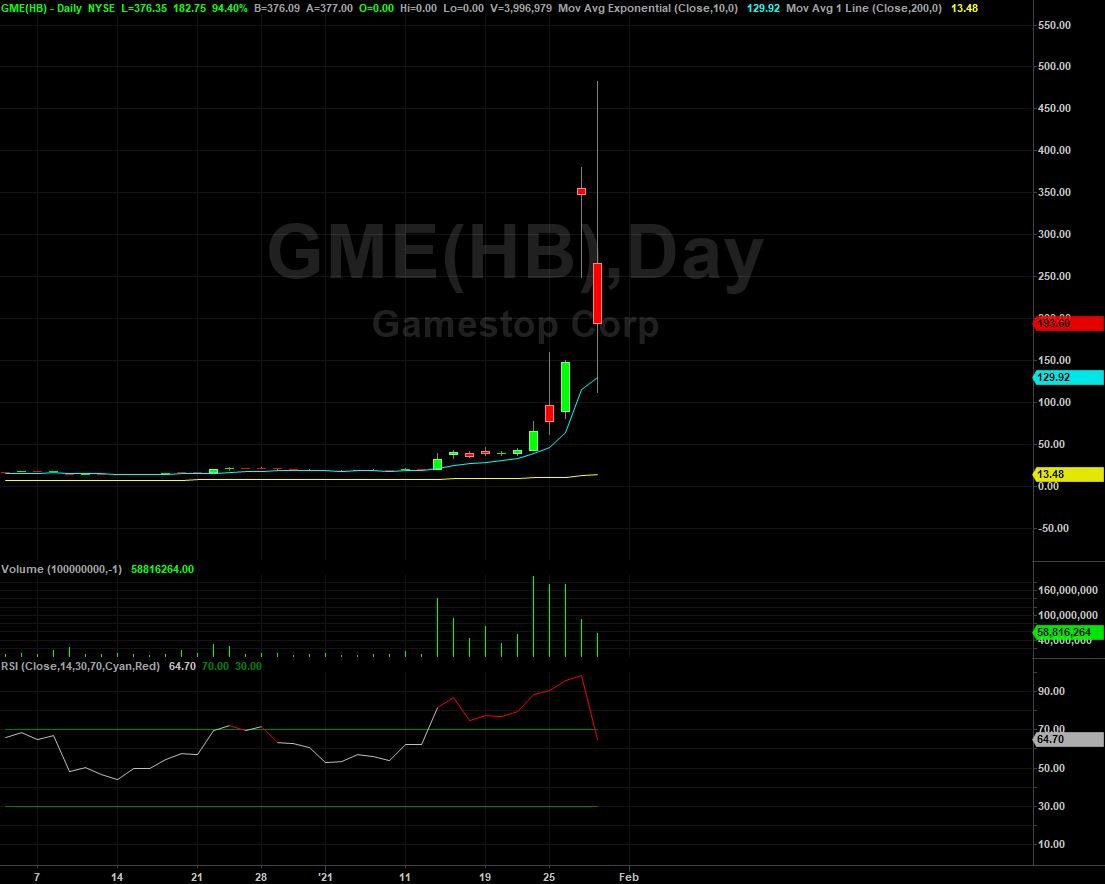
The GameStop (GME) saga of January 2021 wasn’t just a financial event; it was a cultural earthquake. For a few dizzying weeks, the world watched as a legion of retail traders, coordinated on forums like WallStreetBets, propelled a struggling video game retailer’s stock into the stratosphere, defying hedge funds and upending conventional market wisdom. At the heart of this meteoric rise was a complex and powerful market mechanism: the gamma squeeze.
While the term “short squeeze” became household jargon, the gamma squeeze was the hidden engine that amplified GME’s price moves to astronomical levels. It’s a self-reinforcing feedback loop born from the intricate relationship between stock prices, options contracts, and the market makers who facilitate trades.
This article is not a nostalgic look back. It is a forward-looking playbook. Our goal is to deconstruct the gamma squeeze into its fundamental components, providing you with a systematic, data-driven framework to understand the conditions that create these explosive opportunities. We will move beyond the memes and hype to explore the tangible metrics, the inherent risks, and the strategic mindset required to navigate this high-stakes area of the market.
A Critical Disclaimer: Pursuing gamma squeezes is an exceptionally high-risk strategy. It is akin to trading financial dynamite. The potential for life-changing gains exists alongside the very real possibility of catastrophic losses. This guide is for educational purposes to demystify the process, not a guarantee of profits. You must conduct your own research and never risk more than you are willing to lose entirely.
Part 1: The Foundation – Understanding the Machinery
Before we can find the next potential gamma squeeze, we must first understand the gears and levers that make the machine work. This requires a solid grasp of two key concepts: the short squeeze and the options Greeks, particularly Delta and Gamma.
1.1 The Short Squeeze: The Primary Catalyst
A short squeeze is the foundational pressure cooker. It occurs when a stock that has been heavily shorted begins to rise sharply in price.
- Short Selling 101: Short sellers borrow shares and sell them, betting the price will fall so they can buy them back later at a lower price, return the shares, and pocket the difference. Their potential loss is theoretically infinite because a stock’s price can rise indefinitely.
- The Squeeze Trigger: When the stock price rises instead of falls, short sellers start incurring losses. At a certain point, these losses become unbearable, or they face margin calls from their brokers. To limit their losses, they are forced to buy back the shares to close their positions.
- The Feedback Loop: This forced buying creates additional demand for the stock, pushing the price even higher. This, in turn, triggers more margin calls and forces more short covering, creating a violent upward spiral. This is the classic short squeeze.
1.2 The Options Market: Fueling the Fire with Delta and Gamma
This is where the story gets more complex and where the gamma squeeze separates itself. To understand it, you need to be familiar with options and two of the “Greeks” that measure their sensitivity.
- Call Options: A call option gives the buyer the right (but not the obligation) to buy a stock at a specific price (the “strike price”) before a certain date (the “expiration”).
- Delta (Δ): The Hedge Ratio
- What it is: Delta measures how much an option’s price will change for every $1 move in the underlying stock.
- For Call Options: Delta ranges from 0 to 1.00 (or 0 to 100). A delta of 0.50 means the option’s price will gain approximately $0.50 for every $1 the stock goes up. Delta also represents the estimated probability of the option expiring in-the-money.
- Crucially, Delta represents a market maker’s hedge. If a market maker sells a call option with a delta of 0.50, they are exposed to the risk of the stock rising. To remain “delta neutral” (market neutral), they must hedge by buying 50 shares of the underlying stock.
- Gamma (Γ): The Accelerator
- What it is: Gamma measures the rate of change of Delta. It tells you how much the Delta will change for a $1 move in the stock.
- The Acceleration Effect: Gamma is highest for “at-the-money” options. If a call option has a high gamma and the stock price rises, its delta will increase rapidly. For example, an option with a delta of 0.60 and a high gamma might see its delta jump to 0.80 after a $1 rise in the stock.
1.3 The Gamma Squeeze: The Perfect Storm
Now, let’s combine these elements into the gamma squeeze feedback loop.
- Initial Catalyst: A heavily shorted stock begins to rise due to positive news, a social media frenzy, or initial short covering. This rise pushes it toward key strike prices where a large number of call options have been sold.
- Market Maker Hedging: As the stock price rises, the deltas of these out-of-the-money and at-the-money call options increase (due to Gamma). The market makers who sold these calls are now suddenly under-hedged. To re-establish delta neutrality, they are forced to buy more shares of the underlying stock.
- Accelerated Buying: This forced buying by market makers adds significant fuel to the fire, pushing the stock price higher.
- The Feedback Loop Intensifies: The higher stock price further increases the delta of the call options (again, thanks to Gamma), forcing market makers to buy even more shares. This creates a self-perpetuating cycle: Rising Price → Rising Deltas → Hedging Share Purchases → Further Rising Price.
- The Peak: The squeeze is most powerful when it is “rolling,” moving from one strike price to the next, forcing market makers to continuously hedge. It eventually stalls when the buying pressure subsides, when options expire, or when the chain of high-open-interest strikes is broken.
In the GME case, this loop became a vortex. The massive volume of call options purchased by retail traders created an enormous hedging obligation for market makers, whose relentless buying to hedge their positions directly contributed to the parabolic price move.
Part 2: The Gamma Squeeze Playbook – A Step-by-Step Scouting Framework
This is the core of our guide—a systematic approach to identifying stocks with gamma squeeze potential before they explode.
Step 1: Identify the Short Interest Pressure Cooker
A gamma squeeze is far more potent when layered on top of a potential short squeeze. The short interest provides the fundamental pressure.
- Key Metric: Short Interest % of Float: Look for stocks with a very high short interest as a percentage of the float (the number of shares available for public trading). While there’s no magic number, anything above 20% is notable, and above 40% is considered extremely high and susceptible to a squeeze. Data sources: Ortex, S3 Partners, Bloomberg (your broker may also provide this).
- Days to Cover (DTC): This metric calculates how many days it would take for short sellers to buy back all their borrowed shares, based on the stock’s average daily trading volume. A high DTC (e.g., 5-10+ days) indicates that short sellers would have a very difficult and slow exit if the stock started to rise, increasing the squeeze potential.
Step 2: Analyze the Options Chain – The Battlefield Map
The options chain is your primary tool. You are looking for an imbalance that creates a large, unstable hedging requirement for market makers.
- High Open Interest (OI) at Key Strikes: Open Interest is the total number of outstanding options contracts. Focus on call options. You want to see a massive wall of open interest at strike prices just above the current stock price. This is the “fuel” for the gamma squeeze. As the price approaches these strikes, their gamma and delta will spike.
- The “Gamma Ramp”: This is a visualization of the cumulative hedging requirement. A strong gamma ramp exists when there is a high concentration of OI across multiple strike prices in a tight range above the current price. The steeper the ramp, the more explosive the potential move if the stock price starts climbing it.
- Low Float & High Cost to Borrow: A stock with a low number of available shares (low float) is much easier to move. A high cost to borrow shares (indicating scarce availability) also signals intense short-selling activity, adding to the squeeze pressure.
Step 3: Assess the Catalysts and Community Sentiment
The dry tinder of high short interest and a loaded options chain needs a spark.
- Fundamental or News Catalyst: Is there a pending earnings report, an FDA approval, a new product launch, or a major partnership? A positive fundamental shift can be the initial trigger that forces a re-evaluation of the stock’s value and attracts buying.
- Social & Community Momentum: This was the X-factor in the GME saga. Monitor communities like WallStreetBets, Twitter (X), and StockTwits. Look for:
- Rising Mentions and Engagement: Is the ticker being discussed with increasing frequency and passion?
- Coordinated Narratives: Is there a unifying “story” or “thesis” (e.g., “this company is undervalued and overshorted”) that is gaining traction?
- Options Flow: Are there reports of large, unusual volumes of call options being bought? Tools that track “unusual options activity” can be valuable here.
Read more: Passive Income Powerhouses: 3 US Dividend Stocks for Reliable Cash Flow
Step 4: Monitor Technical Analysis for Confirmation
Price and volume action can provide the final technical confirmation that a move may be starting.
- Breaking Key Resistance Levels: A stock breaking above a key technical resistance level on high volume can trigger algorithmic buying and attract momentum traders.
- Sustained High Volume: A gamma/short squeeze cannot sustain itself without massive, sustained trading volume. Volume is the oxygen for the fire. Look for volume that is multiples of the stock’s average.
- Relative Strength Index (RSI): While a high RSI (e.g., above 70) can indicate overbought conditions, during a squeeze, the RSI can become extremely elevated (e.g., >90) and stay there for extended periods. Don’t use it as a sell signal in isolation during a squeeze event.
Part 3: A Hypothetical Case Study – Scouting “XYZ Biotech”
Let’s apply the playbook to a fictional company, “XYZ Biotech,” to see how the process works in practice.
- The Setup:
- Stock Price: $9.50
- Float: 25 million shares
- Short Interest: 12 million shares (48% of Float – High Pressure)
- Days to Cover: 8 days (Difficult Exit for Shorts)
- Catalyst: PDUFA date (FDA decision) in 3 weeks.
- Options Chain Analysis (Focusing on weekly expiration):
- $10 Strike: Call Open Interest = 15,000 contracts (Equivalent to 1.5 million shares).
- $11 Strike: Call Open Interest = 12,000 contracts (1.2 million shares).
- $12 Strike: Call Open Interest = 10,000 contracts (1.0 million shares).
- $13 Strike: Call Open Interest = 8,000 contracts (0.8 million shares).
- The Gamma Ramp Analysis:
- The current price of $9.50 is sitting just below the massive $10 strike wall.
- If positive news hits and the stock pushes to $10.50, the delta on the $10 and $11 strikes will surge.
- Market makers who sold these ~27,000 contracts would be forced to hedge by buying millions of shares very quickly to remain delta-neutral.
- This creates a clear “ramp” from $10 to $13. If buying pressure can push the stock up the first step, the internal mechanics of the options market could help propel it up the rest.
This hypothetical XYZ Biotech now presents a textbook setup. It has the short interest pressure, the loaded options chain, and a clear, binary catalyst. It becomes a stock to watch closely.
Part 4: The Inverted Playbook – The Risks and The Exit Strategy
For every GME that rockets, there are dozens of failed squeezes that incinerate capital. Understanding the risks is non-negotiable.
The Perils: How It All Goes Wrong
- The Failed Breakout: The stock approaches a key resistance level or a high-OI strike but fails to break through. This can lead to a rapid reversal as option buyers panic and sell, causing market makers to unwind their hedges (i.e., sell shares), accelerating the drop.
- IV Crush (Implied Volatility Crush): You buy call options when implied volatility (IV) is high. If the expected explosive move doesn’t happen, IV can collapse (“crush”) after an event like an earnings report. This can cause option prices to plummet even if the stock price stays flat or moves slightly in your favor.
- Time Decay (Theta): Options are wasting assets. Every day that passes without a major price move, your option loses value due to theta decay. This is especially punishing in high-IV environments.
- Liquidity Traps: In some low-float stocks, the bid-ask spreads on options can be extremely wide. You might be right on the direction, but still lose money trying to get in and out of your position.
- The “Bag Holder” Problem: Squeezes are violent but often short-lived. The price can peak and reverse with stunning speed. Those who buy at the top, hoping for further gains, are often left holding “the bag” as the price collapses.
The Exit Strategy: Your Pre-Flight Checklist
You must have a plan before you enter a trade. Emotion has no place in a gamma squeeze play.
- Set Profit Targets: Based on the options chain, identify key resistance levels and strike prices. Decide in advance at what price you will take profits on a portion or all of your position. “Pigs get fat, hogs get slaughtered.”
- Use Hard Stop-Losses: Decide the maximum loss you are willing to accept on the trade. Use a stop-loss order (or a mental one you strictly adhere to) to sell if the trade moves against you. This protects your capital from a total wipeout.
- Consider Selling into Strength: During a parabolic move, it is often wise to sell part of your position as the price surges. This locks in gains and allows you to play with “house money” for the remainder of the trade.
- Beware of Expiration: Gamma exposure is highest near expiration. Be extremely cautious holding positions, especially out-of-the-money calls, into the final day or hours before expiration. The value can evaporate instantly.
Conclusion: The Discipline of the Dynamite Trader
The hunt for the next gamma squeeze is not a game of luck; it is a game of probabilities, discipline, and ruthless risk management. It requires the analytical rigor of a quant to identify the setup and the emotional fortitude of a poker player to execute the trade.
The playbook outlined here provides a structured way to look beyond the hype and identify the tangible, quantitative metrics that signal a potential explosion. By understanding the machinery of Delta and Gamma, scouting for high short interest and a loaded options chain, and respecting the powerful risks involved, you position yourself to make informed—not impulsive—decisions.
The legacy of GME is not that it created a repeatable get-rich-quick scheme. Its true lesson is that it unveiled the hidden leverage embedded within our market structure. The gamma squeeze is a powerful, neutral force. In the hands of an undisciplined trader, it is a weapon of self-destruction. But for the educated, disciplined, and risk-aware individual, it represents a deep understanding of market mechanics and a strategic framework for identifying moments of extreme market opportunity. Trade carefully.
Read more: Hidden Gems: 3 Undervalued US Stocks Flying Under the Radar
Frequently Asked Questions (FAQ)
Q1: What’s the difference between a Gamma Squeeze and a Short Squeeze?
- A: A short squeeze is driven by short sellers being forced to buy back shares to cover their losses. A gamma squeeze is driven by market makers being forced to buy shares to hedge their options positions. They often occur together, with the gamma squeeze acting as an accelerator on top of the short squeeze.
Q2: Can a Gamma Squeeze happen without high short interest?
- A: Yes, but it’s typically less potent. A gamma squeeze can be driven purely by explosive options buying in a low-float stock. However, the presence of high short interest adds a powerful layer of forced buying (from short covering) that can make the squeeze much more violent and sustained.
Q3: What are the best tools or screeners to find gamma squeeze candidates?
- A: There is no single “best” tool, but a combination is effective:
- Short Interest Data: Ortex, S3 Partners.
- Options Chain Analysis: Your broker’s platform (Thinkorswim, Fidelity Active Trader Pro), Barchart, Market Chameleon.
- Unusual Options Flow: FlowAlgo, Cheddar Flow, Black Box Stocks.
- Social Sentiment: SwaggyStocks, Ape Wisdom, (and manually reviewing WallStreetBets/StockTwits).
Q4: Is it better to buy the stock or options when betting on a gamma squeeze?
- A: There’s a classic risk/reward trade-off.
- Stock: Less risky. No time decay. You can’t lose 100% if the stock doesn’t go to zero. But it requires more capital for the same percentage gain.
- Options: Higher risk, higher reward. Offers immense leverage. However, you are fighting time decay (Theta) and Implied Volatility Crush. It’s possible to be right on the stock direction and still lose your entire option investment.
Q5: How long do gamma squeezes typically last?
- A: They are usually short-lived, lasting from a few hours to a few days. The intensity peaks around key options expiration dates (especially monthly “OpEx”) and tends to fade as options expire, market makers adjust their hedges, or the buying momentum stalls.
Q6: What is the single biggest mistake traders make in these situations?
- A: FOMO (Fear Of Missing Out) buying at the top without an exit strategy. The emotional urge to jump into a parabolic move is overwhelming. The disciplined trader has a plan for entry, profit-taking, and stop-losses before the trade. The undisciplined trader chases, buys the peak, and becomes a bag holder during the inevitable sharp correction.
Author Bio & Disclaimer: This article was written by a team with expertise in quantitative finance and market microstructure. It is intended for educational purposes only and does not constitute financial advice, nor a recommendation to buy or sell any security. All trading and investment activities involve substantial risk and are not suitable for every investor. The examples provided are hypothetical and for illustrative purposes only. You are solely responsible for your own investment decisions.
Read more: Passive Income Powerhouses: 3 US Dividend Stocks for Reliable Cash Flow